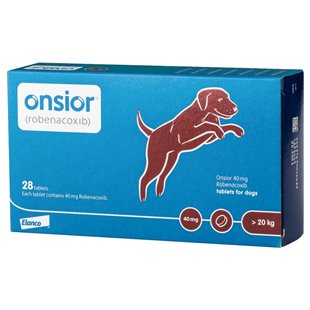
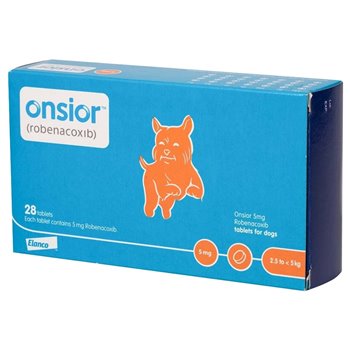
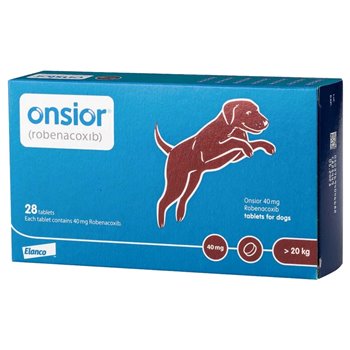
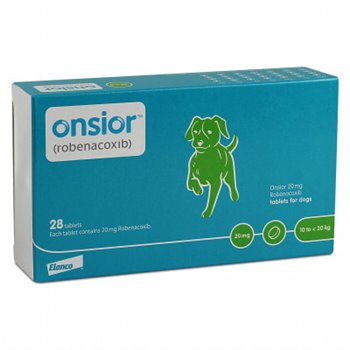
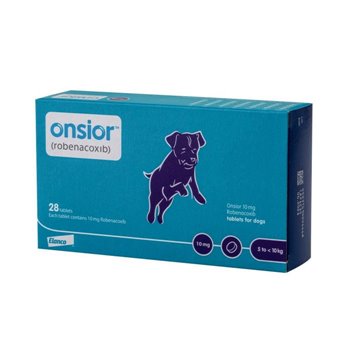
Onsior Tablets are a prescription-only veterinary medicine used to help manage pain and inflammation in dogs. Each Onsior tablet contains robenacoxib, a non-steroidal anti-inflammatory drug, often shortened to NSAID, that is used by vets when a dog needs targeted analgesic and anti-inflammatory support.
Onsior Tablets may be prescribed for dogs with chronic osteoarthritis, a long-term joint condition that can cause stiffness, lameness and reduced mobility. Onsior Tablets may also be used around soft tissue surgery, where the aim is to reduce post-operative discomfort and local inflammation while your dog heals.
A Veterinary Pet Prescription is required for Onsior
Onsior Tablets work by reducing the activity of cyclooxygenase-2, also called COX-2, an enzyme involved in the production of prostaglandins. Prostaglandins are chemical mediators that contribute to pain, swelling, heat and inflammation at affected tissues, includi...
Onsior Tablets are a prescription-only veterinary medicine used to help manage pain and inflammation in dogs. Each Onsior tablet contains robenacoxib, a non-steroidal anti-inflammatory drug, often shortened to NSAID, that is used by vets when a dog needs targeted analgesic and anti-inflammatory support.
Onsior Tablets may be prescribed for dogs with chronic osteoarthritis, a long-term joint condition that can cause stiffness, lameness and reduced mobility. Onsior Tablets may also be used around soft tissue surgery, where the aim is to reduce post-operative discomfort and local inflammation while your dog heals.
A Veterinary Pet Prescription is required for Onsior
Onsior Tablets work by reducing the activity of cyclooxygenase-2, also called COX-2, an enzyme involved in the production of prostaglandins. Prostaglandins are chemical mediators that contribute to pain, swelling, heat and inflammation at affected tissues, including arthritic joints or surgical sites. By limiting these inflammatory signals, Onsior Tablets can help dogs move more comfortably and cope better with day-to-day activity. Robenacoxib belongs to the coxib class of NSAIDs and is designed to be relatively selective for COX-2 at recommended doses, while sparing more of the COX-1 activity that has protective roles in the gastrointestinal tract and kidneys. This does not make Onsior Tablets risk-free, but it helps explain why vets may choose this medicine for appropriate dogs when anti-inflammatory pain relief is needed. The effect is not sedation, and it should not change your dog’s personality; instead, the goal is to reduce nociceptive discomfort so your dog can rest, walk and recover with less strain.
For dogs with osteoarthritis, Onsior Tablets are used to reduce the pain and inflammation linked with degenerative joint disease. Osteoarthritis can develop gradually, so owners may first notice subtle changes rather than obvious yelping or crying. Signs that may lead a vet to discuss Onsior Tablets include:
- stiffness after rest, especially first thing in the morning;
- limping, lameness or uneven weight bearing;
- reluctance to climb stairs, jump into the car or go on longer walks;
- slower rising, reduced play, or changes in posture;
- licking around a painful joint or becoming more withdrawn.
Onsior Tablets do not cure osteoarthritis or rebuild damaged cartilage, but by improving comfort they can support controlled exercise, weight management and physiotherapy plans that protect joint function. Many dogs with chronic joint disease benefit from a wider mobility plan that includes gentle activity, avoiding slippery floors, maintaining lean body condition and reviewing progress with the vet rather than waiting until pain becomes severe.
When Onsior Tablets are prescribed after soft tissue surgery, the focus is usually short-term pain control and reduction of inflammation around the operation site. Your vet may recommend a dose before surgery and continued treatment for a limited period afterwards, depending on the procedure and your dog’s recovery. Onsior Tablets are flavoured and many dogs take them voluntarily, but they should only be given exactly as directed on the prescription label. For osteoarthritis, they are commonly given once daily at the same time each day, without food or at least 30 minutes before or after a meal, because administration away from meals may support better clinical effect. Onsior Tablets are available in different strengths, including 5mg, 10mg, 20mg and 40mg, so the prescribed tablet size should match your dog’s bodyweight and treatment reason. If a dose is missed, owners should ask their vet or pharmacist for advice rather than doubling the next dose, as NSAID dosing is based on maintaining a safe therapeutic range.
As with all NSAIDs, Onsior Tablets need sensible safety checks. They should not be used in dogs with gastrointestinal ulceration, significant hepatic disease, known hypersensitivity to robenacoxib, or in pregnant or lactating animals unless a vet has specifically assessed the risk. Onsior Tablets should not be given alongside other NSAIDs or corticosteroids, as this can increase the chance of adverse effects. Dogs with renal disease, cardiac disease, dehydration, low blood pressure or previous intolerance to anti-inflammatory medicines may need closer monitoring or a different option. Possible side effects can include vomiting, diarrhoea, reduced appetite, blood in the faeces, lethargy, or changes in liver enzyme results. Contact your vet promptly if your dog seems unwell, stops eating, vomits repeatedly, passes dark or bloody stools, or becomes unusually tired while taking Onsior Tablets. For longer courses, your vet may recommend checking biochemistry results, especially liver enzymes, because changes are sometimes easier to identify on a blood test before they are obvious at home.
What are Onsior Tablets for dogs?
Onsior Tablets are prescription veterinary tablets for dogs that contain robenacoxib, an NSAID used to control pain and inflammation. Vets may prescribe Onsior Tablets for chronic osteoarthritis or for short-term pain relief linked with soft tissue surgery. They should only be used for the dog named on the prescription.
How do Onsior Tablets work in dogs?
Onsior Tablets work by reducing COX-2 activity, which helps limit prostaglandins involved in pain, swelling and inflammation. This anti-inflammatory action can make movement more comfortable for dogs with osteoarthritis and can support recovery after surgery. They relieve discomfort but do not cure the underlying joint disease.
Do I need a prescription to buy Onsior Tablets?
Yes, Onsior Tablets for dogs are prescription-only veterinary medicines. A vet must assess your dog and decide whether robenacoxib is suitable, what strength is needed and how long treatment should continue. This helps protect dogs with kidney, liver, heart or gastrointestinal risks from unsuitable NSAID use.
Can Onsior Tablets be given with food?
Onsior Tablets are usually given without food, or at least 30 minutes before or after a meal, unless your vet advises otherwise. Giving them away from meals may support the intended clinical effect. Always follow the prescription label, and ask your vet or pharmacist before changing administration.
How quickly do Onsior Tablets start working?
Some dogs may show improved comfort within a short period, although the response can vary with the condition being treated. For osteoarthritis, vets often review whether there is a clear clinical response during the early part of treatment. Contact your vet if your dog’s pain or lameness does not improve.
What side effects can Onsior Tablets cause?
Possible side effects of Onsior Tablets include vomiting, diarrhoea, reduced appetite, lethargy, blood in the faeces, or changes in liver enzyme results. Stop and contact your vet promptly if your dog seems unwell, repeatedly vomits, passes dark or bloody stools, or becomes unusually tired during treatment.
Can my dog take Onsior Tablets with other pain relief?
Do not give Onsior Tablets with other NSAIDs, corticosteroids, or human painkillers unless your vet has specifically instructed you to do so. Combining anti-inflammatory medicines can increase the risk of gastrointestinal, kidney or liver problems. Tell your vet about all medicines and supplements your dog takes.