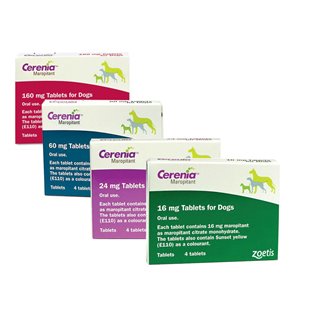
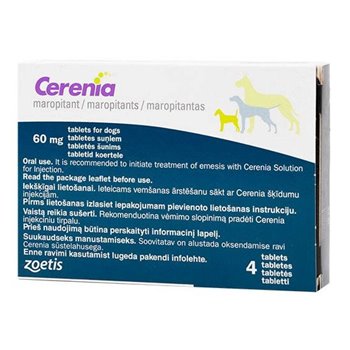
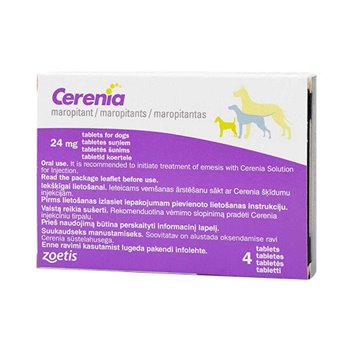
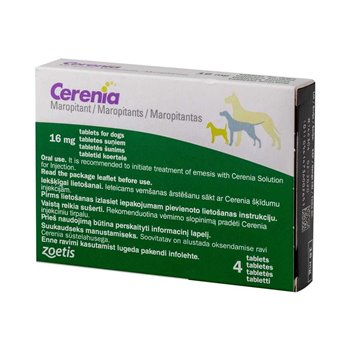
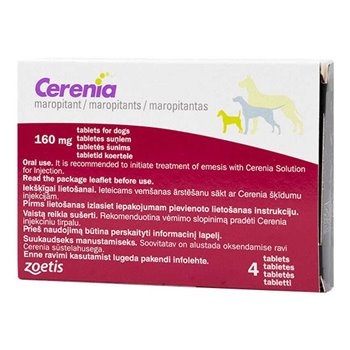
Cerenia Tablets for Dogs are a veterinary prescription medicine used to help prevent and control vomiting. They contain maropitant, an antiemetic active ingredient, and are available in 16mg, 24mg, 60mg and 160mg strengths so a veterinary surgeon can select a suitable tablet combination for a dog’s bodyweight and reason for treatment. Cerenia Tablets may be prescribed for vomiting linked to illness or treatment, for nausea associated with chemotherapy, and for the prevention of vomiting caused by motion sickness.
A Veterinary Pet Prescription is Required for Cerenia
Because vomiting has many possible causes, these tablets are not a substitute for diagnosis. A dog may vomit after eating unsuitable food, during gastroenteritis, because of pancreatitis, as a reaction to medicine, or due to a foreign body or gastrointestinal obstruction. The aim of Cerenia Tablets is to reduce the vomiting response while the underlying condition is assessed and managed. This can make it easier to maintain hydration, nutrition and comfort, but veterinary advice remains essential, particularly when signs are severe, repeated or unexplained.
Cerenia Tablets work in the central nervous system. Maropitant is a selective neurokinin-1, or NK1, receptor antagonist. These receptors normally bind substance P, a neuropeptide that plays a key role in activating the emetic centre in the brainstem. By blocking substance P at NK1 receptors, Cerenia Tablets interrupt an important final pathway used by both central and peripheral vomiting signals. This means the medicine can act against triggers arising from the digestive tract, circulating chemicals or motion-related stimulation. Cerenia Tablets are antiemetic rather than sedative, so they should not make a dog calm or sleepy simply for travel. A dog may still show signs of nausea, such as lip licking, drooling, swallowing repeatedly, restlessness or lethargy, even when vomiting is controlled. This does not always mean the treatment has failed, but persistent distress should be discussed with a veterinary surgeon. The response can also vary between dogs because absorption, metabolism and the cause of vomiting are not identical in every patient.
Vomiting in dogs is an active process that usually involves nausea, abdominal contractions and the forceful expulsion of stomach contents. It is different from regurgitation, which is often passive and may bring up undigested food soon after eating. A single mild episode can sometimes settle, but repeated vomiting can rapidly cause dehydration, electrolyte imbalance and weakness, especially in puppies, older dogs and animals with chronic disease. Contact a veterinary practice promptly if vomiting is accompanied by blood, a swollen or painful abdomen, repeated unproductive retching, collapse, pale gums, breathing difficulty, marked lethargy, diarrhoea with blood, inability to keep water down or suspected ingestion of a toxin or foreign object. Cerenia Tablets can control an important symptom, but they do not remove an obstruction, treat poisoning or correct fluid loss. Where emesis is frequent, an oral tablet may be brought back up before enough medicine is absorbed; a veterinary surgeon may therefore choose an injectable antiemetic and fluid therapy first. Diagnostic tests may include physical examination, blood tests, imaging or faecal analysis, depending on the history and clinical signs.
The dose and timing of Cerenia Tablets depend on the indication as well as the dog’s weight, age, health and medicines. The regimen used for vomiting unrelated to motion sickness is different from the regimen used to prevent motion-sickness vomiting, so owners should follow the dispensing label exactly and not reuse instructions from an earlier illness or another dog. Cerenia Tablets for general vomiting are intended for dogs from eight weeks of age, while the motion-sickness regimen is intended for dogs from sixteen weeks of age; use in younger dogs requires a veterinary benefit–risk assessment. For travel, the tablet is normally given before the journey, and a light meal or snack beforehand may reduce the chance of pre-travel vomiting. Prolonged fasting should be avoided. The tablet should not be wrapped or enclosed in food because this can delay dissolution and onset of action. After administration, check that the dog has swallowed the dose. If vomiting occurs soon afterwards, do not automatically give another tablet; contact the prescribing practice for advice.
Most dogs tolerate Cerenia Tablets well when they receive the prescribed amount. The recognised common adverse event is vomiting before travel, usually within two hours of dosing. Very rare reports include lethargy and neurological signs such as ataxia, tremors, convulsions or seizures. Urgent veterinary advice is appropriate if a dog becomes unsteady, unusually drowsy, collapses, has a seizure or develops any other severe or unexpected change. Cerenia Tablets are metabolised in the liver, so extra caution and monitoring may be needed in dogs with hepatic disease, particularly during longer courses. A veterinary surgeon should also assess dogs with cardiac disease or a predisposition to heart problems. Maropitant can interact with calcium-channel antagonists and may compete with other highly protein-bound medicines, making a complete medication history important. Safety has not been established in pregnant or lactating bitches, so use is based on an individual benefit–risk assessment. Tell the prescriber about all medicines, supplements and relevant medical conditions before treatment starts.
What are Cerenia Tablets used for in dogs?
Cerenia Tablets contain maropitant and are prescribed to prevent or treat vomiting in dogs. They may be used for vomiting associated with illness or treatment, nausea caused by chemotherapy, and vomiting triggered by motion sickness. Because vomiting may indicate a serious underlying problem, a veterinary assessment is important before use.
How do Cerenia Tablets work?
Maropitant blocks neurokinin-1 receptors in the brain’s emetic centre. This prevents substance P, an important neurotransmitter in the vomiting pathway, from binding to those receptors. By interrupting signals from both central and peripheral triggers, Cerenia Tablets reduce the urge to vomit without acting as a sedative.
How quickly do Cerenia Tablets work?
Cerenia Tablets can begin producing clinical antiemetic effects from about one hour after administration, although timing varies with the indication, the individual dog and whether the tablet is retained. Give the medicine at the time stated on the dispensing label, especially when it is prescribed before travel or treatment.
Can Cerenia Tablets prevent travel sickness in dogs?
Yes. Cerenia Tablets may be prescribed to prevent vomiting caused by motion sickness in dogs aged sixteen weeks or older. They are not a sedative and may not remove every sign of nausea, such as drooling or restlessness. Follow the veterinary directions for timing and never substitute an old dose plan.
Should Cerenia Tablets be given with food?
For motion sickness, a light meal or snack before the dose is recommended, and prolonged fasting should be avoided. Do not wrap or enclose the tablet in food, because this can delay dissolution and onset of action. Watch your dog afterwards to make sure the full tablet has been swallowed.
What side effects can Cerenia Tablets cause?
The recognised common adverse event is vomiting before travel, generally within two hours of dosing. Very rare reactions include lethargy, unsteadiness, tremors, convulsions or seizures. Contact a veterinary practice promptly about severe, persistent or unexpected signs, and seek urgent help for collapse, seizures or marked neurological changes.