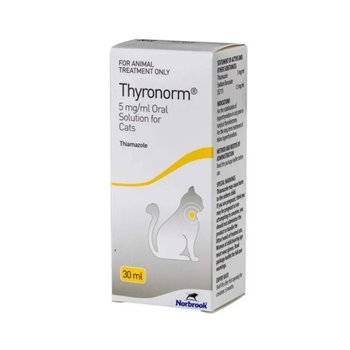
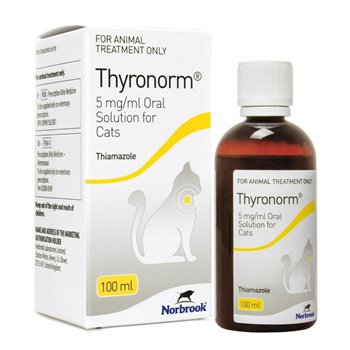
Thyronorm is a prescription-only veterinary medicine for cats with hyperthyroidism, a condition in which the thyroid gland produces excessive amounts of thyroid hormone. It contains thiamazole, an antithyroid ingredient that reduces hormone production within the gland. Thyronorm is used for long-term management of the condition and for stabilising cats before surgical removal of affected thyroid tissue. The honey-flavoured oral solution offers a liquid alternative to antithyroid tablets and is supplied with a measuring syringe for administration directly into the mouth. Both the 30ml and 100ml bottles contain 5mg thiamazole per millilitre.
The thyroid glands lie in the neck and produce hormones that influence energy use, body temperature, heart function and many other processes. Hyperthyroidism is particularly common in older cats and usually develops because thyroid tissue becomes abnormally active. Thyronorm reduces the resulting excess hormone production. An affected cat may eat enthusiastically while losing weight, become unusually restless or vocal, drink more and develop an unkempt coat. Vomiting, loose stools and a rapid heartbeat can also occur. Some cats show a less typical pattern, becoming quiet and eating poorly despite having an overactive thyroid. Increased hunger can be particularly noticeable, with a cat asking for extra meals but continuing to lose muscle and body condition. The combination of weight loss and increased appetite is therefore a characteristic feature of the disease. Thyronorm can improve the metabolic effects responsible for many of these changes, although the speed and extent of improvement vary with the cat’s condition and any other illness present.
Thiamazole in Thyronorm interferes with thyroid peroxidase, an enzyme needed to incorporate iodine into thyroid hormones. This reduces the synthesis of thyroxine, known as T4, and triiodothyronine, known as T3. These hormones normally help regulate the pace of cellular activity throughout the body. Thyronorm reduces the manufacture of new hormone rather than supplying thyroid hormone as replacement treatment. Hormone already stored in the gland or circulating in the blood must decline before the full clinical benefit becomes apparent. As excessive stimulation eases, appetite and activity can become more settled, and weight may gradually recover. The medicine controls hormone production while it is being given; it does not remove the abnormal thyroid tissue, which is why medical management is usually continued for life.
The effects of hyperthyroidism extend beyond appetite and bodyweight. Persistently high thyroid hormone levels increase the demands placed on the cardiovascular system, and some cats develop high blood pressure or changes in heart muscle function. Thyronorm helps reduce this hormonal burden as thyroid activity comes under control. Kidney function is also relevant because hyperthyroidism can increase blood flow through the kidneys and temporarily conceal reduced renal reserve. When Thyronorm restores a more normal metabolic state, an existing kidney problem may become more apparent. This is one reason thyroid control is considered alongside renal health, rather than judged by weight gain alone. Excessive suppression can produce hypothyroidism, with lethargy, reduced appetite or other signs of insufficient thyroid activity, so treatment aims for an appropriate hormone level rather than the lowest possible result.
Thyronorm is administered directly into the cat’s mouth using the supplied syringe. It should not be mixed into food, because efficacy by that route has not been established. The syringe is marked in milligrams of thiamazole, making it important to use its own scale rather than assume the markings represent millilitres. Thyronorm is generally given in morning and evening administrations; once-daily use is an option in selected circumstances, although divided administration may control the condition more effectively in the short term. A consistent relationship between treatment and feeding helps stabilisation. The 30ml bottle and 100ml bottle are both the same oral solution, so neither represents a stronger medicine. The amount needed over time depends on the individual cat’s daily treatment requirement.
Thyronorm can cause vomiting, reduced appetite, lethargy or itching, and blood-cell or liver problems may also occur. Marked facial itching, jaundice, unusual bleeding or a sudden deterioration needs prompt veterinary attention. The medicine must not be used in pregnant or lactating cats, and certain liver, immune or blood disorders can make it unsuitable. Thyronorm also needs careful handling: women who are pregnant, may be pregnant or are trying to conceive should not administer it or handle litter or vomit from treated cats. Women of childbearing age must wear impermeable single-use gloves for these tasks. Keep the bottle tightly closed in its original labelled packaging. Once opened, the solution has a six-month in-use shelf life, subject to the printed expiry date.
What is Thyronorm used for in cats?
Thyronorm is used to manage feline hyperthyroidism, in which the thyroid gland produces too much thyroid hormone. It can provide long-term medical control or stabilise a cat before thyroid surgery. Reducing excess hormone production helps address effects such as weight loss, increased appetite and restlessness.
What is the active ingredient in Thyronorm?
Thyronorm contains thiamazole at a concentration of 5mg/ml. Thiamazole reduces the production of thyroid hormones by interfering with an enzyme involved in their manufacture. It is an antithyroid medicine for an overactive thyroid, rather than levothyroxine, which supplies thyroid hormone as replacement treatment.
Are Thyronorm 30ml and 100ml the same strength?
Yes. Both Thyronorm bottle sizes contain 5mg thiamazole per millilitre. The 100ml bottle holds more solution, but the medicine is not more concentrated. The range therefore offers two quantities of the same formulation, with the bottle size selected according to the cat’s treatment requirement.
Can Thyronorm be mixed with cat food?
Thyronorm should be given directly into the mouth using its supplied oral syringe. Mixing it with food is not recommended because efficacy by this route has not been established. A consistent relationship between administration and feeding is recommended to help stabilise the cat’s thyroid control.
Is the Thyronorm syringe marked in milligrams or millilitres?
The supplied Thyronorm syringe is marked in milligrams of thiamazole, not millilitres of liquid. Its scale runs in 0.5mg increments up to 5mg. Since the solution contains 5mg/ml, confusing these units could produce a substantial dosing error. Use the syringe supplied with the medicine.
How quickly does Thyronorm improve hyperthyroidism symptoms?
Thyronorm reduces new hormone production, but hormone already stored or circulating takes time to decline. Improvement is therefore gradual rather than immediate. Appetite, activity and bodyweight may change at different rates, while thyroid blood results help establish how effectively the medicine is controlling hormone levels.
What side effects can Thyronorm cause?
Possible effects include vomiting, reduced appetite, lethargy and itching, sometimes particularly around the head or neck. Blood-cell and liver problems can also occur. Marked facial irritation, jaundice, unusual bleeding or a sudden decline in health requires prompt veterinary advice while the treatment is reviewed.