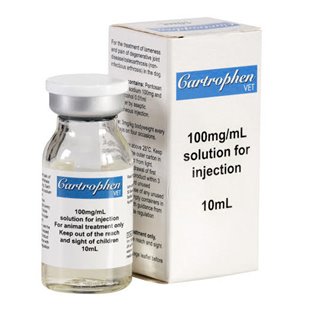
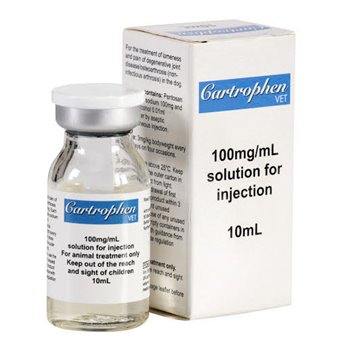
Cartrophen Vet is an injection for dogs with osteoarthritis. Vets use it to treat the joint pain and lameness that can make familiar things harder, from getting up after a nap to walking the usual route home. It contains pentosan polysulphate sodium and is given as a course of four injections. The 10ml vial contains the 100mg/ml solution for dogs. Its licensed use is in dogs whose bones have finished growing and whose joint disease is due to degeneration rather than infection.
Often the first change an owner notices is not an obvious limp. A dog may stand for a moment before tackling the back step, take shorter strides after resting or stop jumping into the car. Those details are useful when discussing osteoarthritis with your vet. They do not, on their own, tell you which joint hurts or why. An injury and an infected joint can also cause lameness, but they need different treatment. A dog that suddenly cannot put weight on a leg needs assessment rather than an assumption t...
Cartrophen Vet is an injection for dogs with osteoarthritis. Vets use it to treat the joint pain and lameness that can make familiar things harder, from getting up after a nap to walking the usual route home. It contains pentosan polysulphate sodium and is given as a course of four injections. The 10ml vial contains the 100mg/ml solution for dogs. Its licensed use is in dogs whose bones have finished growing and whose joint disease is due to degeneration rather than infection.
Often the first change an owner notices is not an obvious limp. A dog may stand for a moment before tackling the back step, take shorter strides after resting or stop jumping into the car. Those details are useful when discussing osteoarthritis with your vet. They do not, on their own, tell you which joint hurts or why. An injury and an infected joint can also cause lameness, but they need different treatment. A dog that suddenly cannot put weight on a leg needs assessment rather than an assumption that existing arthritis has flared up.
In a healthy joint, cartilage covers the ends of the bones and joint fluid helps the surfaces move smoothly. Osteoarthritis affects the whole joint, including the cartilage and the tissues around it. Pentosan polysulphate acts on processes involved in cartilage metabolism and the production of substances that lubricate the joint. The reason for giving Cartrophen Vet is to ease pain and lameness. A dog that moves more comfortably has gained something valuable, but this does not mean the damaged cartilage has grown back or the arthritis has been cured.
Each Cartrophen Vet injection is given under the skin, with five to seven days between injections. The vet weighs the dog to calculate the amount needed. The injection does not go into the painful joint, so a dog with more than one affected joint does not need an injection into each one. Some dogs show no noticeable change until after the second injection. If your dog is uncomfortable in the meantime, contact the practice about pain relief: several common arthritis medicines cannot be used at the same time as Cartrophen Vet.
It helps to choose one or two ordinary activities to compare over the course. For example, how easily does your dog rise from the bed in the morning? Is the limp still noticeable on the first few steps outside? A short video of the same walk on different days can be more informative at a review than trying to remember whether a particular day was good or bad. There is no need to encourage a dog to climb stairs or jump to test the effect of treatment.
An important part of choosing Cartrophen Vet is checking whether it fits with your dog's other treatment. Pentosan polysulphate can affect blood clotting, so the vet needs to know about bleeding, upcoming surgery and medicines given at home as well as those supplied by another practice. It is also unsuitable for dogs with evidence of infection, advanced kidney or liver impairment, or a malignancy. If your dog already takes a daily anti-inflammatory, speak to the vet managing the arthritis before making any change; they can plan how to keep your dog comfortable.
Is Cartrophen Vet the same as carprofen?
No. The names sound similar, but Cartrophen Vet contains pentosan polysulphate sodium. Carprofen is a non-steroidal anti-inflammatory drug (NSAID). They are different medicines and must not be given together.
Does my dog need to be elderly to have Cartrophen Vet?
No. The important distinction is whether the skeleton has finished growing, not whether the dog is considered senior. The vet also needs to establish that degenerative joint disease is responsible for the pain and lameness.
What if I see no difference after the first injection?
It can take until after the second injection before an effect is apparent. Tell your vet if pain worsens or your dog develops a new limp, rather than waiting until the end of the course.
Can my dog take meloxicam or steroids during a course?
No. Cartrophen Vet must not be used alongside NSAIDs such as meloxicam, corticosteroids or anticoagulants. This includes aspirin. If another vet treats your dog during the course, tell them when the last injection was given.
What side effects should I watch for?
Vomiting, diarrhoea, tiredness, reduced appetite or swelling at the injection site can occur. Contact your vet promptly if your dog becomes unwell. Unexplained bleeding, including nosebleeds or blood in diarrhoea, needs urgent veterinary advice.
Is Cartrophen Vet suitable before an operation?
It must not be used around the time of surgery because of its effect on clotting. If an operation is planned, let the veterinary team know the dates of any recent injections so they can plan accordingly.