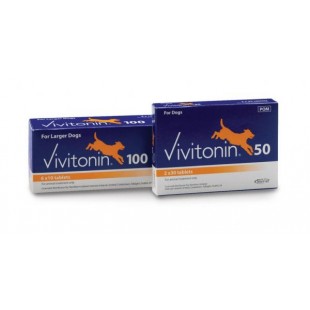
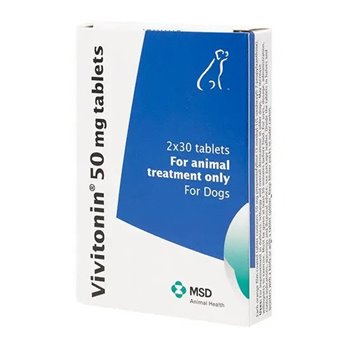
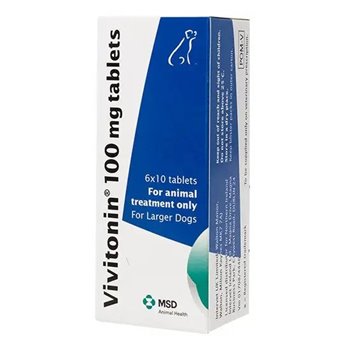
Vivitonin for Dogs is a prescription medicine that contains propentofylline, a xanthine-derivative drug used in veterinary practice to support some older dogs who seem to have “slowed down”. Many senior pets remain comfortable and engaged, but others become noticeably quieter, less responsive, or less interested in activities they used to enjoy.
VETERINARY PRESCRIPTION REQURIED
Vivitonin Tablets are commonly prescribed when your vet suspects that reduced blood flow in small vessels (microcirculation), particularly to the brain and peripheral tissues, is contributing to dullness and reduced vitality. By improving microcirculation and helping cells make better use of available oxygen, Vivitonin Tablets may improve alertness, willingness to move, and day-to-day interaction in suitable cases. They are not a sedative, and they are not intended to mask pain; the goal is to support normal function where circulation is a limiting factor. Because senior dogs often have more than one health issue at the same time, Vivitonin Tablets are usually one part of a wider wellbeing plan agreed with your vet.
Ageing can look different from one dog to the next, and it is sensible to investigate changes rather than assuming they are “just old age”. A dog that appears dull or reluctant may be experiencing osteoarthritis discomfort, endocrine disease such as hypothyroidism or diabetes, sensory loss, cardiac disease, or chronic kidney or liver conditions, and these problems can need very specific treatment. Before prescribing Vivitonin Tablets, your vet will usually assess overall health, including weight, mobility, hydration, heart and lung sounds, and may recommend blood tests or other investigations to rule out underlying disease. Signs that might prompt a discussion about Vivitonin Tablets include:
- reduced interest in walks, toys, training, or social interaction
- general lethargy, lower stamina, or slower recovery after activity
- seeming less responsive to familiar cues, or taking longer to “get going”
- changes in sleep–wake pattern, including restlessness at night
- reduced confidence with stairs, car journeys, slippery floors, or unfamiliar places
- mild disorientation, unsettled behaviour, or appearing less engaged in the home
Because these signs have many possible causes, Vivitonin should be used alongside an individual care plan, which may also include pain control, weight management, gentle exercise pacing, and practical home adjustments. The aim is to help your dog stay comfortable, safe, and able to enjoy daily life as they age.
Vivitonin works through several complementary mechanisms that aim to improve tissue perfusion and cellular oxygenation. In simple terms, Vivitonin Tablets help blood move more efficiently through tiny vessels, supporting delivery of oxygen and glucose to cells and assisting the removal of metabolic by-products. Vivitonin is associated with effects on microvascular circulation, including influences on adenosine signalling and phosphodiesterase activity, which can help maintain blood flow and energy metabolism where tissues are under-perfused. These actions are considered particularly relevant to cerebral perfusion in older dogs, where even modest changes in circulation can affect attentiveness and responsiveness. In everyday terms, the goal with Vivitonin Tablets is a dog who seems brighter, more willing to engage, and less “flat”, once other medical problems have been addressed.
In day-to-day use, Vivitonin Tablets are most commonly prescribed for geriatric dogs with general dullness, reduced activity, and a decline in normal enthusiasm, particularly when veterinary assessment suggests the changes are consistent with ageing rather than an acute disease process. They may also be considered for dogs with features of canine cognitive dysfunction (CCD), a clinical syndrome linked to brain ageing that can include altered interactions, disrupted sleep, changes in house training, and episodes of disorientation. Vivitonin Tablets are not presented as a cure for cognitive ageing, and they do not replace environmental support such as predictable routines, enrichment, and gentle training refreshers. For some dogs, however, improved circulation can make it easier for them to cope with daily life, which can be reassuring for both pet and owner. If your dog has significant pain, breathing difficulty, fainting, sudden weakness, or rapid weight loss, these signs need prompt veterinary attention, and Vivitonin should not be used as a substitute for investigating those concerns. If Vivitonin Tablets are being used as a trial, your vet may ask you to watch for practical changes such as a better appetite for walks, more interest in family activity, or improved steadiness and confidence. When a dog responds well and tolerates the medicine, Vivitonin Tablets can sometimes be continued longer term with periodic check-ups to confirm ongoing benefit and to make sure other age-related conditions are not developing.
Vivitonin is given by mouth and are often administered twice daily, but your vet will calculate the exact dose based on your dog’s bodyweight, clinical signs, and response. Try to give Vivitonin Tablets at roughly the same times each day to keep dosing consistent, and follow the prescribed course even if you notice early improvement. Tablets can usually be offered directly, placed at the back of the tongue, or hidden in a small amount of food. If you miss a dose of Vivitonin Tablets, it is generally safer to give the next dose at the normal time rather than doubling up, but always follow your vet’s instructions. Some dogs show a change within days, while others need a few weeks before the benefit becomes clear, so your vet may suggest reviewing progress after an initial trial period.
Most dogs tolerate Vivitonin well, but any medicine can cause adverse effects, and you should contact your vet if anything concerns you. With Vivitonin, the most commonly reported issues are gastrointestinal signs such as vomiting, diarrhoea, soft stools, or reduced appetite, particularly when first starting treatment. Some dogs may appear mildly restless, and these changes should be discussed if they persist. Tell your vet about all medicines, supplements, and parasite treatments your dog receives, including anti-inflammatories (NSAIDs) and heart medications, so they can check for interactions and decide on the safest approach. Vivitonin may not be suitable for every patient, so regular reviews are important. Store the tablets in their original packaging, keep them dry, and use them only for the dog they were prescribed for.
What are Vivitonin Tablets used for in dogs?
Vivitonin Tablets are prescribed for some older dogs that seem dull, less responsive, or less interested in normal activity. They are used when a vet believes reduced microcirculation may be contributing to these age-related changes. They are usually part of a wider plan that also addresses pain, mobility, and general health.
How do Vivitonin Tablets work?
Vivitonin Tablets contain propentofylline, which supports blood flow in tiny vessels and helps tissues use oxygen more efficiently. The medicine has effects on microvascular circulation and energy metabolism, which can be particularly relevant for cerebral perfusion in senior dogs. The aim is improved alertness and engagement, not sedation or stimulation.
How quickly will Vivitonin Tablets help my dog?
Some dogs show subtle improvement within several days, but it is common for changes to build over a few weeks. Your vet may suggest a short trial and review, looking at practical signs such as interest in walks, interaction, and sleep patterns. If there is no benefit, your vet may reassess the approach.
Do I need a prescription for Vivitonin Tablets?
Yes. Vivitonin Tablets are a prescription-only veterinary medicine, so a vet must assess your dog and decide whether it is appropriate. This ensures symptoms are not caused by a different condition that needs targeted treatment, and it allows dosing to be set safely for your dog’s weight and overall health.
What should I do if I miss a dose of Vivitonin Tablets?
If you miss a dose, it is usually best to give the next dose at the normal time rather than doubling up. If you are unsure, or your dog has missed more than one dose, contact your vet for tailored advice. Consistent dosing helps you judge whether Vivitonin Tablets are providing a real benefit.