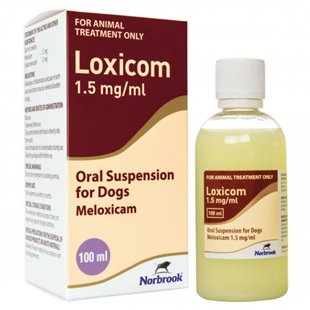
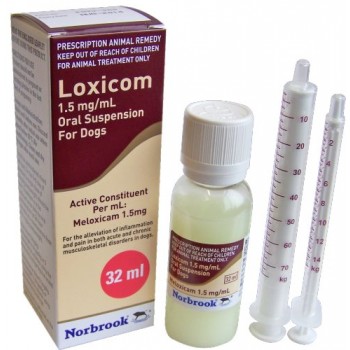
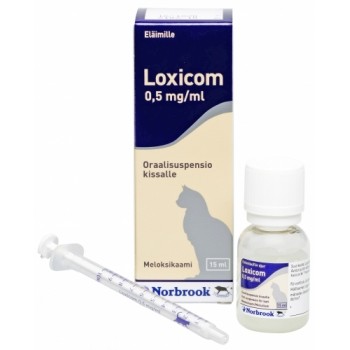
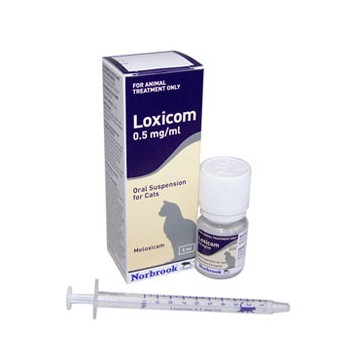
Loxicom for Dogs and Cats is a prescription veterinary medicine for dogs that contains meloxicam, a non-steroidal anti-inflammatory drug, or NSAID. Vets prescribe Loxicom to relieve pain and inflammation associated with acute and chronic musculoskeletal disorders, including osteoarthritis. Loxicom is supplied as a pale yellow liquid and is measured with the dosing syringe provided, which helps owners give an accurate amount according to the veterinary prescription.
A Veterinary Pet Prescription is Required for Loxicom
Loxicom does not cure osteoarthritis or rebuild damaged cartilage, but reducing painful inflammation can help a dog move more comfortably, rest more easily and take part in suitable daily activity safely. Treatment should form part of an individual care plan based on the dog’s age, weight, general health, mobility and any other medicines being used. Because osteoarthritis can change over time, regular veterinary reviews are valuable, particularly when Loxicom is prescribed for longer-term use. The vet may recommend blood or urine tests before treatment and during monitoring, especially for older dogs or those with other health concerns.
Osteoarthritis is a progressive joint disease in which cartilage and other structures within a joint become damaged or altered. Healthy cartilage allows the ends of bones to glide smoothly and helps absorb force. When cartilage deteriorates, the joint can become inflamed, stiff and painful, while changes such as synovitis, thickening of the joint capsule and new bone formation may develop. Canine osteoarthritis commonly affects the hips, knees, elbows, shoulders or spine, and it may follow inherited joint disease, previous injury, abnormal joint development or years of wear. Signs are not always dramatic. A dog may be slow to rise, stiff after sleep, reluctant to use stairs, less willing to jump, intermittently lame, quieter on walks or sensitive when a joint is handled. Some dogs lick a painful area, lose muscle around the affected limb or show changes in mood. Loxicom may be prescribed when a veterinary assessment indicates that inflammation and pain are limiting comfort or movement. Diagnosis can involve a clinical history, gait assessment, orthopaedic examination and imaging such as radiography.
The active ingredient in Loxicom, meloxicam, works by inhibiting cyclooxygenase enzymes involved in producing prostaglandins. Prostaglandins are chemical mediators that contribute to inflammation, pain, swelling and fever after tissue irritation or injury. Meloxicam inhibits cyclooxygenase-2, commonly called COX-2, to a greater extent than cyclooxygenase-1, or COX-1, at therapeutic concentrations. By reducing prostaglandin synthesis, Loxicom can lessen the inflammatory response within and around an affected joint and provide an analgesic effect. This may make weight bearing, rising, walking and settling more comfortable, although the response differs between dogs. Improvement is often assessed through everyday behaviour rather than a single sign, so owners may be asked to monitor walking pace, willingness to exercise, ability to climb steps, ease of getting up and quality of sleep. Loxicom controls clinical signs while it is being given; it does not remove the underlying structural changes of osteoarthritis. Weight management, controlled exercise, physiotherapy, hydrotherapy and sensible changes at home may therefore be recommended alongside medication.
Give Loxicom exactly as prescribed by the vet. Shake the bottle well before each dose so that the suspension is evenly mixed, attach the correct measuring syringe and draw up the prescribed quantity carefully. The medicine may be administered with food or directly into the mouth, depending on the dog and the vet’s directions. Try to give each maintenance dose at the same time every day, and never give an extra dose to compensate for one that has been missed unless a vet specifically advises it. Accurate dosing is important because the amount is based on body weight and the first-day instruction may differ from the ongoing dose. Do not change the dose, continue treatment longer than directed or restart leftover Loxicom after a break without veterinary advice. Contact the practice if pain appears uncontrolled or mobility deteriorates, rather than increasing the amount yourself. Keep the bottle, syringe and leaflet together, prevent contamination of the contents, and store the medicine away from children and animals that may chew the packaging or swallow it accidentally.
Loxicom must not be used in dogs under six weeks of age, during pregnancy or lactation, or where there is known hypersensitivity to meloxicam or another ingredient. The vet must also know about current or previous gastrointestinal irritation, ulcers or bleeding, renal, hepatic or cardiac impairment, haemorrhagic disorders, dehydration, low blood volume or low blood pressure, because these factors can increase risk. Loxicom must not be given at the same time as another NSAID or a corticosteroid, and a suitable treatment-free interval may be needed when changing anti-inflammatory medicines. Tell the vet about all prescription medicines, over-the-counter products and supplements, including diuretics, anticoagulants and certain antibiotics. This dog formulation should not be given to cats; feline Loxicom has a different concentration and species-specific directions.
What is Loxicom used for in dogs?
Loxicom is prescribed to relieve inflammation and pain caused by acute or chronic musculoskeletal disorders in dogs. Vets commonly use it when osteoarthritis, injury or another painful joint or soft-tissue problem affects comfort and mobility. It contains meloxicam and is available only following veterinary assessment and prescription.
How quickly does Loxicom work in dogs?
Some dogs appear more comfortable within the first few days of treatment, although the response varies with the condition, severity and individual dog. The product information states that a clinical response is normally seen within three to four days. Contact the vet if there is no improvement or signs worsen.
Should Loxicom be given with food?
Loxicom oral suspension may be given with food or directly into the dog’s mouth, as directed by the vet. Giving it with a small meal can be easier for some dogs. Shake the bottle thoroughly and use the supplied syringe to measure the prescribed dose accurately before every administration.
What should I do if my dog misses a dose of Loxicom?
Do not give a double dose unless a vet has specifically instructed you to do so. When a dose is missed, contact the prescribing practice for advice based on the timing and your dog’s treatment plan. Keeping a simple daily record can help prevent accidental omissions or repeat dosing.
What side effects can Loxicom cause in dogs?
Possible adverse effects include reduced appetite, vomiting, diarrhoea, lethargy, dark or blood-stained stools and changes in drinking or urination. Rare reactions can be serious. Stop the medicine and contact a vet promptly if your dog becomes unwell, especially during the first week of treatment.
Can a dog take Loxicom long term for osteoarthritis?
Some dogs receive Loxicom for longer-term osteoarthritis management under veterinary supervision. The vet will consider response, general health and potential risks, and may recommend periodic examinations or laboratory tests. Never extend treatment or alter the dose independently; ongoing therapy should use the lowest effective dose prescribed for that dog.