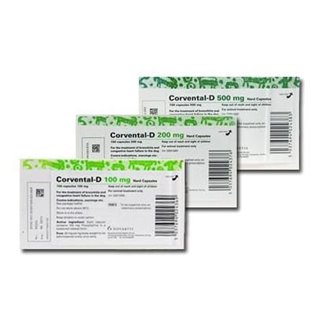
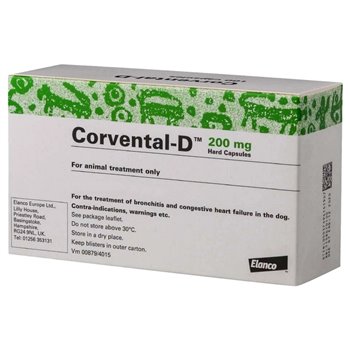
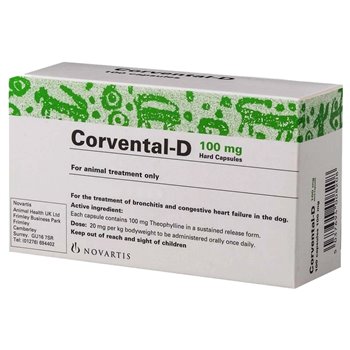
Corvental-D is a prescription-only veterinary medicine containing theophylline, used in dogs with bronchitis and in selected dogs with congestive heart failure. Theophylline is a bronchodilator: it relaxes smooth muscle within the airways, helping air pass more easily through narrowed breathing passages. Corvental-D is supplied as hard capsules, with 100mg and 200mg strengths currently listed in this range. The capsules contain theophylline as their active ingredient and are given orally once daily. Their purpose is to improve airway function where this medicine is appropriate for the dog’s condition. Breathing problems can involve the airways, lungs, heart or several of these together, so the value of bronchodilation depends on the changes actually contributing to the symptoms.
Bronchitis means inflammation of the bronchi, the larger branching airways that carry air into the lungs. Inflamed airways can produce more mucus and become more sensitive to irritation, leading to repeated coughing. Smooth muscle around the airway can also tighten, a process called bronchospasm, which narrows the passage available for airflow. Corvental-D helps relieve this muscular narrowing. A dog with chronic airway disease may cough during activity, after excitement or at rest, and may become less willing to exercise. Corvental-D can help reduce the resistance to airflow where bronchospasm contributes to the problem. Coughing itself has a protective role in clearing material from the airways, but persistent coughing can become tiring and uncomfortable when the underlying airway inflammation continues. Mucus and airway narrowing can occur together, so the intensity of a cough does not always reflect the degree of obstruction. Some dogs have episodes of wheezing or unusually noisy breathing, while others mainly show reduced stamina on familiar walks.
Theophylline in Corvental-D belongs to the methylxanthine family of medicines. It has several effects, including relaxation of smooth muscle and stimulation of respiration. Relaxing bronchial muscle widens the airways, allowing air to move with less resistance during breathing. Corvental-D also has effects on the cardiovascular system, including dilation of coronary vessels and increased strength of heart muscle contraction. It can increase urine production and stimulate the central nervous system. These wider actions help explain both its authorised uses and some of its potential adverse effects. In a dog with narrowed airways, even a modest change in airway diameter can affect the effort needed to move air. Bronchodilation is most useful when reversible muscular narrowing contributes to that resistance; it cannot reverse every structural change associated with long-standing respiratory disease.
In chronic bronchitis, improving airflow is one part of managing a continuing airway problem. Corvental-D may be used alongside treatment directed at inflammation or other contributing factors, depending on the diagnosis. Smoke, airborne sprays and dusty environments can irritate already sensitive airways, while excess bodyweight increases the effort needed for activity and breathing. Reducing avoidable respiratory irritants can help make the dog’s surroundings more comfortable. Corvental-D is also authorised for congestive heart failure, but breathlessness caused by fluid accumulation needs treatment of the cardiac congestion itself. A dog may have both airway disease and heart disease, and the combination of medicines reflects those findings. Sudden severe breathing difficulty, blue or grey gums, or collapse requires urgent veterinary attention rather than an extra capsule at home.
Corvental-D is given once daily, with the total amount calculated from bodyweight and the dog’s treatment requirements. The medicine releases theophylline over time, providing a once-daily treatment schedule for dogs needing continued bronchodilation. The 100mg capsule contains half the theophylline of the 200mg capsule, while both use the same active ingredient. Corvental-D has a modified-release formulation intended for its once-daily schedule, so capsule contents must not be crushed or ground into a powder. Crushing can alter the release characteristics and change exposure to the medicine. Theophylline products with different release formulations are not automatically interchangeable, even when their stated milligram strength appears similar.
Corvental-D can cause digestive effects such as vomiting or diarrhoea, changes in thirst and urination, or behavioural changes including restlessness and agitation. It must not be used in dogs with a known history of epileptiform seizures. Twitching, marked nervous-system stimulation or convulsions requires treatment to be stopped and immediate veterinary advice. Corvental-D also needs caution in dogs with liver disease because handling of theophylline can be altered. Certain antibiotics can raise theophylline concentrations, while some anticonvulsant medicines can lower them; concurrent beta-sympathomimetics are contraindicated because their effects can combine excessively. Theophylline has a relatively narrow margin between effective and excessive exposure, so changes that affect its breakdown can influence both benefit and tolerability. Store the capsules below 30°C in a dry place, keeping them protected in their original labelled packaging until needed.
What is Corvental-D used for in dogs?
Corvental-D is authorised for bronchitis and congestive heart failure in dogs. It contains theophylline, a bronchodilator that helps relax narrowed airways. Its usefulness depends on the respiratory and cardiac changes present, particularly whether bronchospasm is contributing to increased breathing effort or reduced exercise tolerance.
How does Corvental-D help a dog with bronchitis?
Bronchitis inflames the airways and can cause mucus production, coughing and muscular narrowing called bronchospasm. Corvental-D helps relax that airway muscle, reducing resistance to airflow. It may be used alongside treatment addressing inflammation or other contributing factors because bronchodilation does not resolve every component of chronic airway disease.
How often is Corvental-D given?
Corvental-D is given orally once daily. Its modified-release formulation is designed for that schedule, and the total amount is calculated for the individual dog. A worsening cough does not justify adding an extra capsule, because excessive theophylline exposure can cause significant digestive, behavioural and neurological effects.
Is Corvental-D a treatment for heart failure?
Congestive heart failure is an authorised indication for Corvental-D in dogs. However, its role depends on the individual case, and it is not a substitute for treatment needed to relieve cardiac fluid congestion. Some dogs have both cardiac disease and airway narrowing that influence their treatment.
What side effects can Corvental-D cause?
Possible effects include vomiting, diarrhoea, changes in thirst or urination, restlessness and agitation. Marked nervous-system stimulation, twitching or convulsions requires treatment to be stopped and urgent veterinary advice. Corvental-D must not be used in dogs with a known history of epileptiform seizures.