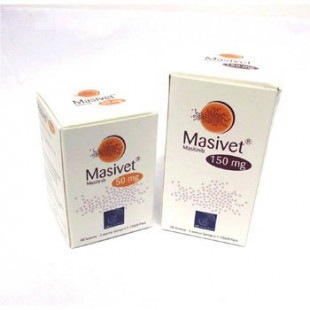
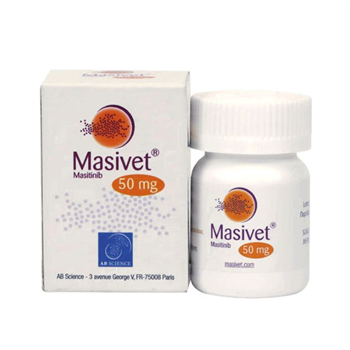
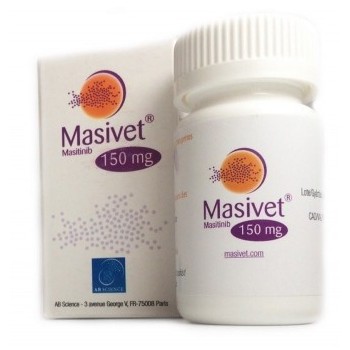
Masivet for Dogs (licensed as Kinavet in the USA) is a prescription-only medicine used by vets to manage certain mast cell tumours in dogs, particularly when the tumour cannot be fully removed with surgery or has returned. The active ingredient, masitinib, is a targeted anti-cancer treatment called a tyrosine kinase inhibitor. Rather than acting on every rapidly dividing cell, Masivet is designed to block specific signals that some tumour cells rely on to grow. This can help slow tumour progression, reduce the size of a mass in some patients, and improve comfort when the tumour is causing irritation or inflammation.
Masivet is not a general 'lump treatment' and it is not suitable for every dog or every mast cell tumour, so your vet will confirm the diagnosis, assess the grade and stage, and decide whether Masivet is appropriate. When used thoughtfully alongside monitoring and supportive care, Masivet can be part of a plan that focuses on both tumour control and quality of life and is available as Masivet 50mg and Masivet 150mg.
A Veterinary Prescription is required for Masivet
Mast cell tumours often grow because of abnormal signalling through a protein on the tumour cell surface called the KIT receptor (also written as c-KIT). In many dogs, the KIT pathway is overactive due to a genetic change (a c-KIT mutation) or altered receptor behaviour, telling mast cells to keep multiplying and resisting normal cell death. Masivet works by binding to the tyrosine kinase region inside the KIT receptor and switching that 'grow' signal down. By inhibiting KIT and related kinases involved in inflammation, Masivet can reduce mast cell proliferation and may also lessen the release of chemical mediators such as histamine that contribute to redness, swelling and gastric irritation. Because this is targeted therapy, your vet may recommend tests that identify whether the tumour is likely to respond, and they may adjust the dose based on how your dog tolerates Masivet over time.
Mast cell tumours (MCTs) are one of the most common skin cancers in dogs. They arise from mast cells, which are immune cells normally involved in allergic responses and defence against parasites. When mast cells become cancerous, they can form a lump in the skin or under the skin, but their behaviour is unpredictable: some remain localised and slow-growing, while others infiltrate surrounding tissue or spread (metastasise) to lymph nodes, spleen, liver or bone marrow. A hallmark of mast cell tumours is that they can change in size from day to day as the tumour releases histamine and other mediators, sometimes after your dog scratches the area or the mass is handled. For dogs being considered for Masivet, recognising these patterns helps your vet judge how active the tumour may be and which supportive medicines are sensible. Signs that may be associated with mast cell tumours include:
- A skin lump that swells, shrinks, looks red, or feels itchy or painful.
- Bruising, ulceration, or oozing on the surface of a lump.
- Vomiting or diarrhoea, especially if episodes are recurrent.
- Reduced appetite, lethargy, or weight loss.
- Dark, tarry stools (melaena), which can indicate gastrointestinal bleeding linked to histamine release.
If you notice any of these changes, prompt veterinary assessment is important, even if the lump seems to settle again.
Your vet will usually start with a fine needle aspirate, where a small sample is taken from the lump and examined under a microscope (cytology). If mast cells are seen, a biopsy may be recommended to confirm the diagnosis and determine the tumour grade, which gives an indication of how aggressively the cells are behaving. Staging tests may include sampling the nearest lymph node, blood tests, abdominal ultrasound and chest imaging to check for spread. Treatment is often multimodal: surgery is preferred when the tumour can be removed with wide margins, while radiotherapy or chemotherapy may be used for higher-risk disease. Masivet is typically considered when a cutaneous mast cell tumour is non-resectable, when margins are incomplete and further surgery is not possible, or when the tumour has recurred. In some cases, testing for c-KIT mutations supports the choice of Masivet, because tumours driven by KIT signalling are more likely to respond to a KIT inhibitor.
Masivet is supplied as tablets and is given by mouth at a dose calculated from your dog's weight. Many dogs take Masivet with food, which can reduce stomach upset, and it helps to give it at roughly the same time each day. Wash your hands after giving Masivet, and keep the blister packs sealed and stored in a cupboard. Because Masivet affects cell signalling, side effects are possible, and it is normal for your vet to discuss the balance of benefit and risk before starting. The most common unwanted effects are gastrointestinal signs such as vomiting, diarrhoea or reduced appetite, and these are often managed with dose adjustments or supportive medication. Less commonly, Masivet can cause changes in blood cell counts (such as neutropenia or anaemia), fluid retention, skin changes, or protein loss through the kidneys (proteinuria). You should contact your vet promptly if you notice persistent vomiting, marked lethargy, black stools, unusual bruising, increased thirst and urination, or any other worrying change while your dog is taking Masivet.
Most dogs on Masivet will have a planned monitoring schedule. This typically includes regular physical examinations to measure the tumour, and repeat laboratory tests such as a complete blood count, serum biochemistry and urinalysis to check liver function, kidney health and protein levels. These checks allow your vet to spot early changes and tailor the Masivet dose so your dog stays comfortable and safe. It is also common for vets to prescribe an antihistamine (for example an H1 blocker) and sometimes a gastroprotectant, because mast cell tumours can trigger histamine-related stomach irritation and ulcers. At home, keep a simple diary of appetite, stools, energy levels and any skin flare-ups, and avoid letting your dog lick or scratch a tumour site if it is inflamed. If a lump suddenly enlarges, bleeds, or your dog seems unwell, your vet may advise pausing Masivet and reassessing, as mast cell tumours can be reactive as well as malignant.
What is Masivet used for in dogs?
Masivet is prescribed for some dogs with cutaneous mast cell tumours, especially when the tumour cannot be completely removed surgically or has come back. It contains masitinib, a targeted medicine that can slow tumour cell growth. Your vet will confirm whether Masivet is suitable for your dog's specific tumour.
What does 'mast cell tumour grade' mean?
Grading describes how abnormal the tumour cells look under the microscope and helps estimate behaviour. Lower-grade mast cell tumours are often more localised, while higher-grade tumours have a greater risk of recurrence or metastasis. Grade is considered alongside staging tests, location, size, and whether the tumour can be fully removed.
What are the common signs of mast cell tumours in dogs?
Mast cell tumours can appear as a skin lump that changes size, looks red, or feels itchy. Some dogs also develop vomiting, diarrhoea, reduced appetite, or black, tarry stools because mast cells can release histamine. Any new lump, or a lump that changes quickly, should be checked by a vet.
How quickly will Masivet start working?
Response time varies. Some dogs show reduced swelling or a smaller mass within a few weeks, while others need longer before any change is seen. Your vet will usually reassess at set intervals, measuring the tumour and reviewing blood and urine tests, to decide whether Masivet is helping and is well tolerated.
Why does my dog need blood and urine tests while on Masivet?
Masivet can cause changes that are not obvious at home, such as neutropenia, anaemia, raised liver enzymes, or proteinuria. Regular complete blood counts, biochemistry panels, and urinalysis help your vet detect issues early and adjust the dose or pause treatment. Monitoring also supports safer long-term use.
What should I do if I miss a dose of Masivet?
If you miss a dose of Masivet, advice should come from your prescribing vet. In many cases, you will be told to give the next dose at the usual time and not to double up, but instructions can vary. If your dog vomits a dose, contact your vet for guidance before re-dosing.