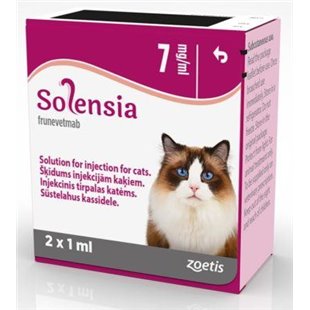
Solensia for Cats – Monthly Injection for Arthritis in Cats
Solensia for Cats is an injection used to help control pain associated with osteoarthritis (arthritis) in cats. It is given as an injection by a veterinary professional, usually once a month. Solensia is designed for long-term management, with the aim of improving day-to-day comfort and supporting normal movement.
Solensia contains frunevetmab, a type of medicine known as a monoclonal antibody. Monoclonal antibodies are proteins that are made to target one specific substance in the body. In this case, Solensia targets a key messenger involved in pain signalling.
Because it is a biological medicine, Solensia works differently from traditional pain relief medicines. It is not a steroid and it is not a non-steroidal anti-inflammatory drug (NSAID). It is also not a general supplement. It is a prescription-only veterinary treatment, supplied and administered under veterinary direction. VETERINARY PRESCRIP...
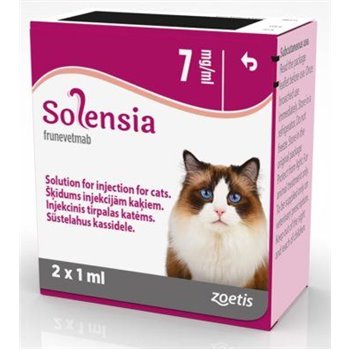
Solensia for Cats – Monthly Injection for Arthritis in Cats
Solensia for Cats is an injection used to help control pain associated with osteoarthritis (arthritis) in cats. It is given as an injection by a veterinary professional, usually once a month. Solensia is designed for long-term management, with the aim of improving day-to-day comfort and supporting normal movement.
Solensia contains frunevetmab, a type of medicine known as a monoclonal antibody. Monoclonal antibodies are proteins that are made to target one specific substance in the body. In this case, Solensia targets a key messenger involved in pain signalling.
Because it is a biological medicine, Solensia works differently from traditional pain relief medicines. It is not a steroid and it is not a non-steroidal anti-inflammatory drug (NSAID). It is also not a general supplement. It is a prescription-only veterinary treatment, supplied and administered under veterinary direction. VETERINARY PRESCRIPTION REQUIRED
How Solensia works
Cats with osteoarthritis often experience ongoing joint pain that affects how they move, rest, groom, and interact. In arthritis, pain is not only caused by the physical changes inside the joint. Pain is also influenced by the way nerves send signals to the brain. Solensia works by binding to nerve growth factor (NGF). NGF is a naturally occurring protein involved in the development and sensitivity of pain pathways. In osteoarthritis, NGF can contribute to increased pain signalling. By attaching to NGF, Solensia reduces NGF’s ability to activate pain receptors on nerves. This can help reduce the intensity of pain signals associated with arthritic joints.
Solensia does not rebuild cartilage or reverse arthritis. It helps manage pain, which can allow a cat to move more comfortably and maintain a better quality of life. Reduced pain can also support more normal activity, which may help preserve muscle strength and joint function over time. What is arthritis in cats? Arthritis in cats usually refers to osteoarthritis, a long-term condition where joints become painful and less flexible. It is common in older cats, but it can affect adults of any age.
Osteoarthritis can develop as a primary age-related change or secondary to other issues such as past injuries, joint abnormalities, or long-standing wear and tear. Inside a normal joint, cartilage provides a smooth surface for movement and helps absorb impact. With osteoarthritis, the joint environment changes. Cartilage can become thinner and less resilient. The underlying bone may remodel. The joint capsule and surrounding tissues can become inflamed and sensitive. These changes contribute to stiffness, discomfort, and reduced range of motion. Cats often hide pain, so arthritis may be missed. Many signs are subtle and develop gradually, which can make changes seem like “normal ageing” when they are actually signs of discomfort. Common signs of arthritis in cats Arthritis can affect one joint or several.
Common signs include:
- Reduced jumping or reluctance to climb stairs or furniture.
- Stiffness, especially after resting, and slower movement.
- Changes in grooming, including a scruffy coat or over-grooming a painful area.
- Changes in litter tray habits, such as avoiding high-sided trays.
- Reduced play, less interaction, or increased irritability when handled.
- Changes in posture, such as a lower head carriage or a guarded walk.
- Weight gain due to reduced activity, which can worsen joint strain.
These signs can overlap with other health problems, so a veterinary assessment is important.
How Arthritis in Cats is diagnosed
Diagnosis often begins with a discussion about behaviour changes at home. A vet may assess gait, posture, joint range of motion, muscle condition, and areas of sensitivity. In some cases, imaging such as X-rays is used to identify joint changes. It is important to understand that X-ray findings do not always match the level of pain. Some cats have significant discomfort with mild imaging changes, and others show obvious joint changes while hiding signs at home. Because cats can be difficult to assess in a clinic environment, vets may also use owner questionnaires or activity observations at home to support diagnosis and track response to treatment. Solensia is usually given as a monthly injection. A vet will decide the correct dose based on body weight and will advise on the treatment plan. Some cats show improvement within the first month, while others need more time. For long-standing arthritis, it may take a few doses to see the full benefit. Improvement is often noticed as easier jumping, more willingness to play, better grooming, or a more relaxed temperament. Regular follow-up helps your vet decide whether Solensia is meeting the treatment goals. Arthritis management is often ongoing, and treatment may be adjusted depending on response, other health conditions, and lifestyle factors. Pain control is a key part of arthritis care, but it is not the only part.
Many cats do best with a combined approach:
- Weight management: Excess weight increases joint loading and can worsen pain.
- Environmental changes: Steps, ramps, and accessible resting places reduce strain.
- Litter tray adjustments: Low-entry trays can reduce discomfort.
- Warm, padded bedding: Helps comfort, especially in colder months.
- Gentle activity: Regular movement can support muscle and flexibility.
- Nutrition: Some diets are designed to support joint health.
A vet may also discuss additional therapies depending on the cat’s needs. Solensia should only be used under veterinary direction. Your vet will consider the cat’s overall health, including kidney disease, heart disease, thyroid conditions, and other common problems in older cats. If a cat is receiving other medicines, your vet will decide what combinations are appropriate. As with all medicines, side effects are possible. Your vet will discuss what to watch for and when to seek advice. If a cat becomes unwell after treatment, veterinary advice should be sought promptly. Ongoing monitoring is particularly important in senior cats, where multiple conditions can exist at the same time.
How does Solensia work differently from NSAIDs?
Solensia is a monoclonal antibody that targets nerve growth factor (NGF), a key pain messenger. NSAIDs work by reducing inflammatory pathways. Solensia focuses on reducing pain signalling linked to arthritis rather than acting as a traditional anti-inflammatory medicine. Your vet will advise what is suitable.
How often is Solensia given to cats?
Solensia is typically given once every month as an injection by a veterinary professional or at home after training. The dose is based on the cat’s weight and the treatment plan is set by the vet. Regular appointments also allow progress to be monitored and adjustments made if needed.
How quickly does Solensia start working?
Some cats show improvement within the first few weeks, while others need longer and may benefit more clearly after several monthly doses. Changes can be subtle, such as easier jumping, more grooming, or improved mood. Your vet may suggest tracking mobility and behaviours at home.
Does Solensia cure arthritis in cats?
Solensia does not cure arthritis or reverse joint changes. It helps control osteoarthritis pain by reducing pain signalling linked to NGF. Managing pain can allow more comfortable movement and better daily function. Many cats benefit from a combined plan that also includes weight control and home adjustments.
What else can help a cat with arthritis at home?
Simple changes can reduce strain, including ramps or steps to favourite places, low-entry litter trays, and warm padded beds. Keeping nails trimmed can improve traction. Maintaining a healthy bodyweight is important. Gentle, regular movement often helps. A vet can advise on diet, supplements, and activity.