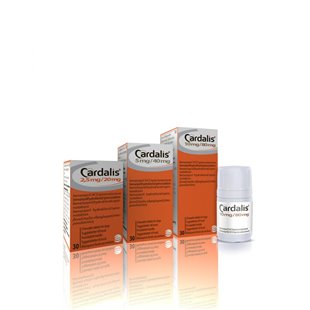
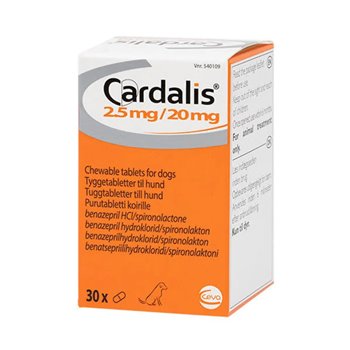
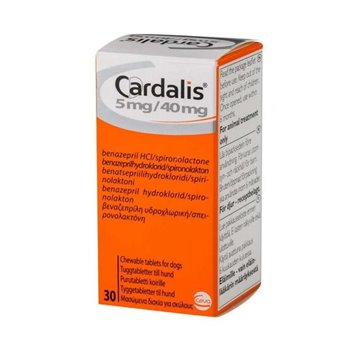
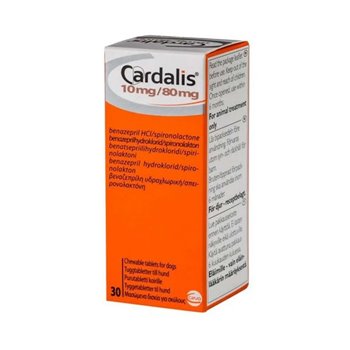
Cardalis for Dogs is a prescription medicine used by veterinary surgeons to help manage congestive heart failure in dogs, most often when it is associated with degenerative mitral valve disease (mitral valve insufficiency). Cardalis combines two cardiac medicines in a single daily dose, so your dog receives both medications without multiple separate tablets.
VETERINARY PRESCRIPTION REQUIRED
Cardalis Tablets are intended for ongoing use once heart failure has been diagnosed, with the goal of easing clinical signs, improving comfort, and supporting quality of life alongside sensible monitoring. Because every dog’s heart condition is a little different, Cardalis Tablets should only be used under veterinary direction, with the strength and dose chosen for your dog’s weight, other medicines, and overall health. Many owners find it reassuring to have a clear, structured treatment plan, and Cardalis Tablets can be one part of that steady routine.
Heart failure in dogs means the heart and its valves are no longer pumping efficiently enough to meet the body’s demands. When forward blood flow drops, the body tries to compensate by increasing circulating fluid and tightening blood vessels, but this can raise pressure in the circulation and lead to congestion.
Left‑sided heart failure is common in older, small‑breed dogs with mitral valve disease and may cause fluid to build up in the lungs (pulmonary oedema), leading to coughing and faster breathing. Right‑sided failure can cause fluid to collect in the abdomen (ascites) or around the lungs (pleural effusion). Dogs may show gradual changes or a sudden flare‑up, and the signs can overlap with airway disease, so a veterinary assessment is essential. Symptoms your vet may ask about include:
- A persistent cough, especially at night or after lying down.
- Faster breathing at rest (tachypnoea) or breathlessness on gentle exercise.
- Tiring more quickly on walks, or seeming less keen to play (exercise intolerance).
- Reduced appetite, weight loss, or general fatigue that is out of character.
- A swollen abdomen from fluid build‑up, or fainting episodes (syncope).
Diagnosis usually involves listening for a heart murmur or arrhythmia, checking respiratory rate and effort, taking chest imaging, measuring blood pressure, and often performing echocardiography, and your vet will then decide whether Cardalis Tablets are suitable for your dog’s specific condition.
Cardalis Tablets work by targeting a hormonal pathway that becomes overactive in heart failure, called the renin–angiotensin–aldosterone system (RAAS). When the heart’s output falls, RAAS activation encourages salt and water retention and constricts blood vessels. In the short term that can help maintain blood pressure, but over time it increases the workload on the heart and worsens congestion. One ingredient in Cardalis Tablets is benazepril, an ACE inhibitor. By reducing the formation of angiotensin II, benazepril promotes vasodilation, helps lower afterload, and reduces the drive for fluid retention, which can improve forward blood flow and ease strain on a failing heart.
The second ingredient in Cardalis Tablets is spironolactone, an aldosterone antagonist with potassium‑sparing diuretic properties. Spironolactone blocks aldosterone at its receptors, helping to limit sodium and water retention while also reducing adverse cardiac remodelling and fibrosis that can occur with chronic heart disease. By combining these complementary actions, Cardalis Tablets are designed to support circulation and help control congestion.
In many dogs, Cardalis Tablets are prescribed as part of a broader plan tailored to the underlying condition and the stage of disease. Your vet may combine them with a loop diuretic such as furosemide to relieve fluid overload, and with other cardiac medicines such as pimobendan where appropriate. The aim is to reduce congestion, improve haemodynamics, and help your dog breathe more comfortably, while keeping treatment as straightforward as possible.
Cardalis Tablets are usually given once daily, and giving them with a meal can make dosing easier and may reduce stomach upset in some pets. Your vet will advise whether the tablets can be divided to achieve an accurate dose, and it is best to follow their instructions rather than altering the tablets at home. If you miss a dose, do not double up; instead, give the next dose at the usual time and let your vet know if missed doses become frequent. Keep a note of all medicines and supplements your dog receives, because interactions can matter in cardiac patients, and your vet may adjust treatment if your dog develops dehydration, vomiting, or diarrhoea.
Most dogs tolerate Cardalis well. Mild digestive signs, such as vomiting, diarrhoea, or a short‑lived reduction in appetite, can occur, particularly when treatment is started or when other medicines are adjusted. Some dogs may seem quieter while their circulation adapts. Because ACE inhibitors and aldosterone antagonists can influence renal perfusion and electrolyte balance, your vet may monitor kidney values (such as urea and creatinine) and electrolytes (especially potassium) with periodic blood tests. This is particularly important in dogs with pre‑existing renal disease, diabetes mellitus, or those receiving other medicines that may affect potassium or blood pressure. Cardalis Tablets are not appropriate for every patient, and vets may avoid them in cases such as severe renal failure, known hyperkalaemia, Addison’s disease (hypoadrenocorticism), or during pregnancy and lactation. If you notice marked lethargy, weakness, collapse, persistent vomiting, very reduced urination, or a sudden worsening of breathing, contact your vet promptly for guidance rather than stopping medication abruptly without support.
Many veterinary teams suggest keeping an eye on resting respiratory rate while your dog is asleep, because an upward trend can be an early sign that congestion is returning. It also helps to note changes in cough frequency, appetite, energy, and weight, and to report anything sudden, such as collapse, marked breathlessness, blue‑tinged gums, or a distended abdomen. Try to keep exercise steady and appropriate for your dog’s stamina, avoid extremes of heat, and ensure constant access to fresh water unless your vet advises otherwise. Regular re‑checks allow your vet to fine‑tune doses, assess blood pressure, and review blood results, which can help keep treatment safe and effective over time. With the right plan and ongoing support, many dogs continue to enjoy affection, gentle walks, and their favourite routines while taking Cardalis Tablets.
What are Cardalis Tablets used for in dogs?
Cardalis Tablets are prescribed by vets to help manage congestive heart failure in dogs, particularly when it is linked to degenerative mitral valve disease. They are used to reduce hormonal drivers of fluid retention and vessel narrowing, which can ease breathing signs and support circulation as part of a wider treatment plan.
How quickly do Cardalis Tablets start working?
Some dogs show easier breathing or better stamina within days, especially when Cardalis Tablets are combined with a diuretic for fluid build‑up. Other benefits, such as stabilising hormones and limiting remodelling, are gradual. Your vet will monitor response over weeks, adjusting medicines based on breathing rate, appetite, and exam findings.
Can Cardalis Tablets be given with furosemide or pimobendan?
Yes, Cardalis Tablets are commonly used alongside other heart medicines, but only your vet can decide the safest combination. Loop diuretics like furosemide help remove excess fluid, while pimobendan can improve cardiac performance in certain cases. Because these drugs affect blood pressure, kidneys, and hydration, follow‑up checks matter.
How do vets diagnose heart failure in dogs?
Diagnosis typically starts with a physical exam, including listening for a murmur or arrhythmia and checking breathing effort. Vets often use chest X‑rays to assess lungs and heart size, blood pressure measurement, and echocardiography to evaluate valves and pumping function. Blood tests may help assess kidney health and overall stability.
Is coughing always a sign of heart failure?
Not always. Coughing can come from airway inflammation, tracheal collapse, bronchitis, infection, or even throat irritation. In heart failure, cough is often linked to pulmonary oedema or an enlarged heart affecting airways, but your vet needs to investigate properly. Never assume coughing is “just old age”.