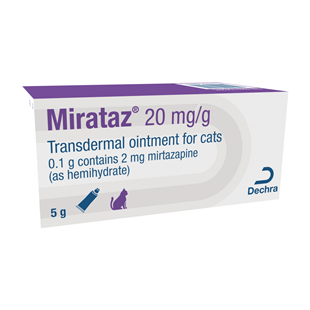
Mirataz for Cats is a prescription ointment used to help manage unintended weight loss by stimulating appetite in cats that have reduced food intake. When a cat loses weight without meaning to, it is rarely just "fussy" eating; it is often a sign of an underlying medical problem such as chronic kidney disease, gastrointestinal upset, dental pain, endocrine disease, or recovery from illness or surgery.
Mirataz for Cats is used in cats that need extra help to start eating again while your vet investigates and treats the root cause. Many owners find the transdermal ointment better because it avoids giving a tablet to a nauseous or reluctant cat.
VETERINARY PRESCRIPTION REQUIRED
The active ingredient in Mirataz for Cats is mirtazapine, a medicine that acts on the central nervous system and is classed clinically as an appetite stimulant. In simple terms, it influences specific receptors involved in appetite, satiety, and nausea signals, which can encourage a cat to feel more willing to eat. Clinically, mirtazapine antagonises presynaptic alpha‑2 adrenergic receptors, which increases the release of noradrenaline and serotonin, and it also blocks certain serotonin receptors (including 5‑HT2 and 5‑HT3). These actions matter because the brain’s appetite centres and the gut–brain nausea pathways use these neurotransmitters to regulate hunger and queasiness. This is why Mirataz for Cats is often helpful for cats that have appetite loss alongside nausea, and why some cats show interest in food within a day of starting treatment.
Mirataz is intended for the management of unintended weight loss, which means it is used when weight reduction is a clinical concern rather than a short‑lived blip. Your vet may recommend Mirataz if your cat’s body condition score is falling, if muscle mass is being lost, or if daily calorie intake is not meeting needs. It can be particularly valuable when poor appetite risks a cycle of further weakness, hepatic lipidosis (fatty liver disease) in overweight cats that stop eating, and delayed recovery. Mirataz for Cats does not replace diagnosis or treatment of the underlying condition, but it can be an important supportive therapy while blood tests, imaging, dental assessment, diet trials, parasite control, or other investigations are underway. Your vet may combine it with a renal diet, a gastrointestinal diet, pain relief, anti‑emetics, or other targeted therapies to help stabilise weight and wellbeing.
Mirataz is supplied as a transdermal ointment that is applied to the inner surface of the ear (the pinna), where it is absorbed through the skin into the bloodstream. Always follow your vet’s instructions exactly, including the dose, frequency, and treatment duration, because these are tailored to your cat’s health status and other medications. In most cases a small, measured amount is applied once daily using the dosing applicator, and many vets advise alternating ears to reduce local irritation. Apply the ointment to the hairless inner flap rather than down the ear canal, and spread it into a thin film. A gentle rub with a gloved finger helps absorption and reduces transfer. If you can see old ointment on the ear, wipe it away before the next dose with a soft, slightly damp cloth, then let the skin dry fully. It is sensible to wear disposable gloves, apply to clean, dry, intact skin, and wash your hands afterwards, because mirtazapine can be absorbed through human skin as well. You should prevent your cat from immediately grooming the ear until the ointment has had a chance to absorb, and you should avoid contact between treated ears and other pets. While many cats tolerate Mirataz well, it helps to know what to watch for, and to contact your vet if you notice concerning changes, including:
- Your cat becomes more vocal or restless than is normal for them.
- Your cat seems agitated, unusually hyperactive, trembles, or paces.
- Your cat vomits, has diarrhoea, drools, or loses interest in food after an initial improvement.
- The ear becomes reddened, scabby, sore, or sensitive where the ointment is applied.
- Your cat develops rapid breathing, a fast heart rate, or marked behavioural changes.
Because Mirataz affects neurotransmitter signalling, it is important to tell your vet about every medicine or supplement your cat is receiving, even if it seems unrelated. Your vet may use extra caution if your cat is on other serotonergic drugs, including some behavioural medicines, certain pain medications, or monoamine oxidase inhibitors, because combining these can increase the risk of adverse effects. In rare circumstances, excessive serotonin activity can lead to a cluster of signs sometimes described clinically as serotonin syndrome, such as agitation, tremors, hyperthermia, or gastrointestinal upset, which is why professional oversight matters. Your vet will also consider your cat’s renal and hepatic function, hydration status, and blood pressure, as these can influence how medicines are processed and tolerated. Mirataz for Cats is intended for cats only, and you should keep it out of reach of children and take particular care if anyone in the household is pregnant, breastfeeding, elderly, or immunocompromised, as accidental exposure should be avoided.
When using Mirataz for Cats, gentle monitoring at home can make the treatment safer and more effective. Weigh your cat regularly on the same scales, note changes in appetite and drinking, and keep an eye on litter tray habits, energy levels, and grooming. If your cat is not showing any improvement in appetite, or if weight continues to drop despite using Mirataz as directed, your vet may need to reassess the dose, review concurrent illness, or adjust the nutrition plan. Likewise, if your cat becomes overly restless, seems disorientated, develops persistent vomiting, or the ear becomes very inflamed, stop applying Mirataz for Cats and speak to your vet promptly for advice. Store the tube as directed, keep the cap tightly closed, and clean the dosing applicator if recommended by your veterinary team, because consistent dosing and good hygiene reduce the risk of skin irritation and dosing errors.
How quickly does Mirataz for Cats start working?
Many cats show improved interest in food within 24 hours of starting Mirataz for Cats, although response varies. Some cats need a little longer if nausea, pain, or systemic illness is still active. If you see no improvement after a couple of days, speak with your vet for guidance.
How do I apply Mirataz for Cats safely?
Apply the measured amount of Mirataz for Cats to the hairless inner surface of the ear as your vet directs. Wear gloves, avoid broken skin, and wash your hands afterwards. Many vets recommend alternating ears daily. Keep treated ears away from other pets and children until the ointment absorbs.
What side effects might Mirataz for Cats cause?
Mirataz for Cats can cause increased vocalisation, restlessness, agitation, vomiting, diarrhoea, drooling, or ear irritation. Less commonly, tremors or a rapid heart rate may occur. If side effects are severe, sudden, or worrying, stop applying the ointment and contact your veterinary practice promptly.
What should I do if I miss a dose of Mirataz for Cats?
If you miss a dose, apply Mirataz for Cats when you remember unless it is close to the next scheduled dose. Do not “double up” without veterinary advice, because excess dosing can increase side effects. If you are unsure what to do, call your vet and describe your cat’s current appetite and behaviour.
Why is my cat losing weight even when they eat sometimes?
Intermittent eating can still lead to a calorie deficit, and weight loss may reflect chronic disease, malabsorption, pain, stress, or metabolic disorders such as hyperthyroidism. Mirataz for Cats can support appetite, but it is not a diagnosis. A veterinary examination and tests are essential if weight loss is persistent.