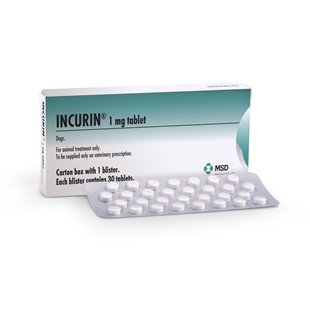
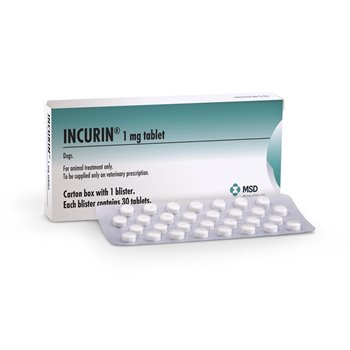
Incurin for Dogs is a prescription veterinary medicine used to treat hormone-dependent urinary incontinence caused by urethral sphincter mechanism incompetence in spayed female dogs. Each tablet contains 1mg of estriol, a short-acting natural oestrogen that acts on the lower urinary tract. The condition is sometimes described as spay incontinence, although it can develop months or years after neutering and should not be dismissed as an unavoidable part of ageing. View 1mg Incurin Product Page.
Affected dogs may leak urine while asleep, leave damp patches where they have been lying, dribble after getting up or lick around the vulva more often. Incurin for Dogs is intended for ovariohysterectomised bitches and is not licensed for intact females, male dogs or dogs younger than one year. Before prescribing it, a vet may examine the dog and test a urine sample because urinary tract infection,...
Incurin for Dogs is a prescription veterinary medicine used to treat hormone-dependent urinary incontinence caused by urethral sphincter mechanism incompetence in spayed female dogs. Each tablet contains 1mg of estriol, a short-acting natural oestrogen that acts on the lower urinary tract. The condition is sometimes described as spay incontinence, although it can develop months or years after neutering and should not be dismissed as an unavoidable part of ageing. View 1mg Incurin Product Page.
Affected dogs may leak urine while asleep, leave damp patches where they have been lying, dribble after getting up or lick around the vulva more often. Incurin for Dogs is intended for ovariohysterectomised bitches and is not licensed for intact females, male dogs or dogs younger than one year. Before prescribing it, a vet may examine the dog and test a urine sample because urinary tract infection, bladder stones, kidney disease, diabetes mellitus, Cushing’s disease, neurological disorders and other problems can produce similar signs.
Urethral sphincter mechanism incompetence occurs when the pressure keeping the urethra closed is not consistently strong enough to prevent urine escaping from the bladder. Following spaying, reduced oestrogen activity can contribute to changes in urethral tone and the sensitivity of tissues involved in continence. The problem is usually involuntary: a well-trained dog may be completely unaware that leakage has occurred, particularly during deep sleep or relaxation. Incurin may be prescribed when the clinical pattern and veterinary investigations indicate that the leakage is hormone dependent. Persistent wetness can irritate the skin around the vulva and inner thighs, causing redness, soreness, odour or secondary dermatitis. Dogs may also smell of urine or become restless after repeatedly waking on damp bedding at night. Urine remaining around the opening of the urinary tract may contribute to infection. Keeping bedding clean and dry can improve comfort, but treating the underlying sphincter weakness is usually needed to control the leakage.
The estriol in Incurin binds to oestrogen receptors in tissues of the lower urinary tract. This can improve the urethra’s ability to remain closed as the bladder fills, reducing involuntary leakage and helping the dog stay dry between normal opportunities to urinate. Estriol is a short-acting oestrogen, and repeated oral dosing does not cause it to accumulate in the body. Incurin for Dogs is not an antibiotic, a diuretic or a drug that simply reduces urine production. It addresses the hormone-responsive component of sphincter weakness, so normal access to fresh water should never be restricted in an attempt to prevent accidents. The medicine controls the signs rather than permanently altering the effects of spaying, and treatment may therefore be ongoing. Some dogs respond to a relatively low dose, while others require adjustment before good continence is achieved. A lack of improvement should prompt veterinary reassessment rather than repeated dose changes at home.
The dose of Incurin must be set for the individual dog and is not calculated solely from body weight. Licensed dosing begins with one 1mg tablet daily, after which the vet may reduce or increase the amount according to the response, always aiming for the lowest dose that maintains continence. Response is assessed from continence and unwanted effects. The authorised range is normally half a tablet to two tablets per dog per day, and some stable dogs may later be managed on treatment every other day when specifically directed by their vet. Owners should follow the dispensing label exactly and should not alter the dose because leakage returns for a night or two. Give Incurin for Dogs consistently, keep a simple record of wet nights or daytime dribbling, and tell the vet about any other medicines or supplements being used. If a dose is forgotten, contact the prescribing practice or follow its missed-dose advice; do not give an extra or double dose unless instructed. Dogs receiving longer-term treatment should be re-examined regularly, with the product information recommending review every six months.
What is Incurin for Dogs used for?
Incurin for Dogs is used to treat hormone-dependent urinary incontinence caused by urethral sphincter mechanism incompetence in spayed female dogs. It may be prescribed when a dog leaks urine while sleeping or resting and a vet has excluded other causes such as infection, bladder disease or increased urine production.
How does Incurin for Dogs work?
Incurin contains estriol, a short-acting natural oestrogen. Estriol acts on oestrogen-sensitive tissues in the lower urinary tract and can improve urethral closure pressure. This helps the urethral sphincter remain closed as the bladder fills, reducing involuntary urine leakage without deliberately reducing the amount of urine produced.
How quickly does Incurin work in dogs?
Response times vary between dogs, and continence may improve as the vet establishes the most effective individual dose. Keep a record of wet bedding, daytime dribbling and any side effects during the early treatment period. Contact the prescribing vet if leakage continues or becomes worse rather than changing the dose yourself.
How long can a dog take Incurin?
Many dogs need ongoing treatment because Incurin controls hormone-responsive sphincter weakness rather than permanently curing it. The vet should use the lowest dose that keeps the dog continent and reassess long-term patients regularly. The product information recommends a veterinary examination every six months during treatment, even when control appears stable.
Can an unspayed female dog take Incurin?
Incurin should not be used in an intact female dog because its effectiveness has only been established in spayed females. It is also unsuitable for dogs younger than one year and dogs showing excessive thirst and urination until those signs have been investigated. Always give it only to the dog named on the prescription.
What side effects can Incurin cause?
Possible oestrogenic effects include a swollen vulva, mammary gland enlargement, increased attractiveness to male dogs and vomiting, particularly at the highest recommended dose. Vaginal bleeding and hair loss are reported rarely. Contact the vet if any unusual sign develops, as dose adjustment may be needed rather than abrupt withdrawal.