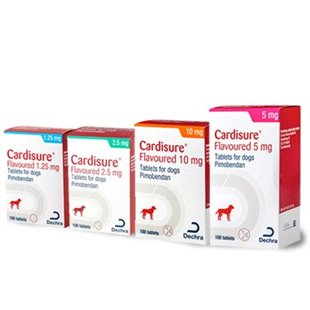
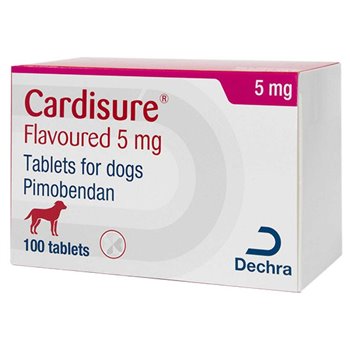
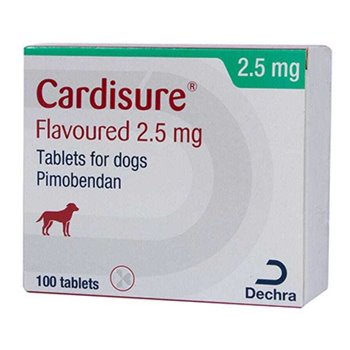
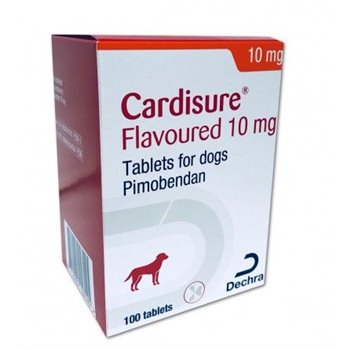
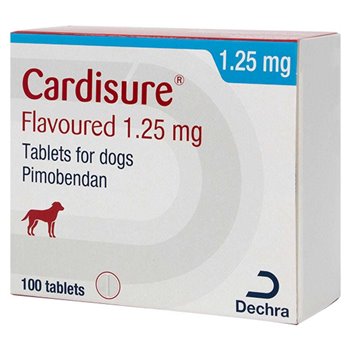
Cardisure Tablets are a prescription-only veterinary medicine used to treat canine congestive heart failure in dogs caused by valvular insufficiency, including mitral or tricuspid regurgitation, or by dilated cardiomyopathy. Each Cardisure tablet contains pimobendan, a cardiac medicine that helps the heart pump more effectively while easing resistance within the blood vessels.
Cardisure Tablets are available in 1.25mg, 2.5mg, 5mg and 10mg strengths. The tablets are flavoured and scored, which may make administration easier when a divided dose has been prescribed. Treatment should begin only after a veterinary diagnosis, which may involve auscultation, chest radiographs, echocardiography, an electrocardiogram and blood tests.
Congestive heart failure occurs when the heart can no longer move blood efficiently enough to meet the body’s needs. With valvular insufficiency, a heart valve does not close properly, so blood leaks backwards with each beat. Mitral valve disease is common in older, smaller dogs, although any dog can be affected. Dilated cardiomyopathy is different: the heart muscle becomes weakened, reducing the force of contraction. As pressure builds, fluid may accumulate in the lungs, chest or abdomen. Common signs vary, but owners may notice the following changes:
- A cough may become more noticeable at night, after rest or following activity.
- Breathing may become faster, noisier or more effortful.
- Exercise tolerance may fall, with the dog tiring earlier than usual.
- Weakness, fainting or collapse may occur when circulation is reduced.
- Appetite, body weight and general interest in activities may decline.
- The abdomen may appear enlarged if fluid begins to collect.
These signs are not specific to heart failure, so a veterinary examination is essential. Cardisure Tablets should not be started solely because a murmur has been detected; the veterinarian must decide whether cardiac insufficiency is present and whether pimobendan is appropriate.
Cardisure Tablets work through the dual action of pimobendan, which is described as an inodilator. First, pimobendan increases the sensitivity of the cardiac muscle fibres to calcium. This produces a positive inotropic effect, helping the heart contract with greater strength. Second, it inhibits phosphodiesterase type III, causing vasodilation, or wider blood vessels. Reduced vascular resistance means the heart does not have to work as hard to move blood around the body. Together, these effects can improve cardiac output and help relieve consequences of poor circulation and congestion. Cardisure Tablets are not a diuretic, so they do not directly remove excess fluid. A dog with pulmonary oedema or other fluid accumulation may also need furosemide or another prescribed diuretic, while some dogs receive additional medicines chosen for their particular diagnosis. The combination must be planned by the veterinary surgeon because each medicine has a different purpose and may affect monitoring requirements.
The response to Cardisure Tablets can differ between dogs and depends on disease stage and other health problems. Some owners notice improved energy, easier breathing or greater willingness to walk when treatment controls the heart failure, but improvement should be assessed alongside veterinary findings rather than appearance alone. The veterinarian may recommend recording the dog’s sleeping respiratory rate, appetite, activity level, coughing episodes and any fainting or weakness. A sustained rise in resting breathing rate, new breathing effort, blue or very pale gums, collapse, or marked distress requires urgent veterinary attention. Follow-up checks may include listening to the heart and lungs, measuring body weight and blood pressure, repeating imaging, and testing kidney function or electrolytes when diuretics are used. Cardisure Tablets are commonly given as long-term treatment, and doses should never be changed because the dog seems better or worse without speaking to the prescribing practice. Consistent administration and accurate observations give the veterinary team useful information for keeping treatment proportionate to the dog’s needs.
Cardisure Tablets must be given as directed on the prescription. Pimobendan is generally divided into two daily doses, approximately 12 hours apart, but the tablet strength and fraction are individual. Each dose should be given on an empty stomach, approximately one hour before food, because food can reduce absorption. The 1.25mg tablet can be divided into two equal parts, while the 2.5mg, 5mg and 10mg tablets can be divided into four equal parts. Use only the fraction stated by the veterinarian, and do not exceed the recommended dose. If a dose is missed, contact the veterinary practice or dispensing pharmacy for advice rather than giving a double dose. Divided tablets should be returned to the opened blister and used within three days. Do not store the medicine above 30°C. Keep it out of the sight and reach of children and animals. Because Cardisure Tablets are flavoured, secure storage is important to prevent a dog eating several tablets accidentally.
Cardisure Tablets are not suitable for every cardiac condition. They must not be used in hypertrophic cardiomyopathy or where increasing cardiac output is not possible for functional or anatomical reasons, such as aortic stenosis. Care is required in dogs with severe hepatic insufficiency, and blood glucose should be monitored in diabetic dogs receiving pimobendan. The safety of Cardisure Tablets has not been established during pregnancy or lactation, so breeding animals require a veterinary benefit-risk assessment. Tell the veterinarian about all medicines, supplements and health conditions, because verapamil or propranolol may reduce pimobendan’s effect on contractility. Report any adverse reaction promptly. Rare effects can include vomiting, diarrhoea, reduced appetite, lethargy, an increased heart rate or increased mitral regurgitation; very rare reports include small mucosal blood spots or bleeding beneath the skin. Accidental overdose can cause vomiting and a faster heart rate and needs immediate veterinary advice. People should wash their hands after handling the tablets, and accidental human ingestion, especially by a child, requires urgent medical attention with the packaging available.
What are Cardisure Tablets used for in dogs?
Cardisure Tablets are used to treat canine congestive heart failure caused by leaking mitral or tricuspid valves, or by dilated cardiomyopathy. They contain pimobendan, which helps the heart pump more effectively and widens blood vessels. A veterinary surgeon must confirm the diagnosis and decide whether this treatment is appropriate.
How do Cardisure Tablets work?
Cardisure Tablets contain pimobendan, an inodilator with two complementary actions. It increases the heart muscle’s sensitivity to calcium, helping contractions become stronger, and inhibits phosphodiesterase type III, encouraging blood vessels to widen. This can improve cardiac output while reducing the resistance against which the heart must pump.
What is canine congestive heart failure?
Canine congestive heart failure develops when the heart cannot circulate blood efficiently and pressure causes fluid to collect, often in the lungs or abdomen. Dogs may cough, breathe faster, tire easily, lose appetite or collapse. These signs require veterinary assessment because respiratory and other diseases can cause similar symptoms.
Should Cardisure Tablets be given with food?
Cardisure Tablets should usually be given on an empty stomach, approximately one hour before feeding. Food can reduce the absorption of pimobendan, so timing matters. Follow the prescription label and your veterinary surgeon’s instructions closely. Ask the prescribing practice before changing the routine if dosing around meals is difficult.
How often should a dog take Cardisure Tablets?
Pimobendan is generally given in two daily doses approximately 12 hours apart, but the exact strength and tablet fraction depend on the dog’s weight and condition. Give Cardisure Tablets exactly as prescribed, without adjusting the dose yourself. Accurate weighing and regular veterinary reviews help keep dosing appropriate as heart disease changes.
What side effects can Cardisure Tablets cause?
Reported adverse effects are rare or very rare, but Cardisure Tablets can cause vomiting, diarrhoea, reduced appetite, lethargy or an increased heart rate. Increased mitral valve regurgitation has also been reported during long-term treatment. Contact your veterinary surgeon about any suspected reaction, sudden deterioration, unusual bleeding or change in breathing.
Can Cardisure Tablets be used with furosemide or other heart medicines?
Cardisure Tablets may be prescribed alongside a diuretic such as furosemide and, in some cases, other cardiac medicines. Each drug addresses a different part of heart failure management. Tell the veterinary surgeon about every medicine and supplement your dog receives, because combinations can alter effects, monitoring needs or dose decisions.