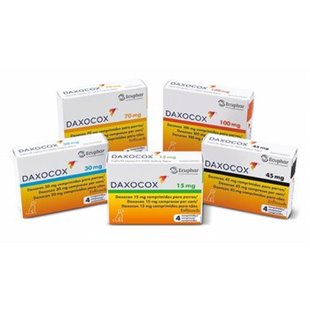
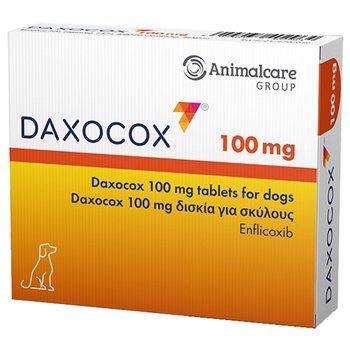
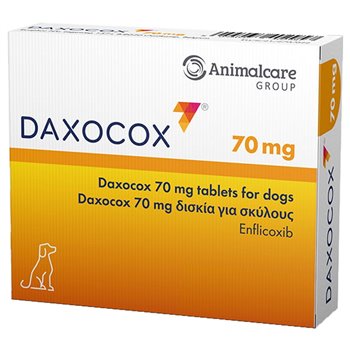
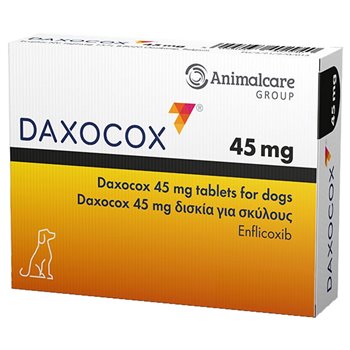
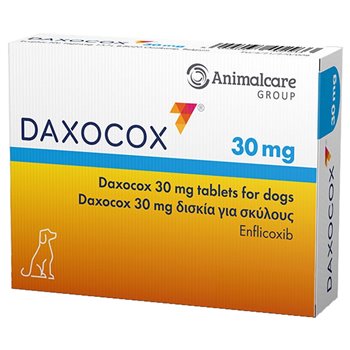
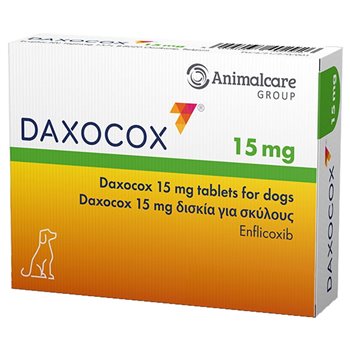
Daxocox Tablets for Dogs are a prescription non-steroidal anti-inflammatory medicine (an NSAID) used to manage pain and inflammation associated with osteoarthritis, also known as degenerative joint disease. When joints are sore, everyday actions such as getting up after a nap, turning, climbing stairs, jumping on the sofa or getting into the car can become uncomfortable. Many dogs try to cope quietly, so early signs can look like “slowing down with age” rather than obvious lameness.
VETERINARY PRESCRIPTION REQUIRED
In osteoarthritis, cartilage becomes worn and less able to cushion movement, the joint capsule can thicken, and surrounding soft tissues may become inflamed. The body releases inflammatory mediators, including prostaglandins, which contribute to pain, swelling, heat and stiffness. The active ingredient in Daxocox Tablets is enflicoxib, a “coxib” medicine that selectively inhibits cyclo-oxygenase-2 (COX-2), an enzyme that becomes more active during inflammation. By reducing COX-2 activity, Daxocox Tablets lower prostaglandin production and therefore reduce inflammatory pain. Enflicoxib is also converted into an active metabolite that persists in the body for longer, which is one reason Daxocox Tablets can be dosed weekly as directed by your vet. Although COX-2 selectivity is designed to help preserve some normal protective processes (such as in the stomach and kidneys), every NSAID still needs sensible, vet-led use.
Osteoarthritis can be easy to miss early on because signs often wax and wane with weather, activity, body weight and fatigue. You might notice subtle changes after rest, on colder mornings, or after a longer walk than usual, and your dog may still have “good days” that mask the underlying problem. Daxocox Tablets are used to treat the pain and inflammation associated with osteoarthritis, and they may be considered when joint discomfort is affecting comfort, activity or behaviour. Common signs that often prompt a veterinary assessment include:
- Your dog limps or shortens a stride, especially when first getting up or after exercise.
- Your dog hesitates on stairs, avoids jumping, or struggles to get into the car.
- Your dog looks stiff through the hips, elbows, neck or back when turning, stretching or shaking.
- Your dog becomes less playful, tires sooner, or seems reluctant to go for walks that used to be easy.
- Your dog licks at a joint, pants at rest, or is less tolerant of being handled around sore areas.
These signs can also occur with other conditions, such as a ligament injury, spinal pain or neurological disease, so it is important that a vet confirms the cause before starting Daxocox Tablets. Your vet may diagnose osteoarthritis based on history and a clinical examination, and they may recommend imaging such as radiographs if it will help guide long-term management.
Many owners find Daxocox Tablets useful because the dosing routine is straightforward once it is established. In most cases your vet will prescribe an initial loading dose followed by a once-weekly maintenance dose, and they will advise the correct strength and schedule for your dog’s weight and health status. Daxocox Tablets are usually given by mouth immediately before or with a meal, because giving the tablet with food can improve tolerance and support consistent absorption. Some dogs show a noticeable improvement in comfort within a day of the first dose, while others improve more gradually over the first one to two weeks as inflammation settles and movement becomes easier. Try to give Daxocox Tablets on the same day each week, as consistency helps reduce the chance of “breakthrough” discomfort between doses. If your dog vomits shortly after taking Daxocox Tablets, or if you miss a dose, speak to your vet for tailored advice rather than trying to double up at home.
As with any prescription NSAID, suitability matters, and your vet will balance benefit against risk for your individual dog. Daxocox Tablets must not be used at the same time as other NSAIDs or corticosteroids unless your vet specifically directs this, because combining anti-inflammatory drugs can increase the risk of gastrointestinal irritation, ulceration or bleeding, and your vet may advise a washout period when switching from another product. Daxocox Tablets are not suitable for every patient, including dogs with certain gastrointestinal disorders, haemorrhagic disorders, or significant renal, hepatic or cardiac disease. Your vet may recommend a clinical check and, in some cases, blood tests before longer-term use, especially for older dogs or those with other health conditions. Most dogs tolerate Daxocox Tablets well, but possible side effects can include vomiting, diarrhoea, reduced appetite, lethargy, increased thirst, or darker stools. If you notice persistent tummy upset, weakness, blood in vomit or stools, or any sudden deterioration, stop the medicine and contact your vet promptly. Always tell your vet about any other medicines, supplements, or recent illness (including dehydration) before starting Daxocox Tablets.
Daxocox Tablets work best when used in conjunction with with practical lifestyle support for aching joints. Osteoarthritis is progressive, so the goal is usually to keep your dog comfortable, active and confident, while minimising flare-ups and protecting remaining joint function. A simple diary of mobility, ability to rise, willingness to exercise and comfort at rest can help you and your vet judge how well Daxocox Tablets are working over time, and it gives you a clear way to spot small changes early. Many dogs benefit from steady, joint-friendly exercise, weight management to reduce mechanical strain, and home adjustments such as rugs for grip, a supportive bed, and a ramp for getting into the car. Some dogs also do well with physiotherapy or hydrotherapy, and your vet can advise which options suit your dog’s condition and temperament. Regular rechecks are useful because pain can change as arthritis progresses or as other issues appear, and your vet may help you integrate Daxocox Tablets into a broader plan so pain relief supports, rather than replaces, long-term joint care.
What is Daxocox used to treat in dogs?
Daxocox Tablets are used to treat pain and inflammation associated with osteoarthritis (degenerative joint disease) in dogs. Vets may prescribe it for chronic joint conditions affecting hips, elbows, knees or the spine, where ongoing inflammation contributes to stiffness, reduced range of motion and discomfort during everyday activity.
How quickly will Daxocox Tablets start to help my dog?
Some dogs show a noticeable improvement within 24 hours of the first dose, especially after the initial loading dose, but response varies. Pain from osteoarthritis can fluctuate, so you may notice gradual changes over the first one to two weeks, such as easier rising, longer walks, and less limping after rest.
How often are Daxocox Tablets given?
Daxocox Tablets are typically given once weekly after an initial loading dose, following your vet’s instructions. This weekly schedule is linked to the way the medicine forms an active metabolite that provides sustained COX-2 inhibition. Always give the exact dose for your dog’s weight and do not change the timetable without advice.
Should Daxocox Tablets be given with food?
Yes, Daxocox Tablets are usually given immediately before or with a meal. Food helps with tolerance for many dogs and supports consistent absorption. If your dog is a fussy eater, ask your vet or pharmacist about practical ways to give the tablet safely, rather than splitting or crushing it without guidance.
What side effects should I watch for with Daxocox Tablets?
Most dogs tolerate Daxocox Tablets well, but NSAIDs can occasionally cause vomiting, diarrhoea, reduced appetite, lethargy or darker stools. Less commonly, there can be effects on the kidneys or liver. If you see persistent tummy upset, weakness, blood in vomit or stools, or sudden worsening, stop the medicine and contact your vet promptly.