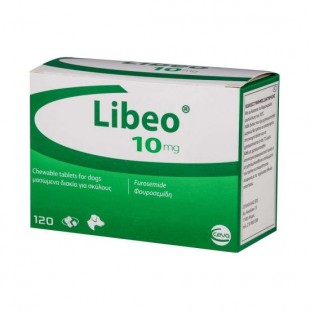
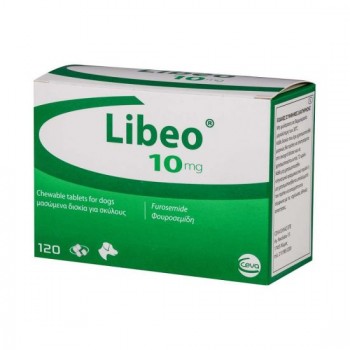
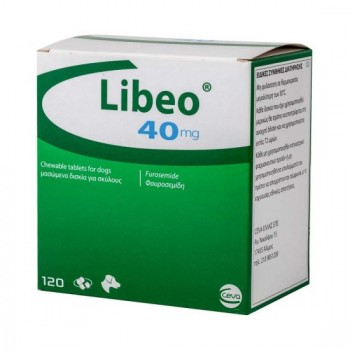
Libeo for Dogs is a prescription-only veterinary medicine used to help control the fluid build-up that can accompany heart failure. Libeo contains furosemide, a potent loop diuretic, and it is prescribed for the treatment of ascites and oedema, particularly when these signs are associated with cardiac insufficiency.
VETERINARY PRESCRIPTION REQUIRED
When a dog’s heart is struggling, fluid can accumulate in the lungs (pulmonary oedema), around the lungs (pleural effusion), or within the abdomen (ascites), and that congestion can cause coughing, breathlessness, and reduced stamina. By helping the body remove excess salt and water, Libeo can ease these clinical signs and support comfort day to day. Libeo does not cure the underlying heart disease, but it can be an important part of a treatment plan that aims to stabilise symptoms, preserve quality of life, and reduce the chance of fluid crises. Because it is a diuretic with a strong effect, Libeo is used under veterinary direction, and the dose is adjusted to the lowest effective level for your dog.
In dogs, heart failure (often called congestive heart failure) means the heart can no longer pump efficiently enough to meet the body’s demands without triggering compensatory changes. Reduced cardiac output can activate hormone systems, including the renin–angiotensin–aldosterone system, which promotes retention of sodium and water. Over time, this extra fluid raises venous pressure and can leak into tissues and body cavities, leading to congestion rather than true weight gain. Your vet may recommend Libeo when there is evidence that fluid is contributing to your dog’s symptoms, and when a physical examination suggests crackles in the lungs, a new heart murmur, or fluid distension. Some common signs that may be linked to congestive changes include:
- A persistent cough, especially at night or after exercise.
- Faster or more laboured breathing, or visible effort when resting or lying down.
- Reduced stamina, reluctance to walk, or tiring more quickly than usual.
- A swollen abdomen, increased girth, or discomfort linked to ascites.
- Restlessness, reduced appetite, and unsettled sleep due to respiratory effort.
Not every dog shows every sign, and several other conditions can look similar, so diagnosis and monitoring often involve chest imaging, echocardiography, blood tests, and blood pressure measurement.
Libeo works in the kidneys, where furosemide inhibits electrolyte reabsorption in the renal tubules and the ascending loop of Henle. When sodium and chloride are not reabsorbed as efficiently, water follows them into the urine, increasing urine volume (diuresis) and reducing the amount of fluid circulating in the bloodstream. This “off-loading” effect can lower the pressure that drives fluid into the lungs or abdomen, which is why Libeo can be particularly helpful when pulmonary oedema or ascites is limiting breathing or causing abdominal discomfort. Many dogs start to pass more urine within hours of a dose, and vets often time medication schedules so the peak effect is manageable at home.
Clinically, reducing fluid in the chest can ease tachypnoea and orthopnoea, improve oxygenation, and allow your dog to rest more comfortably, while reducing abdominal fluid can improve appetite and mobility. It is normal for your vet to reassess regularly, because the goal is to balance decongestion with good hydration and stable kidney function.
Heart failure management is usually a combination approach rather than a single medicine, and Libeo is often used alongside other cardiac treatments. Depending on the diagnosis and stage of disease, your vet may prescribe an ACE inhibitor to moderate fluid-retaining hormone signals, pimobendan to support cardiac contractility and improve haemodynamics, and spironolactone for additional aldosterone blockade and gentle diuretic support. These medicines act on different pathways, which can make symptom control more reliable than relying on one drug alone.
Because diuretics can influence renal perfusion and electrolyte balance, monitoring is a normal and reassuring part of care, rather than a sign that anything is “going wrong”. Your vet may check hydration status, urea and creatinine, and serum electrolytes such as sodium and potassium, especially when Libeo is started, when other medicines are introduced, or when your dog’s breathing pattern changes. If adjustments are needed, they are usually small and guided by clinical response and simple tests.
Libeo chewable tablets are designed to be practical for ongoing use and accurate dose adjustment. The tablets are flavoured, so many dogs accept Libeo readily, and they can be given directly by mouth or with a small amount of food offered before the main meal. Each Libeo tablet is scored so it can be divided into halves or quarters, which helps your vet tailor dosing to body weight and fine-tune therapy over time. Because Libeo increases urine production, you may notice more frequent toileting and increased thirst, so easy access outside and sensible routines are helpful. If your vet advises limiting excessive drinking, do not restrict water harshly, and always prioritise normal hydration, especially during hot weather or after exercise. Some owners find it best to avoid giving Libeo right before bedtime, because the diuretic effect can lead to night-time waking. Store Libeo securely, as flavoured tablets can be attractive to pets, keep it in the blister until use, and follow any advice about using part tablets within the recommended time window.
Like all diuretics, Libeo can cause side effects related to fluid loss and mineral balance. Increased thirst and urination are expected, but marked lethargy, weakness, a sudden drop in appetite, vomiting, diarrhoea, or a dry, tacky mouth can suggest dehydration or an electrolyte disorder such as hypokalaemia or hyponatraemia, particularly during prolonged treatment. If your dog seems faint, unusually wobbly, or their breathing suddenly worsens, contact a vet urgently, as congestive heart failure can change quickly. Libeo is not suitable for every dog, and it is used with extra caution in patients with dehydration, low blood pressure, kidney disease, diabetes mellitus, or significant liver disease. It can interact with other medicines that affect electrolytes, and your vet may adjust the plan if NSAIDs, corticosteroids, or certain antibiotics are needed. Following the prescribed schedule and attending monitoring checks helps Libeo remain both effective and safe.
How does Libeo work?
Libeo contains furosemide, a loop diuretic. It acts in the kidneys to reduce reabsorption of sodium and chloride, so more water is passed in the urine. This diuresis lowers circulating fluid volume and can reduce pulmonary oedema or ascites, improving comfort while the underlying heart disease is managed.
How quickly will Libeo start to work?
Many dogs begin to urinate more within a few hours of taking Libeo, because furosemide is absorbed and starts increasing urine output fairly quickly. The exact timing varies with the dose, your dog’s health, and other medicines. If breathing or coughing worsens at any time, contact a vet urgently.
What heart failure signs can Libeo help with?
Libeo can help when symptoms are driven by fluid congestion, such as rapid or laboured breathing, coughing linked to pulmonary oedema, abdominal swelling from ascites, and reduced exercise tolerance. It does not repair the heart itself, but by reducing fluid load it can make resting, eating, and gentle activity feel easier.
What side effects should I watch for with Libeo?
Increased thirst and urination are expected with Libeo. Contact your vet if you notice marked lethargy, weakness, poor appetite, vomiting, diarrhoea, or signs of dehydration such as a dry mouth. Some dogs can develop electrolyte changes like low potassium, so monitoring is important during longer-term treatment.
What if I miss a dose of Libeo?
If a dose is missed, follow your vet’s advice or contact the practice for guidance, because heart failure plans are individual. In general, avoid giving a double dose to “catch up” unless a vet tells you to. If your dog seems more breathless, collapses, or will not settle, seek urgent veterinary help.