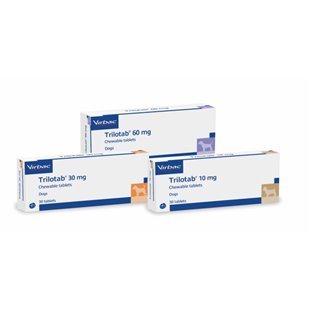
Trilotab for Dogs is a prescription veterinary medicine used to manage Cushing’s syndrome in dogs, a hormonal disorder also known clinically as hyperadrenocorticism. Cushing’s happens when the body produces excessive cortisol for a prolonged period.
Cortisol is a natural steroid hormone made by the adrenal glands and it plays useful roles in metabolism, immune regulation, appetite, and the way the body responds to stress. When cortisol stays too high for weeks or months, it can gradually affect the skin, muscles, liver, and urinary tract, and it can leave dogs feeling thirsty, hungry, and unsettled.
Trilotab is used under veterinary direction, with follow-up checks to tailor treatment to the individual dog, and it is intended to improve comfort while reducing risks linked to long-term hormone imbalance. High cortisol can also thin the skin and reduce resistance to infection, which explains why some dogs bruise easily or develop recurrent flare-ups.
Cushing’s syndrome in dogs is most often caused by pituitary-dependent hyperadrenocorticism, where a small (usually benign) change in the pituitary gland leads to persistent signalling of the adrenal glands to produce cortisol. Less commonly, an adrenal gland tumour produces cortisol directly (adrenal-dependent hyperadrenocorticism). These causes are different, but the effects of cortisol excess can look very similar at home and they often develop slowly, which is why they are sometimes mistaken for normal ageing or “slowing down”. Owners often notice changes such as:
- increased thirst (polydipsia) and increased urination (polyuria)
- increased appetite (polyphagia), scavenging, or gradual weight gain
- panting, restlessness, reduced stamina, or lethargy
- a rounded “pot-bellied” appearance, muscle weakness, or difficulty jumping
- thinning coat, symmetrical hair loss, fragile skin, or slow wound healing
- recurrent ear, skin, or urinary tract infections
Because long-term cortisol excess can contribute to hypertension, diabetes mellitus, pancreatitis, urinary infections, and poor wound healing, diagnosis and treatment are about protecting long-term health as well as improving what you see day to day. Your vet may also check for concurrent problems such as bladder stones, chronic skin disease, or arthritis that can become more noticeable when Cushing’s is present and before Trilotab for Dogs is started.
Trilotab Tablets contains trilostane, a medicine designed to lower cortisol production within the adrenal glands. Trilostane works by inhibiting an enzyme required for steroid hormone synthesis in the adrenal cortex (often described as inhibition of 3β-hydroxysteroid dehydrogenase). In practical terms, Trilotab for Dogs reduces the adrenal glands’ ability to manufacture cortisol, helping circulating levels move towards a safer range. This is a control medication rather than a cure, because it does not remove the underlying pituitary or adrenal cause. Many dogs begin to drink and urinate less as treatment stabilises, and appetite and energy can become more manageable, but improvements are not always immediate and can be subtle at first. Coat and muscle improvements can take longer than thirst and appetite changes, so it is normal for progress to happen in stages. Tablets are typically given as directed by your vet, often with food, and consistency matters because cortisol production can rise again if doses are missed.
Testing and ongoing monitoring are a key part of using Trilotab safely, because the goal is to reduce cortisol without suppressing it too far. Your vet may use screening tests such as a low-dose dexamethasone suppression test, an ACTH stimulation test, or a urine cortisol:creatinine ratio to support the diagnosis, alongside blood and urine tests that assess liver enzymes, kidney values, glucose, cholesterol, urine concentration, and evidence of infection. Imaging, such as ultrasound, can help evaluate the adrenal glands and support decision-making about the type of Cushing’s present. After Trilotab for Dogs is started, follow-up tests help confirm the response and guide dose adjustments, as every dog metabolises medication differently. If your dog has other conditions or takes other medicines (for example anti-inflammatories, insulin, or corticosteroids), tell your vet so the plan can be tailored appropriately. Rechecks are often more frequent at first and then spaced out, and your vet will combine test results with how your dog is behaving at home.
Like all prescription medicines, Trilotab for Dogs can cause side effects, and understanding what to watch for can make treatment feel less daunting. Some dogs develop temporary gastrointestinal signs such as reduced appetite, vomiting, diarrhoea, or mild tiredness, particularly after treatment is started or when doses are adjusted. These signs should always be discussed with your vet, as they can also indicate that cortisol is dropping too low. More significant reactions are uncommon but important, and they are usually linked to iatrogenic hypoadrenocorticism (Addisonian-type signs), where the body does not have enough cortisol to cope. Seek veterinary advice urgently if your dog seems unusually weak, wobbly, collapsed, shaking, disorientated, or has persistent vomiting or diarrhoea. Your vet may also check electrolytes, as low cortisol can be associated with changes such as hyponatraemia and hyperkalaemia. Do not change the dose of Trilotab for Dogs, stop suddenly, or give an extra dose without veterinary guidance.
Day-to-day care can support the medical benefits of Trilotab for Dogs while your dog’s cortisol levels are being brought under control. Until signs improve, plan for extra toilet breaks and ensure constant access to fresh water, because polydipsia and polyuria are uncomfortable and can lead to accidents. Gentle, regular exercise can help rebuild muscle tone and maintain mobility, but it is best to increase activity gradually and follow your dog’s pace, especially if there is muscle weakness or breathlessness. Skin and ear care are also important, as dogs with Cushing’s are prone to infections; keeping up with grooming, parasite control, and prompt treatment of sore patches can prevent flare-ups. Many owners find it helpful to keep a simple diary of thirst, appetite, weight, and coat condition so they can share clear observations at check-ups, particularly during early adjustments with Trilotab for Dogs. Measured meals and steady weight control support joints and stamina, and a simple diary of drinking and toileting can be very useful during early adjustments.
What is Trilotab for Dogs used for?
Trilotab is prescribed to manage Cushing’s syndrome (hyperadrenocorticism) in dogs. It helps control the overproduction of cortisol so symptoms such as excessive thirst, increased urination, and constant hunger become more manageable. It is used under veterinary supervision with regular monitoring to keep cortisol in a safe range.
How does Trilotab for Dogs work in the body?
Trilotab Tablets contains trilostane, which reduces cortisol production inside the adrenal glands. It blocks an enzyme involved in steroid hormone synthesis, so the glands make less cortisol for part of the day. The aim is to control clinical signs while still leaving enough cortisol for normal body function.
How quickly will I see improvement after starting Trilotab Tablets?
Some dogs drink and urinate less within the first couple of weeks, while other improvements take longer. Appetite and panting may settle gradually, and skin, coat, and muscle changes can take months. Your vet will use follow-up checks alongside your observations at home to guide adjustments.
What tests will my vet do when my dog is on Trilotab?
Monitoring usually includes blood and urine tests to assess overall health and detect infections, plus hormone testing to evaluate cortisol control. Many practices use an ACTH stimulation test, and some will also check kidney and liver values, glucose, and electrolytes. Rechecks are often more frequent at the start.
Does Trilotab for Dogs cure Cushing’s syndrome?
Trilotab for Dogs is used to control Cushing’s rather than cure it. It helps reduce cortisol so symptoms improve and complications are less likely, but it does not remove the pituitary or adrenal cause. Most dogs need ongoing treatment and periodic reassessment to stay stable.