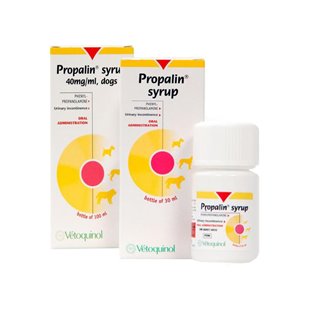
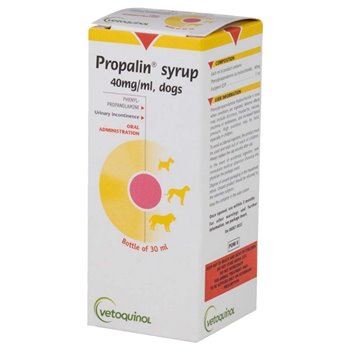
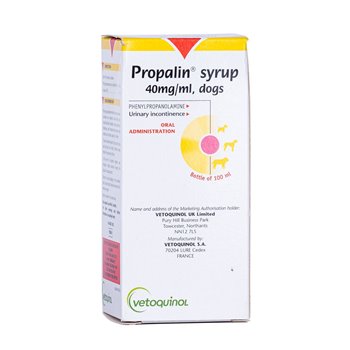
Propalin for Dogs is a prescription veterinary medicine used to help manage urinary incontinence, most commonly in dogs with urethral sphincter mechanism incompetence (USMI). In many cases this is not a training issue or a sudden change in temperament, but a physical reduction in the strength of the urethral “seal” that normally keeps urine inside the bladder.
VETERINARY PRESCRIPTION REQUIRED
Propalin Syrup improves urethral tone, helping many dogs stay comfortable and dry. Used under veterinary guidance, Propalin Syrup can reduce leaking, protect the skin from urine scald, and ease the stress that incontinence can cause for both you and your pet. Many dogs use Propalin Syrup long term, with regular veterinary reviews. Staying dry helps prevent skin irritation and restores confidence.
Urinary incontinence associated with USMI happens when the urethral sphincter (the muscular valve at the bladder neck and urethra) loses tone and cannot maintain sufficient urethral closure pressure. It is particularly common in middle‑aged to older spayed bitches, where hormonal changes and altered soft‑tissue support can contribute to weaker sphincter function, but it can also affect neutered males and some younger dogs.
Leakage from USMI is usually passive, meaning it can occur without your dog squatting or seeming aware, and it often shows up when they are relaxed or asleep. You might notice:
- Your dog’s bedding becomes damp after rest, even when they have toileted normally.
- Small amounts of urine drip when your dog stands up or changes position.
- Your dog licks their genital area more than usual and may smell of urine.
- The skin around the vulva or prepuce becomes red, sore, or scalded.
- Recurrent mild dermatitis develops on the inner thighs or under the tail.
Because other conditions can look similar, a veterinary assessment is important before starting Propalin Syrup. Your vet may recommend an examination, urinalysis and sometimes culture to rule out urinary tract infection, and occasionally blood tests or imaging to check for bladder stones, endocrine disease, or neurological causes.
Propalin Syrup works by enhancing the body’s natural “tightening” signals in the lower urinary tract. The active ingredient, phenylpropanolamine, is an alpha‑adrenergic agonist, which means it stimulates receptors that increase tone in the smooth muscle of the urethra and bladder neck. In practical terms, this helps the urethral sphincter close more effectively and raises urethral closure pressure, reducing leakage in dogs where the underlying problem is sphincter weakness. Propalin supports sphincter tone without changing urine production, so many dogs continue to drink and wee normally but leak less.
Propalin Syrup does not sedate your dog, and it does not treat infections or inflammation on its own, so it is most effective when the diagnosis is clear and other problems have been addressed. Your vet may also discuss the wider management plan, because some dogs benefit from combining Propalin Syrup with other approaches (for example, hormone therapy in selected cases) depending on their history and response.
Your vet will calculate the dose based on your dog’s body weight and clinical response, and it is commonly given in divided doses across the day to keep the effect steady. Use the measuring syringe or dosing device supplied and aim to give Propalin Syrup at similar times each day, with or without food depending on your dog’s tolerance. Shake the bottle well before measuring, check the markings on the syringe in good light, and rinse the syringe after use.
Many dogs show improvement within a few days, but some need a careful adjustment period so the lowest effective dose can be found. If leaking persists or returns, do not increase the amount on your own; instead, speak with your vet, as they may recommend a dose change, a review of timing, or further tests to check for complications such as a urinary tract infection. If you miss a dose of Propalin Syrup, give the next dose at the usual time and avoid doubling up unless your vet has advised otherwise. Store Propalin Syrup as directed on the label.
Most dogs tolerate Propalin Syrup well, but side effects are possible because it affects adrenergic receptors elsewhere in the body. Some dogs may become mildly restless, more alert than usual, or a little off their food, and occasional vomiting can occur. Less commonly, it can increase heart rate or blood pressure, which is why vets use extra caution in dogs with cardiovascular disease, hypertension, hyperthyroidism, glaucoma, kidney disease, or prostatic enlargement.
Your vet will also consider potential interactions with other medicines, including some antidepressants and other sympathomimetic drugs, and will advise you if Propalin Syrup is suitable for your dog’s individual health profile. Seek veterinary advice promptly if you notice marked agitation, panting that is unusual for your dog, tremors, weakness, or any signs of an allergic reaction, and keep regular check‑ups so treatment can be reviewed as your dog ages.
Alongside Propalin Syrup, supportive home care can reduce discomfort and protect your dog’s skin while continence improves. Offer more frequent opportunities to toilet, particularly first thing in the morning and before bedtime, and keep fresh water available unless your vet advises otherwise, because restricting water can worsen urinary tract irritation. Maintaining a healthy body weight can help, as excess weight may increase pressure on the bladder and pelvic tissues, and gentle, regular exercise supports overall muscle tone. Wash and dry the area under the tail daily if your dog is damp, and consider a barrier cream recommended by your vet to prevent urine scald, especially in long‑haired dogs. Many owners find that washable bedding, absorbent pads, or well‑fitting hygiene pants are useful during flare‑ups, and that keeping a simple diary of leaking episodes helps the vet judge how well Propalin Syrup is working over time. If your dog suddenly becomes very thirsty, seems painful when passing urine, produces blood‑tinged urine, or starts straining, arrange a prompt appointment, as these signs suggest an additional urinary problem that needs treatment alongside Propalin Syrup.
What is Propalin Syrup used for in dogs?
Propalin is used to help control urinary incontinence in dogs, most often when the cause is urethral sphincter mechanism incompetence (USMI). It supports the urethral sphincter so urine is less likely to leak when your dog is resting or asleep. It is prescribed and monitored by a vet.
How quickly does Propalin Syrup start working?
Many dogs show some improvement within a few days of starting Propalin, although response varies. Some need a little longer or a dose adjustment to find the lowest effective amount. If you do not see any change after a week, or leaks worsen suddenly, contact your vet for advice.
Does Propalin Syrup cure urinary incontinence?
Propalin usually manages the symptom of leaking by improving urethral tone, but it does not “cure” every underlying cause of incontinence. That is why a veterinary assessment is important, to rule out problems such as urinary tract infection, bladder stones, or endocrine disease. Some dogs need ongoing treatment.
Is Propalin suitable for spayed female dogs?
Yes. Urethral sphincter mechanism incompetence is especially common in spayed bitches, and Propalin Syrup is frequently prescribed for this situation. Your vet will still check for other causes of leaking and will tailor the dose to your dog’s weight, age, and any other health conditions.
What are the common side effects of Propalin Syrup?
Most dogs tolerate Propalin Syrup well, but you may notice mild restlessness, increased alertness, reduced appetite, or occasional vomiting. Because it can affect heart rate and blood pressure, it needs extra caution in dogs with cardiovascular disease or hypertension. Contact your vet if side effects are marked or persistent.