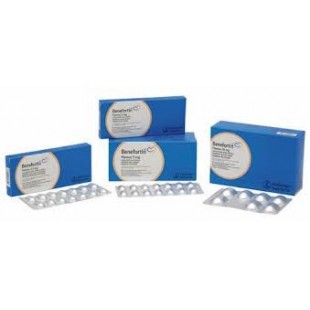
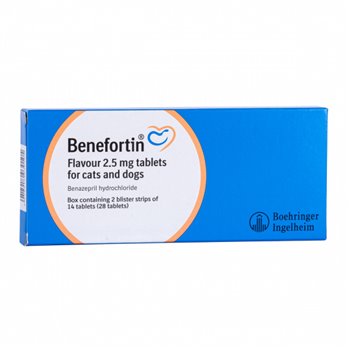
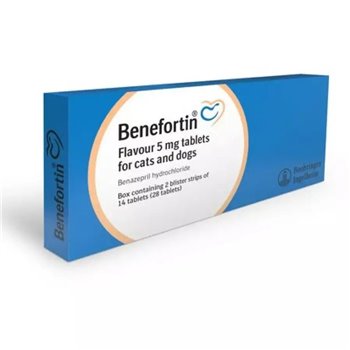
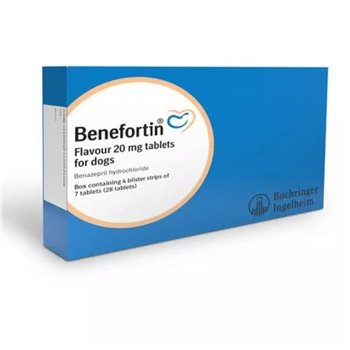
Benefortin Tablets are a prescription veterinary medicine for dogs and cats. Benefortin Tablets contain benazepril hydrochloride, an angiotensin‑converting enzyme (ACE) inhibitor used in veterinary cardiology and renal medicine. Vets most commonly prescribe Benefortin Tablets for congestive heart failure in dogs, and for chronic renal insufficiency in cats (also called chronic kidney disease, or CKD), particularly when protein is being lost in the urine (proteinuria).
VETERINARY PRESCRIPTION REQUIRED
The renin–angiotensin–aldosterone system (RAAS) is the body’s “pressure and fluid” control network. In heart failure and kidney disease, RAAS can become overactive. That overactivity tightens blood vessels (vasoconstriction), increases sodium and water retention, and causes harmful tissue changes. Benazepril is converted in the body to its active metabolite, benazeprilat. By inhibiting ACE, benazeprilat reduces the formation of angiotensin II and lowers aldosterone effects, which supports gentler blood vessel tone and less fluid retention.
In the kidneys, lowering angiotensin II can reduce glomerular capillary pressure (glomerular hypertension), which may reduce proteinuria and support healthier filtration conditions. Because the effect is long‑lasting, Benefortin Tablets are usually given once daily to provide steady support across the day and night.
Congestive heart failure in dogs is not a single disease, but a stage where the heart can no longer pump efficiently enough without fluid backing up into the lungs or body tissues. It is often linked to degenerative mitral valve disease (common in small breeds) or dilated cardiomyopathy (more common in larger breeds), and your vet may confirm the picture using a physical examination, chest imaging, blood pressure checks, and sometimes echocardiography. Fluid in the lungs (pulmonary oedema) can make breathing feel like hard work, and pets may become tired with gentle activity. Signs that often prompt assessment include:
- Your dog coughs, especially at night or after excitement or exercise.
- Your dog breathes faster than usual, breathes with more effort, or pants at rest.
- Your dog tires quickly, seems weaker on walks, or has fainting or collapse episodes.
- Your dog’s abdomen looks swollen, or their weight increases quickly without a change in diet.
Benefortin Tablets are often used as part of a wider plan that may also include diuretics to remove excess fluid, pimobendan to support cardiac function, and other medicines chosen for your dog’s specific heart condition. Because heart failure management is about day‑to‑day stability, many vets recommend tracking your dog’s resting respiratory rate at home and reporting any sustained upward trend.
Chronic renal insufficiency in cats usually develops gradually, especially in older cats, and it can involve reduced concentrating ability, electrolyte changes, high blood pressure (hypertension), and accumulation of waste products (azotaemia). Proteinuria is an important clinical finding because it suggests the kidney’s filters are under strain, and persistent protein loss is associated with a higher risk of progression in many cats. Common signs that fit with CKD include:
- Your cat drinks and urinates more than usual (polydipsia and polyuria).
- Your cat loses weight, has reduced muscle tone, or develops a dull coat.
- Your cat has a reduced appetite, nausea, or occasional vomiting.
- Your cat seems sleepier, hides more, or is less interested in normal routine.
Benefortin Tablets do not “cure” CKD, but by reducing glomerular hypertension and proteinuria they can support more stable kidney filtration pressures over time, alongside kidney‑friendly nutrition, hydration strategies, and other treatments your vet recommends. Some cats also need separate blood pressure medication, so it is helpful to think of Benefortin Tablets as one part of a broader, individualised care plan.
Benefortin Tablets are administered by mouth once daily and can be given with or without food. Many pets accept Benefortin Tablets readily, although some do best with the tablet hidden in a small amount of food or a pill pocket; if you use food, keep it small so you do not disrupt a carefully planned cardiac or renal diet. The tablets can be divided if your vet has prescribed a half dose, and the unused half should be stored safely in the blister until the next dose. Aim to give Benefortin Tablets at roughly the same time each day. If you miss a dose, give the next one at the usual time unless your vet advises otherwise, and avoid doubling up. If you are struggling with dosing, ask your vet team for practical tips, because consistent daily dosing is more helpful than occasional perfect dosing.
Because Benefortin influences blood pressure, fluid balance, and kidney filtration pressures, they should be used with veterinary monitoring. Your vet may schedule periodic checks of blood pressure, creatinine, urea, electrolytes and (especially in cats) red blood cell parameters, and may repeat urine tests such as the urine protein:creatinine ratio (UPC). Benefortin Tablets are not suitable for every pet, including those with low blood pressure (hypotension), low circulating volume (hypovolaemia), low sodium (hyponatraemia), acute renal failure, or cardiac outflow obstruction such as aortic or pulmonary stenosis, and they are not used during pregnancy or lactation.
Some pets experience digestive upset such as vomiting or diarrhoea, or signs of tiredness, particularly when first starting. In pets with CKD, a moderate rise in creatinine at the start of therapy can occur and is not always a reason to stop, but it should be assessed in context with repeat blood tests and how your pet is feeling. Interactions matter: non‑steroidal anti‑inflammatory drugs (NSAIDs) and potassium‑sparing diuretics may need extra caution, and your vet may monitor electrolytes and potassium levels. Contact your vet promptly if your pet is very sleepy, weak, stops eating, vomits repeatedly, or seems unwell after starting or changing Benefortin Tablets.
What are Benefortin Tablets used for in dogs and cats?
Benefortin Tablets are prescribed to support circulation and organ workload. In dogs, they are commonly used alongside other medicines to manage congestive heart failure. In cats, they are often used in chronic renal insufficiency (CKD), especially when urine tests show proteinuria. Always follow your vet’s plan.
How do Benefortin Tablets help a dog with congestive heart failure?
Benefortin Tablets contain an ACE inhibitor that calms an overactive RAAS pathway. This helps widen blood vessels, reduce afterload, and limit fluid‑retaining signals. In practice, that can reduce strain on the heart and support more comfortable breathing when used with diuretics and other prescribed heart medicines.
How does Benefortin help a cat with chronic renal insufficiency?
In CKD, Benefortin Tablets can reduce pressure within the kidney filters (glomeruli). Lower intraglomerular pressure may reduce protein loss in the urine (proteinuria), often reflected in a lower urine protein:creatinine ratio (UPC). This support works best alongside renal diets, hydration strategies, and regular monitoring.
How soon should I expect to see changes after starting Benefortin?
Some pets show subtle improvements within days to a couple of weeks, such as calmer breathing in dogs or improved appetite in some cats. In other cases, the main goal is steady, long‑term support seen in follow‑up tests (blood pressure, UPC, or kidney values). Your vet will guide expectations.
What should I do if I miss a dose of Benefortin Tablets?
If you forget a dose, give the next dose at the usual time unless your vet advises otherwise. Do not double the dose to make up for a missed tablet, because that can increase the risk of low blood pressure. If you miss more than one dose, contact your vet for guidance.