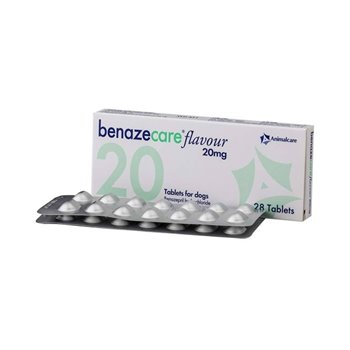
Benazecare Tablets are a veterinary prescription medication containing benazepril hydrochloride, an angiotensin‑converting enzyme (ACE) inhibitor used in dogs and cats. Vets prescribe Benazecare Tablets when a pet’s heart or kidneys are working harder than they should, because the medicine supports healthier blood flow and reduces harmful hormonal signalling.
VETERINARY PRESCRIPTION REQUIRED
In dogs, Benazecare Tablets are widely used for a congestive heart failure, helping to reduce the workload on the heart when it can no longer pump efficiently. In cats, Benazecare Tablets may be prescribed for chronic renal insufficiency (chronic kidney disease), particularly when urine testing shows protein loss (proteinuria) or when blood pressure is a concern.
Benazecare Tablets work by moderating the renin–angiotensin–aldosterone system (RAAS), a hormone pathway the body uses to regulate blood pressure, blood vessel tone, and how much salt and water the body retains. When RAAS becomes overactive, blood vessels tighten (vasoconstriction) and the body holds on to sodium and water, increasing circulating volume and raising pressure within the cardiovascular system. This can worsen fluid build‑up in congestive heart failure and can also increase pressure within the kidneys’ microscopic filtering units, the glomeruli. Benazecare Tablets inhibit ACE, which reduces the production of angiotensin II, a powerful vasoconstrictor. As angiotensin II levels fall, blood vessels relax (vasodilation), afterload reduces, and aldosterone signalling drops, meaning the body is less likely to retain excess salt and water. The overall effect is improved haemodynamics, with gentler pressure on the heart and more stable conditions for the kidneys to filter blood.
In dogs with congestive heart failure, Benazecare Tablets are often usewhen there is evidence of fluid congestion or reduced cardiac efficiency, commonly linked to conditions such as degenerative mitral valve disease or dilated cardiomyopathy. By reducing afterload, Benazecare Tablets can help the heart eject blood more easily, and by dampening RAAS‑driven fluid retention they can support the wider plan to control pulmonary oedema and breathlessness. Many dogs take Benazecare Tablets alongside a diuretic, and sometimes alongside other cardiac medicines, because heart failure is usually managed with a combination approach rather than a single drug. Your vet may ask you to watch for day‑to‑day changes, because early recognition of worsening signs allows treatment to be adjusted promptly:
- Your dog coughs or gags more, especially at night or after activity.
- Your dog breathes faster at rest, becomes breathless, or tires on walks sooner than usual.
- Your dog’s appetite drops, weight changes, or weakness becomes more noticeable.
- Your dog’s abdomen becomes distended, or your dog seems unsettled and cannot get comfortable.
If your dog collapses, shows blue‑tinged gums, or has laboured breathing, treat it as urgent even if Benazecare Tablets are being given, because these signs can indicate a flare‑up that needs immediate attention.
For cats living with chronic renal insufficiency, Benazecare Tablets may be used to help protect kidney function over time, particularly in cats with proteinuria. Protein in the urine is more than a laboratory detail; it can reflect increased pressure and inflammation within the kidney filters, and it is associated with faster disease progression in many patients. By lowering angiotensin II activity, Benazecare Tablets can reduce intraglomerular pressure and may help reduce protein leakage, which can make the kidney environment less damaging in the longer term. Some cats with chronic kidney disease also develop systemic hypertension, and the vasodilatory effect of Benazecare Tablets can be helpful as part of a blood‑pressure management plan chosen by your vet. Because chronic kidney disease affects the whole body, owners often notice a cluster of subtle signs rather than one single symptom:
- Your cat drinks more and urinates more than before.
- Your cat loses weight, has a poorer coat, or shows less interest in meals.
- Your cat vomits intermittently or has ongoing loose stools.
- Your cat seems quieter, hides more, or stops jumping up as confidently.
Benazecare Tablets are commonly paired with supportive measures such as a renal diet, hydration strategies, phosphate control, and anti‑nausea care, all tailored to blood and urine results.
Benazecare Tablets are usually given once daily, or exactly as your vet directs, and they are often continued long term when your pet is stable. It is sensible to expect follow‑up checks when starting Benazecare Tablets or changing other medicines, because ACE inhibitors can influence blood pressure and kidney filtration, particularly in pets who are older or already unwell. Monitoring may include a blood pressure reading, body weight and hydration assessment, and laboratory tests such as urea, creatinine, electrolytes (including potassium), and urine protein measurements. These checks are not about searching for problems; they are a routine way to make sure Benazecare Tablets are providing benefit without tipping the balance too far. If you are giving Benazecare Tablets at home, try to keep timing consistent, offer fresh water at all times, and let your vet know about changes in appetite, thirst, or energy, as these day‑to‑day details are clinically useful.
Most pets tolerate Benazecare Tablets well, but any medicine that alters blood pressure and hormone signalling can cause side effects in some animals. Possible adverse effects include reduced appetite, vomiting, diarrhoea, lethargy, or weakness, and occasionally signs linked to low blood pressure such as wobbliness or unusual tiredness after dosing. Because Benazecare Tablets can affect renal blood flow, your vet will take extra care if your pet is dehydrated, has pre‑existing hypotension, or is receiving other medicines that influence the kidneys, such as certain diuretics or non‑steroidal anti‑inflammatory drugs. Tell your vet about every medicine and supplement your pet receives, and always seek advice before making changes, because interactions and dose adjustments are individual. If your pet seems suddenly unwell, stops eating, or becomes markedly weak while on Benazecare Tablets, contact your veterinary practice promptly so they can advise on the safest next step.
How do Benazecare Tablets help with congestive heart failure in dogs?
In canine congestive heart failure, Benazecare Tablets reduce ACE activity within the RAAS. This encourages vasodilation, lowers afterload, and reduces fluid‑retaining signals such as aldosterone. The heart can pump against less resistance, and pulmonary congestion may be easier to control when combined with other vet‑prescribed medicines.
Do Benazecare Tablets cure heart failure or chronic kidney disease?
Benazecare Tablets are not a cure for congestive heart failure or chronic kidney disease. They are a supportive medicine designed to improve haemodynamics and reduce ongoing strain on the heart or kidneys. Many pets use them long term alongside diet changes, monitoring, and additional medicines chosen by the veterinary team.
What side effects can Benazecare Tablets cause?
Some pets may develop mild gastrointestinal upset, reduced appetite, lethargy, or weakness when starting Benazecare Tablets. Because they can lower blood pressure, a pet might seem wobbly or unusually tired. More significant reactions are uncommon but need prompt attention. Contact your vet if symptoms persist or worsen.
Can Benazecare Tablets be given with diuretics or other heart medicines?
Yes, Benazecare Tablets are often used alongside diuretics and other cardiac medicines, because congestive heart failure is usually managed with a combination approach. Your vet will balance doses to avoid dehydration or hypotension and may adjust treatment based on breathing rate, weight, and repeat examinations.
What should I do if I miss a dose of Benazecare Tablets?
If a dose of Benazecare Tablets is missed, follow your vet’s advice for your pet’s specific plan. In many cases, you give the next dose at the usual time rather than doubling up, because extra dosing may increase the risk of low blood pressure. If you are unsure, call your veterinary practice.