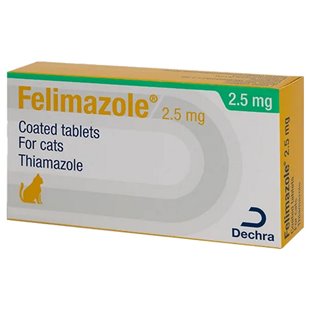
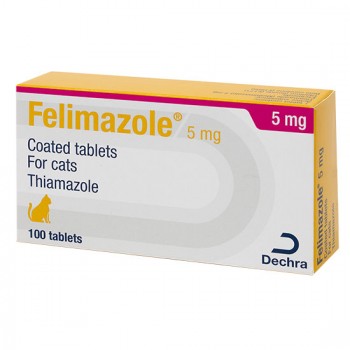
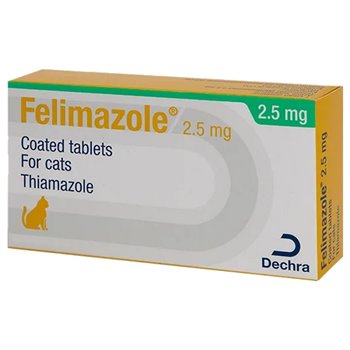
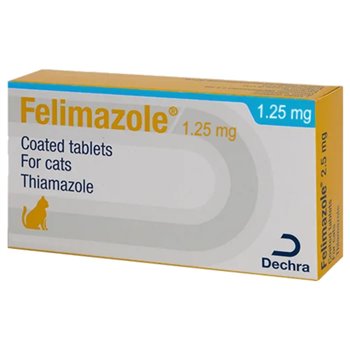
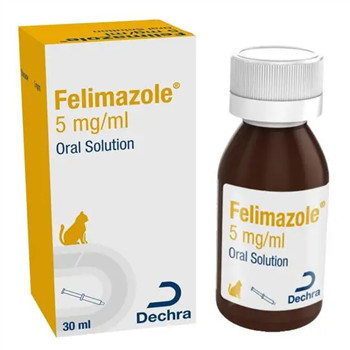
Felimazole for Cats is a prescription tablet used to manage feline hyperthyroidism. Hyperthyroidism in cats develops when the thyroid gland produces excessive thyroid hormones, mainly thyroxine (T4) and triiodothyronine (T3). Those hormones act like the body’s metabolic accelerator, so when levels stay too high your cat can burn energy faster than they can replace it and may seem constantly “switched on”. Over time, this can affect body weight, appetite, behaviour, blood pressure and the cardiovascular system, and it can complicate other age-related problems.
VETERINARY PRESCRIPTION REQUIRED
Felimazole Tablets reduce thyroid hormone production so levels can be brought back into a safer range under veterinary supervision. When thyroid levels are better controlled, many cats regain steadier energy, more settled sleep patterns and improved body condition. Felimazole is not a cure, but can be a way to control clinical signs and support day-to-day wellbeing while your veterinary team monitors progress.
Hyperthyroidism can be subtle at first, and changes are not always obvious until they have been present for some time. Some cats eat more yet lose weight; others become restless, grumpy, or unusually vocal, especially at night, and some drink more than they used to. Your vet will usually confirm the diagnosis with a physical examination and blood tests. An enlarged thyroid gland (a goitre) may be felt in the neck, and a total T4 test is commonly used, sometimes supported by additional thyroid testing if results are borderline. Vets also look closely at kidney and liver markers and listen for a heart murmur or gallop rhythm, because hyperthyroidism can place extra strain on the heart. Common signs that prompt testing include:
- Weight loss despite a good or increased appetite
- Increased thirst and urination (polydipsia and polyuria)
- Restlessness, irritability, or increased vocalising
- Vomiting or diarrhoea, and a dull or unkempt coat
- Rapid heart rate (tachycardia), panting, or breathlessness
Left unmanaged, persistently high thyroid hormones can contribute to systemic hypertension and can worsen cardiac changes such as hypertrophic cardiomyopathy, which is why timely control is important once a diagnosis is confirmed.
Felimazole works because it contains methimazole, a thionamide antithyroid agent. Methimazole inhibits thyroid peroxidase, an enzyme required for key steps in thyroid hormone synthesis, including iodination and coupling reactions. Put more simply, Felimazole Tablets slow the thyroid’s hormone “manufacturing process”, so less T4 and T3 are produced and the excess circulating levels gradually fall. Because the thyroid stores hormone, improvement is usually progressive rather than instant, and it is normal for your vet to recheck blood values before deciding whether any dose change is needed. Felimazole reduces new hormone production, but does not remove abnormal thyroid tissue, which is why ongoing treatment is commonly needed. The aim is clinical control: helping your cat maintain a healthier weight, calmer demeanour and safer heart rate while keeping hormone levels within a target range that suits your individual cat.
Felimazole Tablets are given by mouth, and your vet will select a starting dose based on your cat’s signs, blood results and overall health, then adjust as needed. Early dose changes are common, because cats vary in how they absorb and metabolise methimazole and because the safest approach is to find the lowest effective dose that controls signs without pushing the thyroid too low. Monitoring is not a box‑ticking exercise; it is how your vet confirms that Felimazole Tablets are working and that your cat is tolerating them well. Follow-up blood tests typically include total T4 and may also include a full blood count (to check red and white blood cells and platelets) and biochemistry values such as liver enzymes and kidney markers (including creatinine and urea). This is particularly important because stabilising thyroid levels can sometimes reveal underlying chronic kidney disease that had been masked by the hyperthyroid state. If your cat has other conditions or is on other medicines, your vet may recommend a tailored monitoring schedule so Felimazole Tablets fit safely into the bigger health picture.
Most cats tolerate Felimazole well. Mild gastrointestinal signs such as reduced appetite, vomiting or diarrhoea can occur, particularly in the first few weeks, and often improve with veterinary guidance. Some cats become a little quieter as their metabolism slows, which can be expected if it is mild and your cat remains bright and comfortable. Less commonly, cats may develop pruritus (itching) or skin inflammation, sometimes with facial scratching, and in rarer cases methimazole can affect blood cell lines (for example, causing neutropenia or thrombocytopenia) or place stress on the liver. Contact your vet urgently if you notice marked lethargy, persistent vomiting, bruising or bleeding, fever, swelling, or yellowing of the gums or eyes. Felimazole Tablets should always be used under veterinary direction, and extra care is advised in cats with significant liver disease, blood disorders, or unstable diabetes, as well as in pregnant or breeding animals. Because methimazole can be absorbed by people, wash hands after giving Felimazole Tablets and avoid unnecessary tablet handling, especially if you are pregnant or immunocompromised.
Felimazole Tablets are widely used for longer-term medical management, and they can also be used to stabilise cats before other options such as radioiodine therapy, thyroidectomy, or an iodine-restricted diet are considered. Medical control can be especially helpful when rapid stabilisation is needed, when a cat has concurrent disease that makes other treatments less suitable, or when you want time to weigh up the pros and cons of definitive therapy. Give Felimazole Tablets at the same times each day, keep to the prescribed dose, and let your vet know about any appetite change, vomiting, diarrhoea, increased drinking, or behaviour shifts, even if they seem minor. If medicating is a struggle, your vet can suggest techniques to reduce stress and may be able to adjust the plan using different strengths of Felimazole so dosing stays accurate. Many owners find that once thyroid levels are steady, their cat’s hunger becomes more normal, weight loss slows, and the “wired” restlessness eases, which can make daily life calmer for everyone.
What are Felimazole Tablets used for in cats?
Felimazole Tablets are prescribed for feline hyperthyroidism, where the thyroid gland produces excess T4 and T3. By reducing hormone production, they can ease weight loss, agitation and a fast heart rate, while supporting safer blood pressure and organ function when your vet monitors progress.
How quickly will I see improvements after starting Felimazole?
Some cats seem calmer and less ravenous within 1–3 weeks, but the most reliable measure is a follow‑up T4 blood test. Because dosing is individual, your vet may adjust Felimazole Tablets after early checks. Improvements are usually gradual rather than overnight.
Do Felimazole Tablets cure hyperthyroidism?
Felimazole Tablets control thyroid hormone production but they do not remove the underlying thyroid change. Many cats stay comfortable on medical management for years. Your vet may still discuss definitive options like radioiodine or surgery if they are suitable for your cat.
Why are blood tests needed during treatment?
Blood tests confirm that T4 is controlled and help your vet spot issues early. Monitoring can include a full blood count and checks of kidney and liver markers, because stabilising thyroid levels can change how other conditions show up. This keeps Felimazole Tablets use safer.
Can I split or crush Felimazole Tablets to make dosing easier?
Only do this if your vet specifically advises it. Coatings can affect handling and dosing accuracy, and crushing can increase human exposure to methimazole. If your cat struggles with tablets, ask about different strengths, dosing schedules, or alternative formulations your vet can recommend.