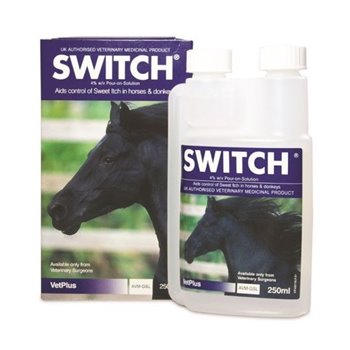
Switch Lotion for Sweet Itch is a topical skin-care lotion to help horses cope with seasonal midge-related itching and rubbing. When a horse cannot stop scratching, the skin barrier becomes compromised, the coat breaks, and sore patches can spread quickly. Used as part of a daily routine, Switch for Horses supports comfort in the areas most often targeted for rubbing, including the mane crest, tail head, belly line, sheath or udder area, and the edges of the ears.
Sweet Itch, also known as insect bite hypersensitivity, is an allergic dermatitis triggered mainly by the saliva of biting midges, particularly Culicoides species. In sensitised horses, the immune system mounts an exaggerated response after a bite, releasing inflammatory mediators that create intense pruritus (itching), redness and heat. The horse then rubs to relieve the itch, which causes excoriation (surface trauma), alopecia (hair loss) and sometimes lichenification (thickened, leathery skin) as the condition...
Switch Lotion for Sweet Itch is a topical skin-care lotion to help horses cope with seasonal midge-related itching and rubbing. When a horse cannot stop scratching, the skin barrier becomes compromised, the coat breaks, and sore patches can spread quickly. Used as part of a daily routine, Switch for Horses supports comfort in the areas most often targeted for rubbing, including the mane crest, tail head, belly line, sheath or udder area, and the edges of the ears.
Sweet Itch, also known as insect bite hypersensitivity, is an allergic dermatitis triggered mainly by the saliva of biting midges, particularly Culicoides species. In sensitised horses, the immune system mounts an exaggerated response after a bite, releasing inflammatory mediators that create intense pruritus (itching), redness and heat. The horse then rubs to relieve the itch, which causes excoriation (surface trauma), alopecia (hair loss) and sometimes lichenification (thickened, leathery skin) as the condition becomes chronic. Signs are usually worse from spring through autumn and can peak at dawn and dusk, when midges are most active. Sweet Itch is not contagious, but it can be very distressing, and persistent rubbing can lead to broken skin, pain and secondary infection. Using Switch for Horses alongside sensible midge-control strategies can help reduce the day-to-day discomfort that drives the rubbing cycle.
Sweet Itch can look slightly different from horse to horse, but there are common features that suggest the diagnosis and help you spot a flare-up early. You might notice the following clinical signs, which can vary in severity across the season:
- Your horse persistently rubs the mane, tail or belly, even when the skin initially looks normal.
- The coat becomes patchy with broken hairs, scurf and flakes, and the mane or tail may thin noticeably.
- The skin appears inflamed with small papules (bumps), crusts, weeping spots or dry, tender areas.
- Repeated rubbing leads to soreness over the poll, along the midline, and around the tail head, and grooming becomes uncomfortable.
- Behaviour changes can occur, such as irritability, restlessness, reduced appetite, weight loss, or difficulty concentrating under saddle because the itch is distracting.
Ongoing rubbing can create micro-tears that allow bacteria to enter, increasing the risk of secondary bacterial infection, and it can also lead to hyperpigmentation and thickening where the skin is repeatedly traumatised. A product like Switch for Horses supports a calmer routine by helping you keep those vulnerable areas conditioned, so the horse is less driven to rub and the skin has a better chance to settle.
Switch Lotion works by focusing on the surface of the skin where discomfort starts and where damage from rubbing accumulates. The lotion is made to spread easily so it can be worked through the coat and onto the skin, without leaving the coat sticky or heavy afterwards, helping to rehydrate dry, tight areas and soften crusty patches that can pull and itch. Skin-conditioning components act as emollients, improving the feel of the skin and supporting barrier function so the surface is less prone to cracking and irritation. A light, breathable layer on the coat can also make the skin feel more comfortable under rugs and around friction points. In practical terms, Switch for Horses helps by reducing the “need to scratch” sensation, supporting normal skin hydration, and keeping the coat and skin in better condition during high-challenge periods. It is not a substitute for veterinary treatment when medication is needed, but it can be a useful, gentle part of ongoing management for many horses, especially when Switch for Horses is applied consistently.
For best results, apply Switch Lotion to clean, dry skin and focus on the zones your horse targets for rubbing. Many owners begin with a small patch test, then apply more broadly once they are confident the skin tolerates the product. During peak season, daily use is often sensible, with extra attention after washing, heavy sweating or prolonged wet weather when the skin can become fragile. Work the lotion in with your hands so it reaches the skin rather than just sitting on the hair, and keep nails short so you do not accidentally scratch already-irritated areas. Switch for Horses is most effective when it is combined with measures that reduce exposure to midges, because fewer bites means less immune stimulation. That can include a well-fitting Sweet Itch rug, stabling at dawn and dusk, using fine mesh screens, keeping the stable airy but draught-free, and reducing standing water and muck heaps near turnout where midges breed. Using Switch for Horses consistently through the risk period is often more helpful than using it only during flare-ups
Switch Lotion suits horses and ponies that are prone to recurrent seasonal itching, including those with sensitive skin that does not cope well with harsh shampoos or frequent scrubbing. It can be massaged into the mane crest and tail head, smoothed along the belly line, and used as a supportive layer beneath rugs where friction can otherwise worsen soreness. Take care around the eyes and mucous membranes, and avoid applying directly to open wounds unless your vet has advised it, because broken skin may need specific clinical management. If you notice heat, swelling, a strong odour, pus, increasing pain, or the horse becomes dull or off their feed, seek veterinary advice as these can be signs of infection that require prescription treatment. If your horse is already following a veterinary plan, such as antihistamines, corticosteroids or immunotherapy, Switch for Horses can still be used as a practical day-to-day skin support, helping you maintain hydration and comfort between medical interventions. Having Switch for Horses to hand can also make it easier to respond quickly after turnout or grooming, when early signs of irritation are often first noticed.
What causes Sweet Itch and when is it usually worst?
The main trigger is midge saliva. Symptoms often flare in warmer months, especially at dawn and dusk when midges feed. Windless, damp conditions can make it worse. Some horses show signs earlier in spring and continue into autumn, depending on local midge activity and turnout routines.
Which areas do horses with Sweet Itch tend to rub?
Sweet Itch commonly affects the mane crest and tail head, but the belly line, withers, poll and sheath or udder area can also be involved. Horses may rub on fences, trees or stable doors. The pattern often helps differentiate Sweet Itch from lice, mites or ringworm.
How do I apply Switch Lotion for Sweet Itch?
Apply Switch Lotion to clean, dry skin and work it through the hair so it reaches the skin surface. Focus on the mane, tail head and any itchy patches. Start with a small patch test if the skin is very sensitive. Wash your hands afterwards and avoid contact with eyes.
How often should I use Switch for Horses Switch Lotion?
During peak Sweet Itch season, many owners use Switch for Horses once daily, increasing to twice daily during flare-ups if the skin tolerates it. Consistency matters more than occasional heavy application. Reapply after bathing, heavy sweating or persistent rain, as wet coats can reduce how well topical products sit.
When should I contact a vet about Sweet Itch?
Seek veterinary advice if the skin is hot, swollen, painful, weeping, has a strong odour, or if your horse seems unwell. These signs can indicate secondary infection or a different condition such as mites. A vet can confirm the diagnosis and discuss options like prescription anti-inflammatories or immunotherapy.