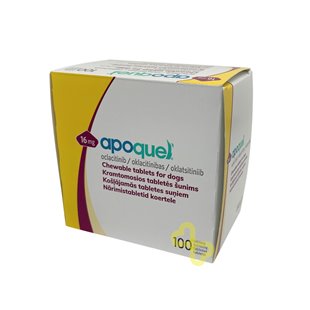
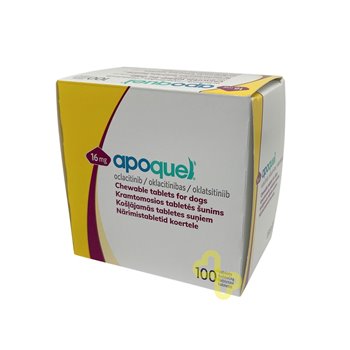
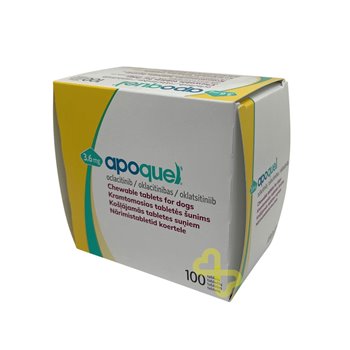
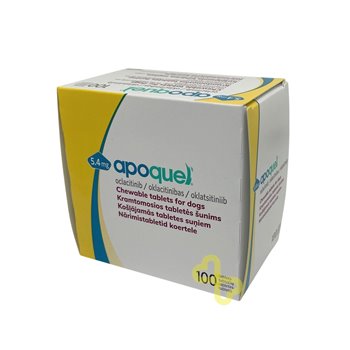
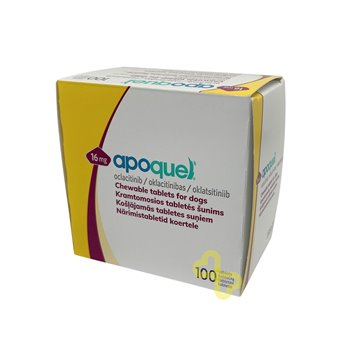
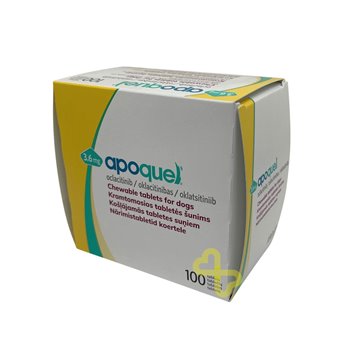
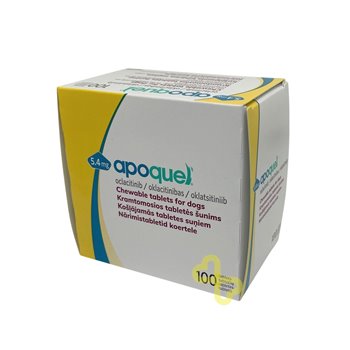
Apoquel is a prescription-only veterinary medicine for dogs. It contains oclacitinib, an active ingredient used for the treatment of pruritus, meaning itching, associated with allergic dermatitis and for the treatment of the clinical manifestations of atopic dermatitis. Apoquel tablets are available in 3.6mg, 5.4mg and 16mg strengths.
Allergic dermatitis can make a dog intensely uncomfortable. Typical signs may include repeated scratching, licking, chewing or rubbing, together with redness, inflamed skin, hair loss, sore areas and disturbed sleep. Atopic dermatitis is a chronic allergic skin condition commonly associated with environmental triggers, while other forms of allergic dermatitis may be linked to flea allergy, contact allergens or food hypersensitivity. Persistent scratching damages the skin barrier and can contribute to secondary bacterial, fungal or parasitic complications.
Apoquel is prescribed to control the itch and clinical signs, but it does not nec...
Apoquel is a prescription-only veterinary medicine for dogs. It contains oclacitinib, an active ingredient used for the treatment of pruritus, meaning itching, associated with allergic dermatitis and for the treatment of the clinical manifestations of atopic dermatitis. Apoquel tablets are available in 3.6mg, 5.4mg and 16mg strengths.
Allergic dermatitis can make a dog intensely uncomfortable. Typical signs may include repeated scratching, licking, chewing or rubbing, together with redness, inflamed skin, hair loss, sore areas and disturbed sleep. Atopic dermatitis is a chronic allergic skin condition commonly associated with environmental triggers, while other forms of allergic dermatitis may be linked to flea allergy, contact allergens or food hypersensitivity. Persistent scratching damages the skin barrier and can contribute to secondary bacterial, fungal or parasitic complications.
Apoquel is prescribed to control the itch and clinical signs, but it does not necessarily remove the underlying allergic trigger. A veterinary investigation may therefore include parasite control, examination for infection, dietary assessment or other tests according to the dog’s history. Treating complicating factors is important because an infection or infestation can continue to cause discomfort even when the allergic component is being managed. Owners should contact their vet if the skin becomes increasingly sore, moist, swollen, malodorous or painful.
Apoquel works by inhibiting Janus kinase enzymes, often shortened to JAK enzymes. These enzymes are involved in signalling by cytokines, which are chemical messengers used by the immune system. Some cytokines contribute to allergic inflammation and the sensation of itching, so reducing their activity can help control pruritus and the visible manifestations of atopic dermatitis. Apoquel is not a corticosteroid or an antihistamine, although all of these medicines may be considered in different circumstances when managing allergic skin disease. Oclacitinib also affects immune pathways involved in normal host defence and blood-cell production, which is why Apoquel needs to be prescribed and monitored rather than selected without veterinary assessment. A good response to the tablets does not prove what caused the allergy, and treatment may need to be combined with flea control, skin treatment, antimicrobial therapy, dietary management or allergen avoidance. The prescribing vet remains best placed to decide whether Apoquel is suitable and whether ongoing treatment offers an appropriate balance of benefit and risk.
Apoquel tablets are given by mouth and may be administered with or without food. The authorised treatment schedule commonly begins with dosing twice daily for up to 14 days, followed by once-daily maintenance when this is appropriate, but the directions on the prescription and dispensing label must always be followed. Do not increase, reduce or restart treatment without veterinary advice. The film-coated tablets are scored and can be divided into equal halves when the prescribed dose requires this; any unused half should be returned to the opened blister or original container and discarded after three days.
Apoquel must not be used where there is known hypersensitivity to oclacitinib or another ingredient, in dogs younger than 12 months, in dogs weighing less than 3kg, or in dogs showing evidence of immune suppression such as hyperadrenocorticism. It should also not be used where there is evidence of progressive malignant neoplasia, because the active ingredient has not been evaluated in these cases. Its safety has not been established during pregnancy or lactation, or in breeding male dogs, so use in breeding, pregnant or nursing animals is not recommended. Because oclacitinib modulates the immune system, dogs receiving Apoquel should be monitored for infections and neoplastic conditions. Periodic complete blood counts and serum biochemistry are recommended during long-term treatment. Tell the vet about every medicine, supplement and parasite treatment the dog receives, and discuss forthcoming vaccinations, because treatment decisions may need to consider the dog’s wider health and current medication.
How does Apoquel work?
Apoquel contains oclacitinib, a Janus kinase inhibitor. It reduces signalling by certain cytokines involved in allergic inflammation and itching. Because some of these immune pathways also contribute to normal host defence, Apoquel is prescription-only and dogs receiving long-term treatment may require clinical examination, blood counts and serum biochemistry.
How quickly does Apoquel work in dogs?
Response time varies between dogs, and the UK product particulars do not promise a specific time by which every dog will improve. Give Apoquel exactly as prescribed and monitor scratching, licking, sleep and skin condition. Contact the vet if symptoms worsen, fail to improve or new clinical signs develop.
Does Apoquel require a veterinary prescription?
Yes. Apoquel is a POM-V medicine and can only be supplied against a valid veterinary prescription. Select the exact strength, formulation and quantity written by the veterinary surgeon. A prescription for Skylocalm cannot be used to purchase Apoquel
Can Apoquel be given with food or divided in half?
Apoquel film-coated tablets may be given with or without food and are scored so they can be divided into equal halves when prescribed. Return an unused half to the opened blister or original container and discard it after three days. Do not split tablets to create a dose that was not prescribed.
How long can a dog remain on Apoquel?
Some dogs receive Apoquel for a short flare-up, while others are prescribed ongoing maintenance treatment. Long-term use should be based on an individual benefit-risk assessment by the vet. Periodic complete blood counts and serum biochemistry are recommended, together with monitoring for infection, new growths and changes in the dog’s general health.
Does Apoquel cure a dog’s allergy?
Apoquel controls pruritus associated with allergic dermatitis and the clinical manifestations of atopic dermatitis, but it does not necessarily cure the underlying allergy. The vet may still need to investigate flea allergy, contact dermatitis, food hypersensitivity, environmental triggers and secondary bacterial, fungal or parasitic conditions that continue to irritate the skin.