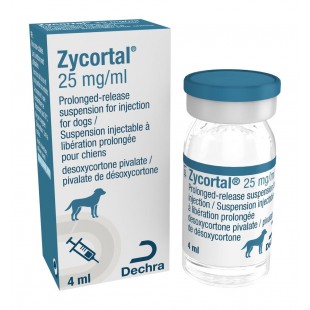
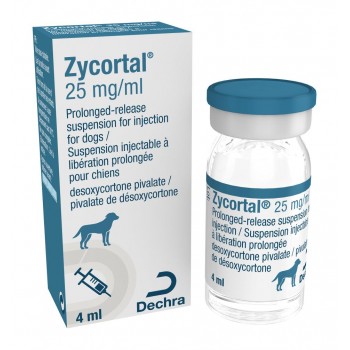
Zycortal for Dogs - Treating Addison's Disease with Zycortal
Zycortal is a prescription veterinary medicine used to manage Addison’s disease in dogs, also known as hypoadrenocorticism. Addison’s disease is a long-term condition where a dog’s adrenal glands do not produce enough essential hormones. With appropriate diagnosis, monitoring, and ongoing treatment, many dogs with Addison’s disease can live a normal and active life. View the Zycortal 4ml product page.
What Addison’s disease is in dogs?
The adrenal glands sit near the kidneys and produce several hormones that help regulate vital body functions. In Addison’s disease, the adrenal glands under-produce hormones that are needed to maintain normal balance of water, salts, blood pressure, and the body’s response to stress.
Addison’s disease is often described as either "typical" or "atypical". Typical Addison’s involves a deficiency in mineralocorticoids (hormones that control sodium and potassium balance) and often also a deficiency in glucocorticoids (hormones such as cortisol). Atypical Addison’s may involve mainly glucocorticoid deficiency without the classic salt imbalance at first. Your vet will determine which form is present based on blood tests and response to stimulation testing.
Because Addison’s disease affects basic body regulation, signs can be vague and can come and go. Some dogs appear unwell for a day or two, then seem to recover, which can delay diagnosis.
Common signs of Addison’s disease
Signs vary between dogs and may be mild at the start. Owners often notice a pattern of intermittent illness. Common signs include:
- Lethargy and weakness
- Reduced appetite or weight loss
- Vomiting or diarrhoea
- Increased thirst and urination
- Shaking, trembling, or seeming “not quite right”
- Episodes of collapse
- Slow heart rate in some cases, due to high potassium
A serious presentation is an "Addisonian crisis”". This is an emergency where hormone deficiency causes severe dehydration, low blood pressure, and dangerous changes in electrolytes (especially low sodium and high potassium). An Addisonian crisis needs urgent veterinary treatment.
How Zycortal works
Zycortal contains desoxycorticosterone pivalate (often shortened to DOCP). DOCP is a mineralocorticoid replacement. Mineralocorticoids help the body regulate sodium and potassium levels and maintain normal fluid balance and blood pressure.
In dogs with Addison’s disease, lack of mineralocorticoids can lead to low sodium and high potassium. These changes can affect hydration, circulation, heart rhythm, and overall energy levels. Zycortal works by replacing the missing mineralocorticoid activity, helping the body restore and maintain a healthier electrolyte balance.
Zycortal does not replace cortisol. Many dogs with Addison’s disease also need a separate glucocorticoid medicine (often prednisolone) alongside Zycortal, particularly at the start of treatment and during stressful events such as travel, boarding, surgery, or illness. Your vet will advise whether your dog needs glucocorticoid support and what dose is appropriate.
Zycortal for Dogs is given as an injection, usually administered by a veterinary surgeon or nurse. Treatment is long term. The aim is to keep your dog stable, comfortable, and able to tolerate everyday life without repeated episodes of illness.
Most dogs start on a standard dosing plan, then the dose and interval are adjusted based on blood results and clinical signs. Many dogs receive Zycortal roughly every 25 to 30 days, but the schedule can vary. Some dogs need a slightly shorter or longer interval depending on how their body responds.
Your vet will use blood tests to guide treatment, typically focusing on sodium and potassium levels. Monitoring is especially important in the early stages, when the correct dose and dosing interval are being established. Once stable, monitoring usually becomes less frequent, although routine checks remain important.
Monitoring is a normal part of Addison’s management and does not necessarily mean there is a problem. It is how the treatment is personalised for your dog.
Your vet may check electrolytes at specific points after an injection, particularly early in the treatment course. If sodium and potassium are not within the desired range, your vet may adjust the Zycortal dose, the interval between injections, or both. Your vet will also consider how your dog is doing at home, including appetite, energy, drinking habits, and stool quality.
It is helpful to keep a simple record of injection dates, any symptoms you notice, and any changes in prednisolone dosing, if used. Consistency makes it easier to spot patterns and keep the plan working smoothly.
A dog with Addison’s disease benefits from routine and observation. Many owners find that once treatment is stabilised, day-to-day life becomes straightforward.
If your dog is also prescribed prednisolone, follow the dosing instructions carefully. Do not stop glucocorticoids suddenly unless your vet tells you to, because abrupt changes can cause your dog to feel unwell. During periods of stress, your vet may advise a temporary increase in glucocorticoid dose. Stress dosing is a common and sensible precaution for Addisonian dogs.
If your dog becomes unwell with vomiting, diarrhoea, refusal to eat, marked lethargy, weakness, or collapse, contact your vet urgently. Dogs with Addison’s can deteriorate faster than expected, and it is safer to treat early. It is also worth discussing an emergency plan with your vet, particularly if you travel or live far from an out-of-hours clinic.
Zycortal is used for dogs diagnosed with primary hypoadrenocorticism where mineralocorticoid replacement is required. It is not used as a general tonic and it is not suitable for every cause of low cortisol. Diagnosis is important because symptoms can resemble many other illnesses.
Your vet will decide whether Zycortal is appropriate based on test results, your dog’s history, and clinical signs. If your dog has other medical conditions or takes other medicines, your vet will consider this when designing the treatment plan.
Many dogs improve noticeably once the right balance is achieved. Appetite and energy often return, drinking and urination become more normal, and stomach upsets may reduce. The speed of improvement depends on how unwell the dog was at diagnosis and whether they presented in crisis.
Stability is usually the goal rather than a dramatic “overnight fix”. Early on, some fine-tuning is common. With steady monitoring and a consistent schedule, dogs with Addison’s disease often do very well over the long term.
Does Zycortal replace cortisol too?
No. Zycortal replaces mineralocorticoid activity but does not replace cortisol. Some dogs with Addison’s disease also require a glucocorticoid medicine, such as prednisolone, to replace cortisol support. Your vet will advise whether this is needed and how doses should change during stress.
How often are Zycortal injections given?
Many dogs receive Zycortal injections about once a month, but the exact interval varies. Your vet may adjust the dose or timing based on blood electrolyte results and how your dog is doing at home. Early in treatment, more frequent checks are common until the schedule is stabilised.
Why does my dog need blood tests while on Zycortal?
Blood tests check sodium and potassium levels to ensure the dose and injection interval are right for your dog. These electrolytes can drift over time, especially early on or if your dog’s needs change. Monitoring helps prevent relapse of symptoms and reduces the risk of an Addisonian crisis.
Can my dog live a normal life with Addison’s disease?
Many dogs do very well once treatment is stabilised. With regular injections, appropriate glucocorticoid support when needed, and periodic monitoring, dogs often return to normal routines. Consistent scheduling and prompt veterinary advice during illness or stress help maintain long-term stability.
Will my dog need prednisolone as well as Zycortal?
Some dogs need prednisolone long term, while others only need a low maintenance dose or stress dosing during events like travel, boarding, surgery, or illness. The need depends on whether your dog has glucocorticoid deficiency and how they respond clinically. Your vet will tailor the plan.