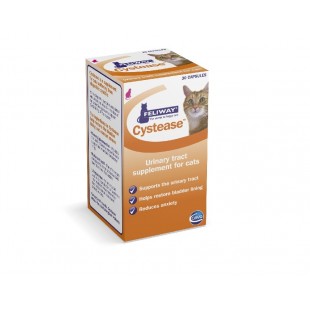
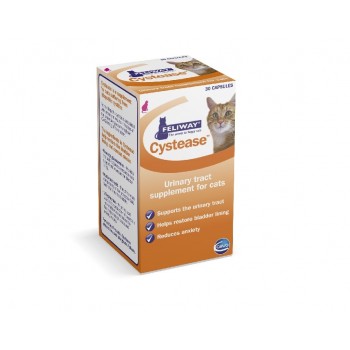
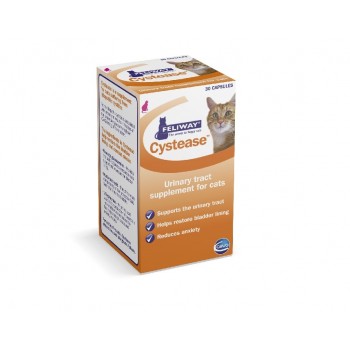
If your cat is visiting the litter tray more often, straining to pass urine, or leaving small puddles outside the tray, it could be linked to Feline Idiopathic Cystitis (FIC), a form of feline lower urinary tract disease (FLUTD) where the urinary bladder becomes inflamed without a clear infectious cause.
Cystease Tablets are a supplement for cats that are prone to stress-related urinary discomfort, and they are often used alongside practical changes at home and veterinary guidance. Cystease Tablets do not replace diagnosis, and they are not a substitute for pain relief or prescription treatment when that is needed, but they can help support the bladder’s natural defences between episodes and during predictable stressors such as moving house, visitors, or changes in a multi-cat household. Because urinary signs can have more than one cause, including bladder stones (uroliths), urethral plugs, infection, or other medical conditions, it is sensible to have new urinary s...
If your cat is visiting the litter tray more often, straining to pass urine, or leaving small puddles outside the tray, it could be linked to Feline Idiopathic Cystitis (FIC), a form of feline lower urinary tract disease (FLUTD) where the urinary bladder becomes inflamed without a clear infectious cause.
Cystease Tablets are a supplement for cats that are prone to stress-related urinary discomfort, and they are often used alongside practical changes at home and veterinary guidance. Cystease Tablets do not replace diagnosis, and they are not a substitute for pain relief or prescription treatment when that is needed, but they can help support the bladder’s natural defences between episodes and during predictable stressors such as moving house, visitors, or changes in a multi-cat household. Because urinary signs can have more than one cause, including bladder stones (uroliths), urethral plugs, infection, or other medical conditions, it is sensible to have new urinary symptoms assessed, especially if your cat has not had a urine test before.
FIC can be painful, and it can look similar to a urinary tract infection, but most affected cats do not have a bacterial infection. Instead, the bladder wall becomes irritated and hypersensitive, leading to inflammation (cystitis) and sometimes spasm of the urethra. During a flare-up you may notice one or more of the following clinical signs:
- Frequent trips to the tray (pollakiuria) with only small amounts passed.
- Straining or crying when urinating (stranguria and dysuria).
- Blood in the urine (haematuria).
- Excessive licking around the genital area.
- Urinating outside the tray (periuria).
- Restlessness, hiding, reduced appetite, or changes in behaviour.
It is important to contact your vet if signs are new, severe, or recurring, or if your cat seems unwell. Male cats are at particular risk of urethral obstruction; repeated straining with little or no urine, marked lethargy, or vomiting is an emergency that needs urgent veterinary attention. Once your vet has ruled out other causes, Cystease Tablets can be used to support the bladder during flare-ups and in quieter periods.
The bladder has a delicate protective surface called the glycosaminoglycan (GAG) layer, which sits on top of the urothelium (the inner bladder wall). This layer acts like a water‑repellent coating, helping to keep urine from directly irritating deeper tissues. In many cats with FIC, the barrier is thought to be disrupted, allowing substances in the urine to penetrate more easily and trigger pain, inflammation, and urinary urgency. Stress also matters: some cats have a heightened sympathetic (“fight or flight”) response, which may contribute to neurogenic inflammation and increased sensitivity in the bladder. Because FLUTD can also involve crystals, uroliths, infection, or anatomical problems, your vet may recommend urinalysis, urine culture, and sometimes imaging before settling on FIC. When FIC is the likely diagnosis, the focus becomes reducing pain during episodes and lowering stress and irritation in the background.
Cystease Tablets work by supporting two areas that matter in FIC: the bladder lining and the stress response. The formulation provides key building blocks for the protective GAG layer, including N‑acetyl glucosamine and hyaluronic acid. These compounds are naturally present in the bladder’s surface coating, and supplementation is intended to help maintain the integrity of that barrier so the bladder wall is less exposed to urinary irritants. When the barrier is better supported, the bladder can be less reactive and less “leaky”, which may ease discomfort and reduce the cycle of inflammation. Cystease Tablets also contain L‑tryptophan, an amino acid involved in the body’s production of serotonin, a neurotransmitter associated with calm behaviour and emotional resilience. This is particularly relevant for stress-linked flare-ups, where anxiety and environmental tension can amplify urinary signs. While Cystease Tablets are not a sedative and will not mask serious illness, they are designed to support comfort from two directions at once: by nurturing the bladder’s protective lining and by helping the body cope with everyday stressors that can unsettle sensitive cats.
Giving Cystease is straightforward, and they can be introduced without dramatically changing your cat’s routine. If your cat has other health conditions, is on medication, or you are unsure how to combine Cystease Tablets with a prescription urinary diet, ask your vet or veterinary nurse for advice. It is also worth remembering that supplements support the background health of the bladder; during an acute flare-up, your cat may still need veterinary pain relief, anti-inflammatory treatment, or an antispasmodic to control discomfort.
Because FIC has both physical and emotional components, the best results usually come from a “whole-cat” approach rather than relying on one change alone. Alongside Tablets, focus on hydration by offering wet food, adding extra water bowls, trying a fountain, and placing water away from food and litter. Litter tray management also matters: provide one tray per cat plus one extra, keep trays clean, and position them in quiet areas so your cat never feels rushed. Reduce tension in multi-cat homes by increasing resources (beds, scratching posts, feeding stations) and adding vertical space and play. Even when you are using Cystease Tablets, treat sudden deterioration seriously; cats hide pain well, and a blocked urethra can become life-threatening within hours. Your veterinary team can help you adjust the plan if episodes are frequent, if weight loss develops, or if urinary signs change.
What is Feline Idiopathic Cystitis (FIC)?
FIC is inflammation of the bladder that has no single identifiable cause, which is why it is called “idiopathic”. It is part of feline lower urinary tract disease (FLUTD) and can cause pain, frequent urination, and blood in the urine. Stress and a fragile bladder lining are common factors.
How do I know if my cat’s urinary signs are an emergency?
Seek urgent veterinary help if your cat repeatedly strains but produces little or no urine, especially if they are male. A urethral blockage can become life-threatening within hours. Vomiting, collapse, a painful belly, or extreme lethargy are also red flags, even if symptoms started suddenly.
Can stress really trigger bladder flare-ups in cats?
Yes. Many cats with FIC have flare-ups after changes that increase anxiety, such as visitors, building work, a new pet, or conflict between cats. Stress can affect the nervous system and bladder sensitivity, making the bladder wall more reactive. Reducing triggers at home is often as important as any supplement.
How do Cystease Tablets support the bladder lining?
Cystease Tablets provide nutrients that support the bladder’s protective glycosaminoglycan (GAG) layer. By helping maintain this natural barrier, the bladder wall may be less exposed to urinary irritants. The formula also supports calm behaviour, which matters because stress can worsen urinary signs in sensitive cats.
What can I do at home to reduce FIC flare-ups?
Support hydration, keep litter trays clean and easy to access, and maintain predictable routines. Provide one tray per cat plus one extra, add play and climbing space, and reduce competition over food and resting areas. Many cats do better with wet food and calm, consistent daily patterns.