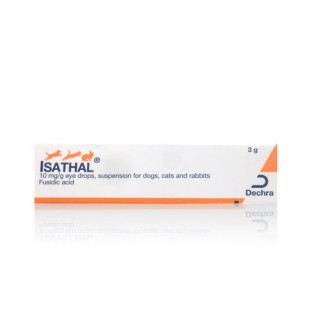
Isathal eye drops contain fusidic acid, a prescription antibiotic used to treat certain bacterial infections affecting the surface of the eye. The medicine is authorised for dogs, cats and rabbits, with specific indications for conjunctivitis associated with staphylococcal bacteria. Isathal contains 10mg fusidic acid per gram of suspension and is supplied in a tube rather than a conventional dropper bottle. A veterinary prescription is required because the cause of the eye problem needs to be assessed before an antibiotic is selected.
Conjunctivitis is inflammation of the tissue lining the eyelids and covering part of the eye’s surface. It may cause redness, discharge and discomfort, but similar signs can occur with other eye conditions. Isathal is not suitable for every infection and must not be used for conjunctivitis associated with Pseudomonas bacteria. Your vet may examine the eye and recommend tests to help identify the cause. A painful eye, persistent squinting, sud...
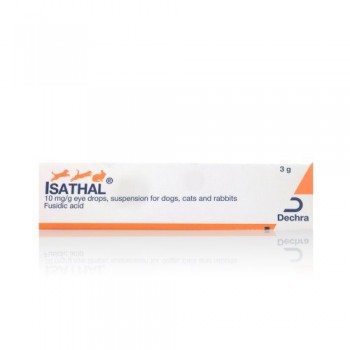
Isathal eye drops contain fusidic acid, a prescription antibiotic used to treat certain bacterial infections affecting the surface of the eye. The medicine is authorised for dogs, cats and rabbits, with specific indications for conjunctivitis associated with staphylococcal bacteria. Isathal contains 10mg fusidic acid per gram of suspension and is supplied in a tube rather than a conventional dropper bottle. A veterinary prescription is required because the cause of the eye problem needs to be assessed before an antibiotic is selected.
Conjunctivitis is inflammation of the tissue lining the eyelids and covering part of the eye’s surface. It may cause redness, discharge and discomfort, but similar signs can occur with other eye conditions. Isathal is not suitable for every infection and must not be used for conjunctivitis associated with Pseudomonas bacteria. Your vet may examine the eye and recommend tests to help identify the cause. A painful eye, persistent squinting, sudden cloudiness, injury or a change in vision needs prompt assessment rather than treatment with drops left over from a previous episode.
The reason for conjunctivitis can differ between species. In cats, the staphylococcal infection treated by Isathal may be secondary to another problem, such as an underlying infection or injury. That primary cause also needs attention. In rabbits, conjunctivitis can occur alongside inflammation of the tear sac or dental disease, so eye drops alone may not resolve the problem. Isathal treats susceptible bacteria; it does not correct tooth-root problems, remove a foreign body or replace treatment needed for a different eye disorder.
Isathal has a thick consistency when it leaves the tube and becomes liquid when it meets the tear fluid. This formulation helps the medicine remain in contact with the eye. The product directions specify one drop once or twice daily, with treatment continuing for at least 24 hours after the eye has returned to normal. Follow your vet’s instructions for the affected eye or eyes and the duration of treatment. If there is no clinical response after five days, the diagnosis needs reassessment; worsening symptoms should be reported sooner.
Careful handling helps keep the tube contents clean. Avoid touching the nozzle with your fingers or allowing it to touch the eye, eyelids or surrounding fur. Replace the cap between applications and wash your hands afterwards. Do not use the same Isathal tube for different animals, regardless of similar symptoms. If your pet moves suddenly during application or you are struggling to give the drops, ask the veterinary team to demonstrate a comfortable handling technique rather than attempting to apply them while the animal is resisting.
Store Isathal below 25°C and use it within one month of first opening. Writing the opening date on the carton makes that limit easier to track. The one-month limit is a storage requirement, not a recommended course length. Allergic or hypersensitivity reactions are listed as very rare adverse events; stop using the medicine and contact your vet if a reaction is suspected. If redness or discharge returns after a completed course, arrange a review rather than restarting an old tube. Recurring symptoms may need a different investigation or treatment.
What is Isathal used for?
Isathal is used for conjunctivitis associated with particular staphylococcal infections in dogs, cats and rabbits. In cats, its indication concerns secondary staphylococcal infection. It is an antibiotic medicine, so suitability depends on the likely bacteria and the underlying cause of the eye problem.
What is the active ingredient in Isathal?
Isathal contains fusidic acid at a concentration of 10mg per gram of suspension. Fusidic acid acts against susceptible bacteria, including staphylococci. It is not a general eye cleanser or a treatment that covers every cause of redness, discharge or irritation.
Is Isathal suitable for rabbits?
Yes, Isathal is authorised for conjunctivitis associated with staphylococcal infections in rabbits. Your vet may also check for tear-sac inflammation or dental disease, which can require additional treatment. It must not be used in rabbits intended for human consumption.
How long should treatment continue?
The manufacturer directs treatment for at least 24 hours after the eye returns to normal. Follow your vet’s course instructions. If there is no clinical response after five days, the diagnosis should be reviewed, while worsening pain or appearance needs earlier attention.
Can I share an Isathal tube between pets?
No. The manufacturer specifically advises against using the same tube for different animals. Sharing can transfer contamination, and similar-looking symptoms may have different causes. Each pet needs its own assessment and any treatment recommended for that animal.