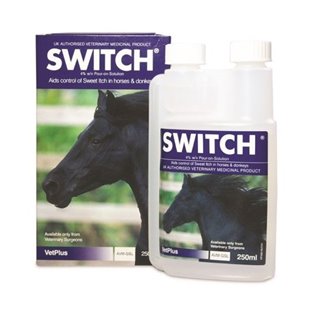
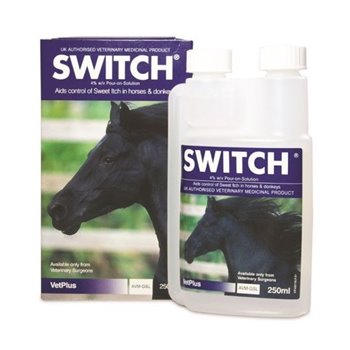
Switch Lotion is a ready-to-use pour-on solution used as an aid in the control of sweet itch in horses and donkeys. The active ingredient in Switch Lotion is 4% w/v permethrin, a synthetic pyrethroid that acts on biting insects on contact. Rather than masking the problem, Switch is easy to apply, works topically on the skin and coat. Because sweet itch can become distressing for both horse and owner, early and consistent use of Switch Lotion can help support comfort before rubbing and skin trauma become established.
Sweet itch is the common name for a seasonal allergic dermatitis, also called insect bite hypersensitivity or summer seasonal recurrent dermatitis. In most cases, it is triggered by the bites of Culicoides midges, although other flying insects may add to the irritation. The problem is not simply the bite itself. In affected horses, the immune system overreacts to insect saliva, leading to intense pruritus, inflammation, and repeated episodes of rubbing and self-trauma. This is why a horse with sweet itch may seem far more distressed than another horse standing in the same field. Typical signs include hair loss along the mane and tail head, broken hairs, crusting, excoriations, thickened skin, and restlessness during warmer months. Some horses also develop lesions along the topline, belly, withers, or around the ears. Once the itch-scratch cycle begins, the skin barrier becomes more damaged, making soreness and secondary bacterial infection more likely. Switch Lotion is often used in horses with this pattern of seasonal dermatitis because controlling exposure to biting insects is one of the most important parts of management.
After application, Switch lotion sits on the coat and skin surface, where the permethrin acts topically against flying and biting insects. Permethrin affects sodium channels in the insect nervous system, causing disruption of normal nerve function. This helps reduce the number of insects able to bite and irritate the horse. Sweet itch is driven by hypersensitivity to insect bites, so lowering the bite burden can lower the risk of an allergic flare. It does not cure the underlying allergy, and it does not switch off the immune response completely, but it can help reduce the trigger that starts the reaction in the first place. For many horses, that means less rubbing, less skin damage, and a better chance to keep the coat and epidermis in healthier condition through the midge season. Used early enough, Switch Lotion may help prevent a mild seasonal itch from developing into a much more uncomfortable dermatitis.
Switch Lotion is usually most useful when started at the beginning of the sweet itch season, before the horse is already intensely itchy. The solution is applied according to body weight, typically at 1ml per 10kg up to a maximum of 40ml, and is placed in roughly equal portions along the mane and rump while avoiding the saddle area. If the horse is being groomed, Switch Lotion is best applied afterwards so the product is not brushed away too soon. Treatment is commonly repeated as needed, and for many horses once weekly is sufficient, although the exact routine should always follow the product directions and any advice from your vet. Switch Lotion is for external use only, and care should be taken to avoid the eyes and the area forward of the ears. In very sensitive horses, especially fine-skinned individuals, a small patch test may be sensible before full application. Used correctly, it is designed to be practical rather than fussy, which can make regular seasonal control much easier.
Horses with insect bite hypersensitivity often benefit from measures that reduce midge exposure throughout the day, particularly around dawn and dusk when biting insects are most active. Depending on the horse and the environment, this may include a well-fitted sweet itch rug, stabling at higher-risk times, improving airflow with fans, and reducing access to damp areas or standing water where insects thrive. If a horse has rubbed until the skin is broken, sore or weeping, the inflammation may need veterinary assessment and the damaged areas may need additional treatment. This lotion can help limit further irritation from insects, but raw skin, marked oedema, heat, discharge, or obvious discomfort can point to complications that need more than insect control alone.
Not every itchy horse has sweet itch. Lice, mites, urticaria, contact irritation, pinworm rubbing, bacterial folliculitis, and other dermatological problems can look similar at first glance. If the pattern is unusual, the symptoms continue through winter, or the horse is becoming very uncomfortable despite using Switch Lotion, it is sensible to ask your vet to assess the skin properly. Horses with severe pruritus can quickly create significant alopecia, lichenification, and excoriation by persistent rubbing, and once that happens the condition can become much harder to settle. The product is intended to aid control, not to replace clinical assessment where that is needed. For many horses, though, timely use of Switch Lotion can make the sweet itch season easier to manage by targeting the insect trigger that sits at the heart of the problem. When owners understand what sweet itch is, how Switch Lotion works, and when extra veterinary input is needed, they are in a stronger position to keep their horse comfortable and protect the skin before minor irritation turns into a more established dermatitis.
What is Switch Lotion used for in horses?
Switch Lotion is a pour-on solution used as an aid in the control of sweet itch in horses and donkeys. It helps reduce the impact of biting insects that trigger seasonal itching, rubbing, hair loss and skin irritation, especially during the warmer months when Culicoides midges are active.
How does Switch Lotion work?
Switch Lotion contains permethrin, a synthetic pyrethroid that acts topically on flying and biting insects. By reducing the number of insects able to bite the horse, it helps lower the allergic trigger behind sweet itch. This can support better comfort and reduce rubbing during midge season.
What is sweet itch in horses?
Sweet itch is a seasonal allergic skin disease, often linked to bites from Culicoides midges. Affected horses become hypersensitive to insect saliva, which leads to intense itching, inflammation and skin damage. Common areas include the mane, tail head, topline, belly and sometimes the ears.
When should I start using Switch Lotion?
Switch Lotion is usually most helpful when started at the beginning of the sweet itch season, before itching becomes severe. Early use can help reduce insect challenge before the itch-scratch cycle is fully established. Always follow the label directions and ask your vet if your horse has severe symptoms.
How often should Switch Lotion be applied?
Application frequency should follow the label and any veterinary advice, but many horses are treated once weekly during the sweet itch season. The aim is to maintain consistent protection against biting insects. If your horse is groomed, it is generally best to apply the product after grooming.
Where do you apply Switch Lotion on a horse?
Switch Lotion is typically applied in measured portions to the mane and rump, while avoiding the saddle area. Care should also be taken to avoid the eyes and the area forward of the ears. Always check the product directions carefully before use and apply only to intact external skin.