


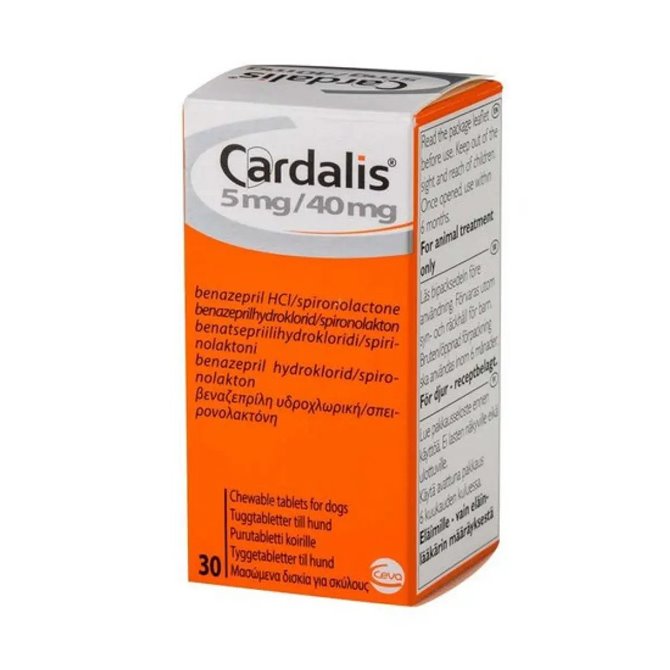
5mg/40mg Cardalis Tablet for Dogs - per tablet
5mg/40mg Cardalis Tablets for Dogs
Cardalis 5mg/40mg is a prescription-only tablet used as part of the management of Congestive Heart Failure in dogs. Each tablet contains two active ingredients: benazepril (5mg) and spironolactone (40mg). They work in different but complementary ways to reduce strain on the heart and help control the fluid and pressure changes that can occur with heart failure.
Congestive heart failure in dogs
Congestive Heart Failure (CHF) describes a stage of heart disease where the heart can no longer pump efficiently enough to meet the body’s needs. When the heart struggles, pressure can build up in blood vessels and the body activates hormone systems that attempt to maintain circulation. These responses can cause the body to retain salt and water and can make blood vessels tighten. Over time, this can lead to fluid accumulation, commonly in the lungs, and it can increase the workload of the heart.
Dogs with CHF may show coughing, faster or more laboured breathing, reduced stamina, restless sleep, reduced appetite, or swelling in the abdomen. Symptoms can vary depending on the underlying heart problem and on where fluid builds up. CHF is a condition that requires ongoing veterinary care, and treatment is usually long term.
How Cardalis works
Cardalis combines an ACE inhibitor (benazepril) with an aldosterone antagonist (spironolactone). Together, they target two key pathways that are often overactive in CHF.
Benazepril works by reducing the production of angiotensin II, a substance that narrows blood vessels and encourages salt and water retention. By reducing angiotensin II, blood vessels can relax and blood pressure can reduce. This can lower the resistance the heart has to pump against, which may improve forward blood flow and reduce congestion. Benazepril can also help limit signals that contribute to fluid retention.
Spironolactone works by blocking the effects of aldosterone. Aldosterone is a hormone that tells the body to hold on to sodium and water. In CHF, aldosterone can remain high and can continue to drive fluid retention. By antagonising aldosterone, spironolactone helps reduce sodium and water retention while conserving potassium. Aldosterone can also influence longer-term changes in the heart and blood vessels, so controlling its effects can be valuable alongside other heart medicines.
VET PRESCRIPTION REQUIRED.
Product Features
- Pack Size: - Sold Individually
- Target Animal: - Dog (Canine)
- Pet Prescription Required?: - Yes (For UK Orders)
- Active Ingredient: - Benazepril and Spironolactone
- Product Name: - 5mg/40mg Cardalis Tablet for Dogs - per tablet
Additional Product Information
Description
Cardalis Tablets may only be supplied with a valid veterinary prescription issued by your vet. You should only purchase Cardalis tablets if you have or are in the process of arranging such a prescription. See information bar for further details.
Cardalis is available in more than one strength because dogs vary widely in size and in the doses prescribed by the vet. The 5mg/40mg strength may be suitable for certain dogs depending on their weight and their treatment plan. Your vet will decide which strength to prescribe and how it fits with any other heart medicines your dog needs.
CHF treatment is focused on comfort, breathing quality, and stability over time. Many dogs improve when fluid retention and blood pressure effects are better controlled. You may notice a steadier breathing pattern at rest, fewer coughing episodes, improved appetite, or better willingness to move around. Improvements can be gradual and depend on the severity of heart disease and on the full treatment plan.
Cardalis is often used alongside other medications, such as drugs that support heart contraction or additional diuretics that remove excess fluid. Your vet may adjust the overall plan over time, especially if symptoms change, if your dog’s weight changes, or if monitoring tests suggest an adjustment is needed.
Always give Cardalis exactly as prescribed by your vet. Do not change the dose or stop treatment without veterinary advice. Even if your dog seems better, CHF can worsen again if medication is interrupted.
If you miss a dose, follow the instructions provided by your veterinary practice. If your dog is unwell after a dose, or if you are unsure whether a dose has been kept down, contact your vet for advice rather than giving extra medication.
Cardalis is a prescription-only veterinary medicine and should only be used for the dog it was prescribed for. Because medicines that influence blood pressure, kidney circulation, and electrolytes can affect dogs differently, your vet may recommend regular monitoring. This often includes checks of kidney values and electrolytes (including potassium), and sometimes blood pressure checks, particularly when several heart medicines are used together.
Extra care may be needed in dogs that are dehydrated, have pre-existing kidney disease, or have known electrolyte problems. Your vet will also consider possible interactions with other medicines, including some diuretics and some anti-inflammatory medicines, which can affect the kidneys and hydration status.
Possible side effects can include digestive upset, reduced appetite, lethargy, weakness, or changes in drinking and urination. Any sudden worsening of breathing, collapse, marked weakness, persistent vomiting, or major change in thirst and urination should be treated as urgent and assessed by a vet.
Store Cardalis tablets in their original container and keep them out of sight and reach of children and pets. Use tablets only up to the expiry date shown on the packaging. Return unused or out-of-date tablets to a dispensary or veterinary practice for safe disposal.
Brand

You may also like
What our customers say about us.
Excellent service delivered next day.
David
Source: Trustpilot Review
Ordering was straightforward, supplements for my dog arrived very quickly. Well packaged
Maria50
Source: Trustpilot Review
Ease of access. Speed of delivery. Excellent. Good price too.
Susan
Source: Trustpilot Review
- Tracked 24 Delivery Follow your parcel online
- VMD & RCVS Registered VetDispense is a registered UK Dispensary
- Secure Payment Pay securely online by card or PayPal
- Independent Since 2008 A Trusted UK Dispensary