


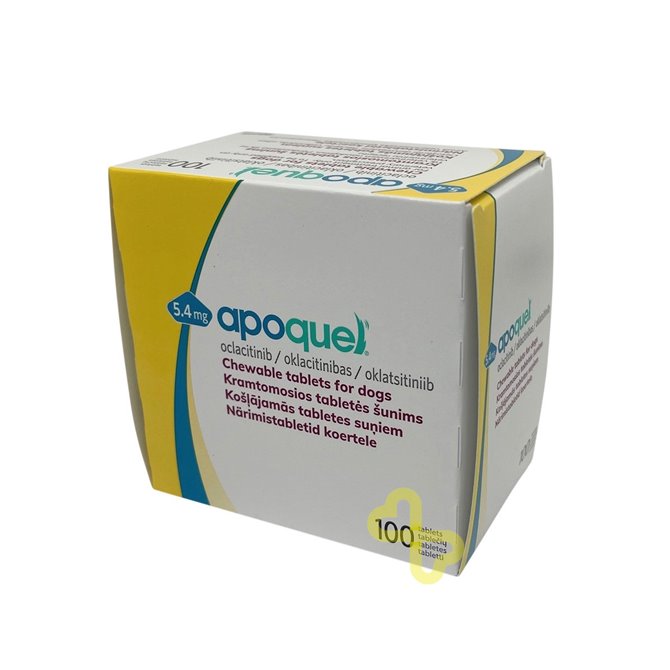
5.4mg Apoquel Tablet - Single Tablet
Apoquel 5.4mg tablets contain oclacitinib, a veterinary medicine used in dogs to control itching (pruritus) associated with allergic skin disease. Apoquel is commonly prescribed for dogs with allergic dermatitis, including canine atopic dermatitis, where inflammation and itch can become persistent. The 5.4mg strength is selected by a veterinary surgeon based on your dog’s bodyweight and treatment plan.
What Apoquel 5.4mg is used for
Apoquel is used to help control:
• Acute pruritus (sudden onset itching) linked to allergic dermatitis.
• Chronic pruritus (long-term or recurring itching) linked to allergic dermatitis, including canine atopic dermatitis.
Itching is a symptom rather than a diagnosis. A veterinary assessment is important to identify likely triggers, check for parasites or infection, and decide whether Apoquel is appropriate.
How Apoquel works
Allergic skin problems in dogs are driven by chemical messengers in the immune system. These messengers, often called cytokines, help coordinate inflammation and the sensation of itch. In allergic dermatitis, this signalling can become overactive, leading to redness, irritation, and scratching.
Oclacitinib works by targeting specific signalling pathways inside immune cells known as Janus kinases (JAKs). By reducing JAK-dependent signalling, Apoquel helps lower the activity of itch-promoting and inflammation-promoting cytokines. This can reduce the urge to scratch and can calm skin inflammation, which helps break the itch–scratch cycle that can damage the skin barrier.
Because it acts on immune signalling, Apoquel does not remove allergens from the environment, and it does not treat the root cause of parasites or infection. It is often used alongside an overall plan that may include flea control, skin care, diet management, and treatment of secondary bacterial or yeast infection where needed.
Product Features
- Pack Size: - Sold Individually
- Target Animal: - Dog (Canine)
- Related Condition: - Pruritus in Dogs
- Pet Prescription Required?: - Yes (For UK Orders)
- Active Ingredient: - Oclacitinib
- Product Name: - Apoquel
Additional Product Information
Description
5.4mg Apoquel Tablets
Apoquel may only be supplied with a valid veterinary prescription issued by your vet. You should only purchase Apoquel if you have or are in the process of arranging such a prescription. See information bar for further details.
Acute and chronic pruritus in dogs
Pruritus means itching. Dogs may show itch through scratching, chewing paws, rubbing the face, scooting, licking the belly, or biting at the coat. The skin may look normal at first, but repeated scratching can cause hair loss, sores, and secondary infection.
Acute pruritus often develops quickly. Common triggers include:
• Flea bites or flea allergy dermatitis.
• Contact reactions to grasses, detergents, or cleaning products.
• Sudden flare-ups of environmental allergies.
• Ear irritation, including otitis externa, which can cause head shaking and scratching.
Chronic pruritus lasts for weeks, returns frequently, or becomes a long-term condition. Common causes include:
• Atopic dermatitis (environmental allergy), often seasonal at first and later year-round.
• Food allergy or food-responsive dermatitis.
• Ongoing flea exposure, even if fleas are not seen.
• Chronic skin infection with bacteria or yeast.
• Parasites such as mites, depending on region and lifestyle.
A veterinary work-up may include skin and ear checks and may involve parasite control trials or diet trials. Treating secondary infection and controlling parasites are often important steps, even when Apoquel is prescribed for itch control.
Apoquel is often considered when itch is moderate to severe, when skin inflammation is affecting comfort, or when rapid control is needed to prevent self-trauma. It may be used for flare management, for ongoing control of atopic dermatitis, or while longer-term measures are introduced.
Your veterinary surgeon will balance benefits against risks for your dog, taking account of age, overall health, and any history of infection.
Apoquel tablets are available in different strengths to allow accurate dosing by bodyweight. The 5.4mg strength can be used alone or in combination with other strengths, depending on the dose prescribed. Follow the dosing instructions provided by your veterinary surgeon. Do not change the dose or schedule without veterinary advice, even if the itching improves or returns.
Apoquel is given by mouth as a tablet. It can usually be given with or without food. If your dog vomits shortly after dosing, speak to your veterinary practice before giving another tablet. Give doses at consistent times as advised.
If you miss a dose, give the next dose at the normal time unless your vet advises otherwise. Do not double up doses to make up for missed tablets.
Successful itch control usually means less scratching, reduced paw licking, and calmer behaviour at rest and overnight. Skin redness may gradually reduce as the itch–scratch cycle settles. In chronic cases, coat regrowth and full skin recovery can take longer, particularly if there has been long-standing inflammation.
If your dog is still very itchy, develops new areas of redness, has an unpleasant skin odour, or shows ear discomfort, this can indicate secondary infection or another trigger that needs attention.
All medicines can cause side effects in some animals. With Apoquel, gastrointestinal upset such as vomiting or diarrhoea can occur. Some dogs may show reduced appetite or lethargy. Because Apoquel influences immune signalling, dogs may be more prone to certain infections, and existing infections may worsen if not treated. Your vet may recommend monitoring for dogs receiving longer-term courses.
What our customers say about us.
Fantastic service
Joanne
Source: Trustpilot Review
Very impressive order turnaround and competitive pricing.
Lina
Source: Trustpilot Review
Smooth process, medication arrived quickly very happy overall with the service
Kelly
Source: Trustpilot Review
You may also like
- Tracked 24 Delivery Follow your parcel online
- VMD & RCVS Registered VetDispense is a registered UK Dispensary
- Secure Payment Pay securely online by card or PayPal
- Independent Since 2008 A Trusted UK Dispensary