


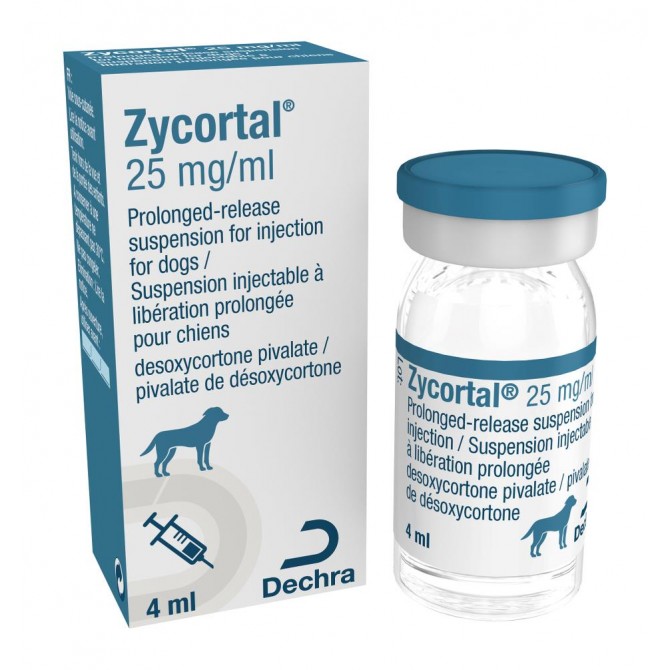
Zycortal for Dogs - 4ml
Zycortal for Dogs is a prescription-only veterinary medicine used in the long-term management of Addison’s disease (hypoadrenocorticism) in dogs. Addison’s disease is a hormonal disorder in which the adrenal glands do not produce enough steroid hormones for normal day-to-day function. In many dogs, the key deficiency is the mineralocorticoid hormone aldosterone, which helps control sodium and potassium levels and supports fluid balance and blood pressure.
Zycortal replaces mineralocorticoid activity to help stabilise electrolytes and hydration under veterinary monitoring.
How Zycortal works
The active ingredient in Zycortal is desoxycortone pivalate (DOCP). DOCP is a long-acting mineralocorticoid given as an injection under the skin. The dose and timing are set by the prescribing vet and adjusted using follow-up blood tests.
In a healthy dog, aldosterone acts mainly on the kidneys. It encourages sodium retention and potassium excretion. Water follows sodium, helping to maintain blood volume and circulation. When aldosterone is low, sodium can drop and potassium can rise. These electrolyte changes can contribute to dehydration, low blood pressure, weakness, and changes in heart rhythm.
DOCP mimics the missing mineralocorticoid effects. By supporting sodium retention and potassium excretion, it helps bring electrolytes back towards a normal range. Many dogs show better energy, appetite, and hydration once electrolytes stabilise, and gastrointestinal signs may improve if they were linked to the hormonal imbalance.
Zycortal does not replace cortisol. Some dogs with Addison’s disease also need a separate glucocorticoid medicine, such as prednisolone, alongside Zycortal.
VETERINARY PRESCRIPTION REQUIRED.
Product Features
- Pack Size: - 4ml Vial
- Target Animal: - Dog (Canine)
- Related Condition: - Addisons Disease in Dogs (Hypoadrenocorticism)
- Pet Prescription Required?: - Yes
- Active Ingredient: - Desoxycortone Pivalate (DOCP)
- Product Name: - Zycortal for Dogs
Additional Product Information
Description
Zycortal for Dogs with Addisons - DOCP
Zycortal may only be supplied with a valid veterinary prescription issued by your vet. You should only purchase Zycortal if you have or are in the process of arranging such a prescription. See information bar for further details.
Addison's disease (hypoadrenocorticism) in dogs
Early signs of Addison's disease can be vague and intermittent. Dogs may appear tired, eat less, lose weight, or have episodes of vomiting or diarrhoea. Some drink more water, seem shaky, or are reluctant to exercise. Signs can come and go, so Addison’s disease can be missed without testing.
Most dogs have 'typical' Addison’s disease, where both mineralocorticoid and glucocorticoid production are reduced. Some dogs have 'atypical' Addison’s disease, where electrolyte changes may not be obvious early on. Your vet will guide treatment based on test results and clinical response.
A small number of dogs present with an Addisonian crisis. This is a sudden, severe deterioration that can involve collapse, profound weakness, dehydration, vomiting, diarrhoea, and abnormal heart rhythm. An Addisonian crisis is an emergency and needs urgent veterinary treatment.
With appropriate lifelong management, many dogs can do very well. Consistent mineralocorticoid replacement, glucocorticoid support when required, and planned monitoring are central to treatment.
Diagnosis and ongoing management of Addison's in dogs
Diagnosis is made by a vet using clinical assessment and laboratory testing. Routine blood tests may show electrolyte changes, particularly low sodium and high potassium, and may suggest dehydration. Confirmatory endocrine testing is used to support the diagnosis and to rule out other causes of similar signs.
Zycortal is typically used as the mineralocorticoid component of the long-term plan. The schedule is refined over time using blood results and the dog’s clinical progress.
Zycortal is administered as a subcutaneous injection. In many cases, injections are given at a veterinary practice every 25-30 days, particularly early in treatment, because monitoring and adjustments are often needed. Some owners may be trained to administer injections at home, depending on the vet’s assessment and local prescribing arrangements.
Follow-up blood tests measure sodium and potassium and help determine whether the dose and interval are appropriate. Monitoring is usually more frequent at the start of therapy, after any change, and if clinical signs return. Dogs vary in how long a given dose lasts, so the injection interval is not identical for every dog and may change over time.
Your vet may schedule blood tests at specific points between injections, for example after the first dose and again closer to the next planned dose. These checks help confirm that electrolytes are controlled throughout the full dosing interval. Do not alter the dose, the interval, or any accompanying steroid medicine unless your vet advises it. Consistency and planned monitoring reduce the risk of relapse.
Many dogs improve as electrolytes normalise. Appetite, energy, and hydration may improve over days to a couple of weeks. If vomiting, diarrhoea, marked lethargy, or weakness continues, veterinary advice is needed.
Glucocorticoid support and "stress dosing"
Some dogs require daily glucocorticoid supplementation. Others may only need extra glucocorticoid during stress, such as illness, surgery, travel, kennelling, or strenuous activity. Your vet will advise whether prednisolone is needed, what dose is appropriate, and when temporary increases may be required.
If a dog with Addison’s disease becomes unusually tired, vomits, or stops eating, seek veterinary advice promptly.
Most dogs tolerate Zycortal well when treatment is individualised and monitored. Signs that may suggest over-replacement include increased thirst and urination, restlessness, or a change in appetite. Signs that may suggest under-replacement can resemble Addison’s signs, such as lethargy, reduced appetite, vomiting, diarrhoea, weakness, or collapse.
Because electrolyte changes can affect the heart, any collapse, repeated vomiting, or severe diarrhoea should be treated as urgent. If your dog shows signs consistent with an Addisonian crisis, seek emergency veterinary care immediately.
Tell your vet about any other medicines or supplements your dog is receiving, especially diuretics, heart medicines, anti-inflammatory medicines, or ongoing treatments for kidney or gastrointestinal disease.
How does Zycortal work in the body?
Zycortal contains desoxycortone pivalate (DOCP), a long-acting mineralocorticoid. It acts mainly on the kidneys to help retain sodium and excrete excess potassium. By improving electrolyte balance, it helps reduce the weakness, dehydration, and digestive signs that can occur when aldosterone is deficient.
How often is Zycortal given?
Zycortal is given as an injection under the skin at intervals set by your vet. Many dogs are treated roughly monthly, but the exact timing can vary between individuals. Blood tests to check sodium and potassium are used to adjust the dose and the interval safely.
Does my dog also need prednisolone with Zycortal?
Many dogs with Addison’s disease need both mineralocorticoid and glucocorticoid replacement. Zycortal covers the mineralocorticoid side, but it does not replace cortisol. Your vet may prescribe prednisolone daily, or may advise extra doses during stress such as illness, surgery, or travel.
What if my dog misses a scheduled Zycortal injection?
Contact your vet as soon as possible for advice on rescheduling. Do not double the next dose unless your vet instructs you to. If your dog becomes very lethargic, vomits repeatedly, has severe diarrhoea, or collapses, treat it as urgent and seek veterinary attention straight away.
What is an Addisonian crisis and what should I do?
An Addisonian crisis is a sudden, severe worsening that can cause collapse, profound weakness, dehydration, vomiting, diarrhoea, and abnormal heart rhythm. It is an emergency. Seek urgent veterinary care immediately. Treatment often involves intravenous fluids and rapid steroid support to stabilise the dog.
What our customers say about us.
Always dispensed very quickly according to any instructions I may have sent .Very reliable company .
Joni
Source: Trustpilot Review
Fantastic service
Joanne
Source: Trustpilot Review
Excellent service delivered next day.
David
Source: Trustpilot Review
You may also like
- Tracked 24 Delivery Follow your parcel online
- VMD & RCVS Registered VetDispense is a registered UK Dispensary
- Secure Payment Pay securely online by card or PayPal
- Independent Since 2008 A Trusted UK Dispensary