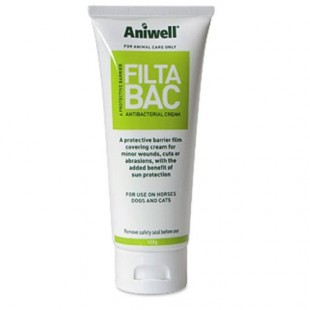
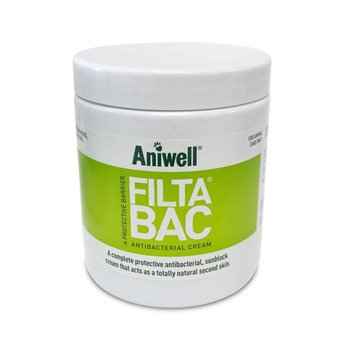
FiltaBac Antibacterial Cream is a topical antibacterial preparation for dogs and cats that helps you look after small, localised areas of irritated or damaged skin. The skin is a living barrier that limits moisture loss and keeps microbes on the outside. When that barrier is broken by a minor scrape, a cracked pad, an insect bite that has been scratched, or a sore skin fold, bacteria can multiply on the surface and prolong inflammation.
FiltaBac is available in 50g, 220g and 500g sizes. FiltaBac Cream is intended for these everyday situations where the goal is to keep the area clean and comfortable while normal healing takes place. It is not a substitute for veterinary assessment of deep wounds, punctures, bite injuries, or widespread rashes, but it can be a practical part of home care when a pet has a small patch that looks mildly infected or at risk of becoming infected.
FiltaBac Cream works by providing antibacterial activity where it is needed on the skin surface and the very top layers of the epidermis. When bacteria colonise damaged skin, the immune system responds, and you may see erythema (redness), swelling, heat, and exudate (weeping or crusting). By reducing bacterial growth locally, FiltaBac Cream can help lower the microbial burden that is driving irritation, which in turn can reduce pruritus (itch) and discourage the lick–scratch cycle that delays healing. Signs that often fit a “superficial, localised” picture include:
- Localised redness and tenderness
- Small spots, pimples, or pustules (papules/pustules)
- Oozing or crusting on the surface
- A “musty” skin odour associated with bacterial overgrowth
- Repeated licking, chewing, or scratching of one site
Alongside its antibacterial effect, the cream base helps create a light barrier that can reduce friction and keep the area from drying and cracking, so a thin, even application of FiltaBac Cream is usually more helpful than applying a thick layer.
In dogs, FiltaBac Cream is commonly used for minor abrasions and grazes, small cuts that are not bleeding heavily, and superficial pad scuffs after long walks. It can also support management of acute moist dermatitis (“hot spots”) once the coat has been clipped back and the skin has been gently cleansed, because moist, inflamed skin is an ideal setting for bacterial multiplication. Dogs with skin fold dermatitis around the lips, tail base, vulva, or facial wrinkles can benefit from careful hygiene and targeted topical support, and FiltaBac Cream may be useful when a fold is mildly sore, red, or a little smelly.
Some dogs develop interdigital dermatitis or mild folliculitis from licking at their paws; a vet-guided plan may include topical antibacterials alongside parasite control and allergy management. Avoid using FiltaBac Cream on large areas of broken skin, on deep puncture wounds, or on wounds with obvious pus, marked swelling, or severe pain, as these can signal deeper infection that needs veterinary treatment.
Cats often hide discomfort, so small problems can be easy to miss until they have been licked into a larger lesion. FiltaBac Cream can be helpful on suitable superficial areas to manage bacterial contamination associated with scratching or over-grooming, for example around the neck and face after flea bites, on mild self-trauma at the base of the tail, or on small abrasions from play. Some cats develop chin acne (comedones) that can become inflamed and secondarily infected; a vet may recommend a topical antibacterial approach as part of management, along with gentle cleansing and addressing stress or bowl hygiene.
Because cats groom meticulously, it is especially important to apply FiltaBac Cream sparingly and to discourage immediate licking, as ingesting topical products can upset the stomach and can make treatment less effective. If your cat resists handling, becomes more distressed, or the area is close to the eyes, mouth, or inside the ear flap, it is safer to ask a vet for an alternative plan that your cat will tolerate.
For best results, use FiltaBac Cream on clean, dry skin. If fur is obscuring the area, carefully trim it back with blunt-ended scissors rather than close clipping, which can worsen inflammation in sensitive skin. Cleanse gently with warm water or a vet-recommended saline solution, then pat dry with clean gauze or a soft cloth. Apply a thin, even film of FiltaBac Cream to the affected patch, taking care not to rub vigorously into sore tissue. Many topical antibacterials are used once or twice daily for short courses, but the right frequency depends on the location and how quickly the skin is responding. If your pet is likely to lick, consider a buster collar, recovery suit, or supervised distraction for a few minutes after application so the product stays on the skin. Do not apply FiltaBac Cream directly into the eyes, the ear canal, or onto mucous membranes, and do not combine it with other topical products (such as steroid creams, antiseptics, or essential oils) unless your vet has confirmed they are compatible.
If a patch is not clearly improving within 48–72 hours, or if it is getting larger, wetter, smellier, or more painful, it is sensible to arrange veterinary advice rather than continuing FiltaBac Cream alone. Seek urgent help if you see marked swelling, heat spreading beyond the original site, bleeding that will not stop, a wound from a bite, or systemic signs such as fever, reduced appetite, vomiting, or lethargy.
Recurrent “infection-like” skin flares are often linked to an underlying trigger such as atopic dermatitis, flea allergy dermatitis, food-related hypersensitivity, ectoparasites, or, in some dogs, endocrine conditions that affect skin health. In those cases, FiltaBac Cream can support the surface while the root cause is addressed, but it should not delay proper diagnosis, which might include skin cytology, culture and sensitivity testing, or an allergy and parasite-control plan. If your pet has known sensitivities, is very young, pregnant, or has a complex medical history, your vet can advise whether FiltaBac Cream is appropriate and how to use it safely alongside any other medications.
What is FiltaBac Cream used for in pets?
FiltaBac Cream is used on small, superficial patches of irritated or broken skin where bacteria may be contributing to redness, weeping, crusting, or soreness. It is commonly chosen for minor scratches, grazes, mild skin fold irritation, and similar localised issues. It is not intended for deep wounds or abscesses.
Is FiltaBac Cream safe for cats?
FiltaBac Cream is formulated for topical use in pets, but cats can be sensitive and may lick treated areas. Apply only to small, superficial patches and prevent licking where possible. Avoid eyes, mouth, and broken skin that is deep or bleeding. If your cat reacts or resists handling, speak to your vet.
Do I need to clean the area before using FiltaBac Cream?
Yes. Gently cleaning helps remove debris and reduces surface contamination so FiltaBac Cream can work effectively. Use warm water or a vet-recommended saline solution, then pat dry. Avoid harsh antiseptics unless advised, as they can sting or delay healing on inflamed skin.
Can I use FiltaBac Cream on paws and between toes?
FiltaBac Cream is often used on small, superficial paw and interdigital areas, especially where licking has caused mild redness or soreness. The key is keeping the area clean and dry and addressing the cause, such as grass seeds, allergies, or yeast. Seek veterinary help if there is swelling, discharge, or limping.
Can I use FiltaBac Cream on ears, eyes, or mucous membranes?
No. FiltaBac Cream should not be placed in the eyes, inside the ear canal, or on mucous membranes such as the mouth or genital tissues unless a vet specifically instructs you. These areas need tailored products and assessment. If irritation is near the face, ask your vet for safer options.