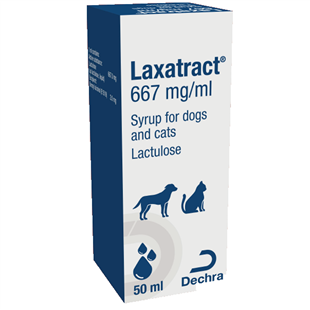
Laxatract for Dogs and Cats is a veterinary oral syrup used to support easier, more comfortable bowel movements in pets with constipation or conditions where defecation needs to be made easier. Laxatract contains lactulose, an osmotic laxative that is widely used in veterinary medicine because it acts mainly within the gut rather than being significantly absorbed into the body.
Laxatract is prescribed when your vet wants to soften hard faeces, encourage normal colonic movement and reduce straining without using a harsher stimulant laxative.
VETERINARY PRESCRIPTION REQUIRED
Laxatract works through the action of lactulose, a synthetic disaccharide that passes through the small intestine largely unchanged. Once lactulose reaches the colon, naturally occurring intestinal bacteria break it down into small organic acids, including lactic, acetic and formic acids. These acids increase the osmotic pressure inside the bowel, which means more water is drawn into the intestinal contents. As the faeces retain more moisture, they become softer and bulkier, helping them move through the colon more comfortably. This gentle increase in water content can also support peristalsis, the coordinated muscular movement that pushes faeces along the gastrointestinal tract.
Because Laxatract acts by changing the fluid balance and acidity of the colonic contents, it does not usually cause sudden urgency in the way some stimulant laxatives can. Instead, the aim is gradual relief, improved stool consistency and less effort when your pet passes faeces. A normal response may take a little time, and your vet will advise how to use Laxatract according to your pet’s weight, clinical signs and overall health.
Vets may prescribe Laxatract for acute or chronic constipation in both dogs and cats. It may be used when constipation is linked to intestinal atony after surgery, reduced mobility, dehydration, hairballs, a heavy faecal load or a slowing of normal bowel transit. Cats are particularly prone to constipation when they are older, less active, reluctant to drink, overweight or affected by painful conditions that make posturing difficult. Dogs may also become constipated after anaesthesia, orthopaedic injury, changes in diet, reduced exercise or medicines that slow gastrointestinal motility.
In cats with recurrent constipation or suspected megacolon, Laxatract may form part of a longer-term bowel management plan alongside hydration support, diet review and regular veterinary checks. Laxatract may also be used as part of the symptomatic management of conditions where easier defecation is needed, such as proctitis, rectal diverticulum or carefully assessed partial obstruction. In these situations, veterinary supervision is essential, because straining may be a sign of a more serious problem than simple constipation.
Laxatract is also relevant in some liver-related cases because lactulose can help reduce the absorption of ammonia from the bowel. In hepatic encephalopathy, ammonia and other nitrogenous toxins can build up in the bloodstream when the liver cannot process them effectively, or when abnormal blood vessels bypass the liver. This can lead to neurological signs such as disorientation, unusual behaviour, drooling, wobbliness, apparent blindness, tremors or seizures. By acidifying the contents of the colon, lactulose encourages ammonia to move from the blood into the bowel, where it is converted to ammonium and passed out in the faeces. When Laxatract is used for this purpose, it is normally part of a broader veterinary treatment plan that may include diet changes, antibiotics, liver support, diagnostic imaging and monitoring of blood parameters.
Laxatract is given by mouth and can usually be mixed with food or administered directly into the mouth using an appropriate oral syringe, depending on what your vet recommends and what your pet will tolerate. It is important to follow the prescribed dose and frequency, as the aim is to produce a soft, formed stool rather than diarrhoea. Around two to three days of treatment may be needed before the full effect is seen, although response times can vary with hydration, diet, activity level and the severity of constipation. Do not increase the amount of Laxatract without veterinary guidance, as too much lactulose can cause loose stools and may disturb fluid balance. During treatment with Laxatract, keep fresh water available and monitor your pet’s appetite, comfort, stool output and behaviour. Contact your vet promptly if your pet cannot pass faeces, seems painful, vomits, becomes very lethargic or develops a swollen abdomen.
What is Laxatract used for in dogs and cats?
Laxatract is used to treat constipation and support easier defecation in dogs and cats. Vets may prescribe it for hard faeces, reduced bowel motility, post-operative intestinal atony, hairball-related constipation or conditions where straining needs to be reduced. It should be used under veterinary guidance.
How long does Laxatract take to work?
Laxatract does not always work immediately. Many dogs and cats need around two to three days of treatment before a clear effect is seen, although response can vary. Hydration, diet, severity of constipation and the prescribed dose all influence how quickly stool consistency improves.
Can Laxatract be mixed with my pet’s food?
Laxatract can often be mixed with food or given directly into the mouth, depending on your vet’s instructions and your pet’s tolerance. Mixing it with a small amount of familiar food may help cats or dogs accept it more calmly. Always ensure the full prescribed amount is taken.
Is Laxatract safe for cats?
Laxatract is licensed for use in cats when prescribed by a vet. It is commonly used for feline constipation, including cases linked to hairballs, reduced fluid intake or slower colonic movement. Cats with severe pain, vomiting, suspected obstruction or a swollen abdomen should be assessed urgently.
Can Laxatract help with hairball-related constipation?
Laxatract may be prescribed when hairballs contribute to constipation or a heavy faecal load in cats. By increasing water in the bowel, it helps soften stool and make defecation easier. Recurrent hairball problems may also need grooming, diet review and assessment for underlying gastrointestinal disease.
Do I need a prescription to buy Laxatract?
Yes. Laxatract is a prescription-only veterinary medicine, so it must be supplied against a valid prescription from a veterinary surgeon. Your vet will decide whether Laxatract is suitable, calculate the correct dose and check for risks such as obstruction, diabetes or electrolyte imbalance.
What should I do if my pet still cannot pass faeces?
Contact your vet promptly if your dog or cat is still unable to pass faeces, is straining repeatedly, vomits, stops eating, becomes lethargic or has a painful or swollen abdomen. These signs can indicate severe constipation, obstruction or another condition that needs urgent veterinary care.