


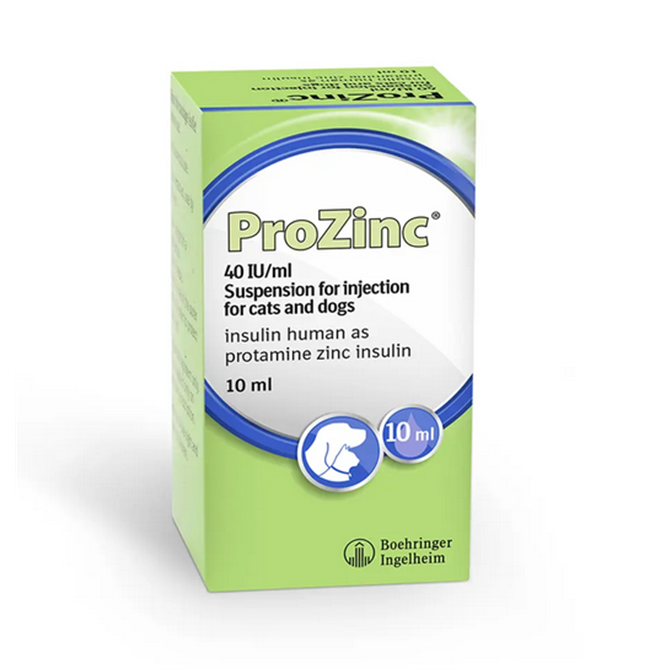
Prozinc Insulin for Cats and Dogs - 10ml
Prozinc Insulin for Cats and Dogs is a prescription-only veterinary insulin used to help manage diabetes mellitus, a condition where pets struggle to control their blood glucose properly. Diabetes can cause signs such as increased thirst, frequent urination, weight loss, tiredness and changes in appetite, which can be worrying for owners but often become more manageable once a clear treatment routine is in place.
Prozinc Insulin contains protamine zinc insulin, designed to provide a steady insulin effect after subcutaneous injection under veterinary direction. When used alongside consistent meals, monitoring and regular vet checks, Prozinc Insulin can help reduce high blood sugar, improve day-to-day comfort and support a more settled routine for diabetic cats and dogs.
VETERINARY PRESCRIPTION REQUIRED
Product Features
- Pack Size: - 10ml Vials
- Target Animal: - Cat (Feline)
- Related Condition: - Diabetes in Cats
- Pet Prescription Required?: - Yes
- Active Ingredient: - Protamine zinc suspension of human insulin
- Product Name: - Prozinc Insulin for Cats
Additional Product Information
Description
Prozinc Insulin for Cats and Dogs is a veterinary insulin used to help manage diabetes mellitus, a long-term endocrine condition in which a pet cannot control blood glucose normally. Prozinc Insulin contains protamine zinc insulin, a form of recombinant human insulin designed for subcutaneous injection under veterinary direction. It is supplied as a 40 IU/ml cloudy white suspension and is used to reduce hyperglycaemia and improve the clinical signs linked with poor glucose control. When a cat or dog has been diagnosed with diabetes, it is natural for owners to feel anxious about injections, feeding times and monitoring.
Diabetes mellitus develops when there is not enough effective insulin activity in the body. In cats, this may be linked to insulin resistance, pancreatic beta-cell dysfunction, excess bodyweight or other endocrine influences, and some cats can enter diabetic remission once their glucose is well controlled. In dogs, diabetes is often associated with a more permanent reduction in insulin production, although temporary diabetic states can occur with conditions such as dioestrus-related hormonal change or hyperadrenocorticism.
Without sufficient insulin action, glucose remains in the bloodstream instead of moving efficiently into cells, so the body cannot use energy as it should. A diagnosis is usually confirmed through blood and urine testing, often alongside fructosamine measurement, ketone assessment and a review of the pet’s weight, diet and concurrent disease.
Common signs can include:
- increased thirst,
- frequent urination,
- weight loss despite a good appetite,
- tiredness,
- a dull coat,
- recurrent infections,
- weakness
- changes in appetite or vomiting.
Prozinc Insulin helps address the underlying lack of insulin activity, but diabetes care also depends on consistent feeding, stable routines, weight management and regular veterinary review.
Prozinc Insulin works by replacing or supplementing the insulin your pet is missing. After injection beneath the skin, the protamine and zinc components slow the absorption of insulin into the circulation, helping to provide a steadier effect than a very short-acting insulin. Insulin binds to receptors on cells in tissues such as muscle, fat and the liver, encouraging glucose uptake and reducing excessive glucose production by the liver. As blood glucose falls towards a safer range, signs such as thirst, urination and hunger should begin to improve. Prozinc Insulin also helps reduce the metabolic strain caused by persistent hyperglycaemia, including the tendency for the body to break down fat and protein for energy. The aim is not to make every glucose reading perfect, but to achieve safe glycaemic control, reduce clinical signs and minimise the risk of complications such as hypoglycaemia, dehydration and ketone production. Because every pet metabolises insulin differently, response should be judged over time rather than from one isolated result, and your vet may balance home observations with laboratory data to avoid both under-treatment and excessive insulin effect. This keeps the plan realistic, safer and easier to maintain for busy households.
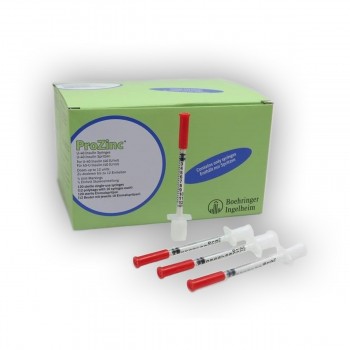
Prozinc Insulin is given by subcutaneous injection using a U-40 insulin syringe, and accuracy matters because small dose changes can have a noticeable effect. The vial should be gently rolled before drawing up each dose so the suspension looks evenly cloudy; it should not be shaken hard, and it should not be used if visible clumps remain after gentle rolling. Prozinc Insulin is usually given with or immediately after a meal, but the exact schedule depends on whether the patient is a cat or dog, the vet’s assessment, current clinical signs and monitoring results. Owners should receive clear training on injection technique, safe handling, syringe choice and what to do if a dose is missed. It is important not to change the dose because a pet seems brighter or because a single glucose reading looks high or low. Dose changes are normally made after a period of observation, because insulin treatment needs time to settle and because stress, appetite changes, exercise, infections, corticosteroids, gestagens and diet changes can alter insulin needs.
Monitoring is an important part of treatment with Prozinc Insulin. Your vet may use clinical signs, bodyweight, urine tests, blood glucose curves, fructosamine and general health checks to judge whether the dose is right. At home, owners are usually asked to watch for changes in drinking, urination, appetite, weight and behaviour. The most important safety concern is hypoglycaemia, which means blood glucose has fallen too low. Possible signs include sudden hunger, restlessness, anxiety, trembling, twitching, weakness, wobbliness, stumbling, disorientation, collapse or seizures. A pet showing signs of hypoglycaemia needs prompt veterinary advice, and many vets recommend keeping a glucose-containing gel, honey or similar source of sugar available for emergencies. Prozinc Insulin should be stored upright in a refrigerator, protected from light and kept away from children. It must not be frozen, and opened vials should be used only within the stated in-use period.
What is Prozinc Insulin used for in cats and dogs?
Prozinc Insulin is used to treat diabetes mellitus in cats and dogs by helping reduce high blood glucose and improve related signs. It is a veterinary prescription medicine, so the dose and schedule should always be set by the prescribing vet for the individual pet.
How does Prozinc Insulin work?
Prozinc Insulin replaces or supplements the insulin your pet is missing. After injection under the skin, protamine and zinc slow absorption, giving a steadier insulin effect. This helps glucose move from the bloodstream into cells and reduces excessive glucose production by the liver.
Is Prozinc Insulin suitable for both cats and dogs?
Yes, Prozinc Insulin is used for diabetes mellitus in cats and dogs, but dosing differs between species and individual patients. Cats may sometimes enter diabetic remission, while dogs often need ongoing insulin therapy. Your vet will decide the most appropriate starting dose and monitoring plan.
How is Prozinc Insulin given to a pet?
Prozinc Insulin is given by subcutaneous injection, usually with or just after a meal. A U-40 insulin syringe should be used for accurate dosing. Owners should be trained by a vet or veterinary nurse before giving the first dose at home.
What signs of pet diabetes should owners look for?
Common diabetes signs include drinking more than usual, passing urine more often, weight loss despite appetite, tiredness, weakness, a dull coat and recurrent infections. Some pets may vomit or seem generally unwell. Any sudden worsening should be discussed with a vet promptly.
What are signs of low blood sugar on Prozinc Insulin?
Low blood sugar, or hypoglycaemia, can cause sudden hunger, anxiety, trembling, twitching, weakness, wobbliness, disorientation, collapse or seizures. This can be urgent. Keep a vet-recommended glucose source available and contact your veterinary practice immediately if these signs appear, especially before the next injection.
Does Prozinc Insulin need to be refrigerated?
Prozinc Insulin should be stored upright in a refrigerator, protected from light and kept out of children’s reach. It must not be frozen. The vial should be gently rolled before use and discarded within the stated in-use period after opening.
What our customers say about us.
It's so easy to order my cat's medication. He has diabetes, so he needs to have it regularly and with Vets Dispense I don't have to worry as it is always on time.
Alison
Source: Trustpilot Review
Bought from here as it seemed the cheapest dispensary for my dog’s prescription. No issues with delivery etc
Claire
Source: Trustpilot Review
I always receive an excellent service from this company. The website is easy to navigate, the items are dispatched immediately and always delivered on time.
Janey
Source: Trustpilot Review
You may also like
- Tracked 24 Delivery Follow your parcel online
- VMD & RCVS Registered VetDispense is a registered UK Dispensary
- Secure Payment Pay securely online by card or PayPal
- Independent Since 2008 A Trusted UK Dispensary