


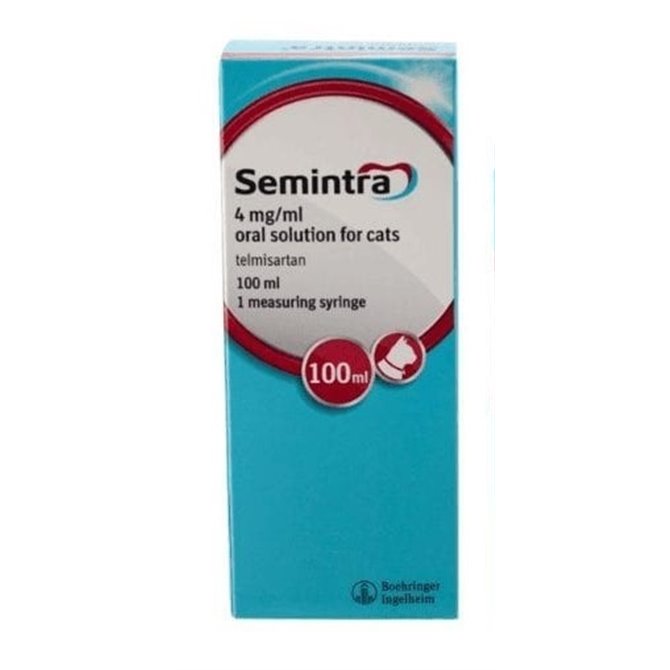
Semintra Oral Solution for Cats - 100ml
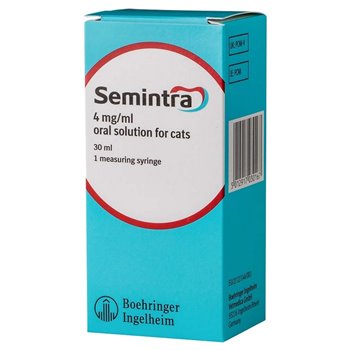
Semintra for Cats 100ml is a veterinary oral solution containing telmisartan. It is used in cats with chronic kidney disease (CKD) when the kidneys are allowing an abnormal amount of protein to leak into the urine. This protein loss is called proteinuria. Managing proteinuria matters because it can be associated with faster progression of kidney damage in some cats. Your vet will diagnose CKD using blood and urine tests and may recommend Semintra as part of a longer-term management plan.
Semintra is supplied as a liquid so it can be measured accurately for each cat’s body weight. The 100ml bottle is often chosen when ongoing daily dosing is expected, but the most appropriate pack size depends on the prescribed dose and your vet’s instructions.
How Semintra works
Telmisartan acts on a hormone pathway called the renin–angiotensin–aldosterone system (RAAS). The RAAS influences blood pressure and blood flow through the kidneys. In CKD, this system can contribute to increased pressure within the kidney’s microscopic filters (the glomeruli). Higher pressure can push more protein through the filter and into the urine.
Telmisartan blocks the angiotensin II type 1 (AT1) receptor. By blocking this pathway, Semintra can help reduce pressure in the glomeruli and lower the amount of protein that passes into the urine. The aim is to reduce ongoing strain on the kidneys. Semintra does not cure CKD, but it can support kidney care where proteinuria is present.
Product Features
- Pack Size: - 100ml Bottle
- Target Animal: - Cat (Feline)
- Related Condition: - Chronic Kidney Disease
- Pet Prescription Required?: - Yes (For UK Orders)
- Active Ingredient: - Telmisartan
- Product Name: - Semintra
Additional Product Information
Description
Semintra may only be supplied with a valid veterinary prescription issued by your vet. You should only purchase Semintra if you have or are in the process of arranging such a prescription. See information bar for further details.
Chronic kidney disease in cats
CKD is a gradual, permanent reduction in kidney function. Healthy kidneys remove waste products, help control hydration and minerals, and contribute to blood pressure regulation. With CKD, waste products can build up and the body can struggle to maintain normal fluid and mineral balance.
CKD is common in older cats, although it can occur at any age. In many cases the exact cause is not identified, and treatment is guided by test results and symptoms. Vets often stage CKD using blood values, urine concentration and blood pressure, which helps decide on monitoring and treatment choices.
Common signs include increased thirst and urination, weight loss, reduced appetite, nausea, vomiting, dehydration, and lethargy. Some cats develop high blood pressure or proteinuria even before obvious signs appear. Routine blood and urine testing is therefore important, especially for senior cats.
Protein is not usually present in significant amounts in urine. When the kidney filter is damaged or under increased pressure, proteins such as albumin can pass into the urine. Proteinuria can be a marker of kidney injury and can contribute to further inflammation and scarring within kidney tissues over time.
Your vet may measure a urine protein:creatinine (UPC) ratio to assess protein loss. They may also rule out other causes of protein in urine, such as urinary tract infection, inflammation, or blood contamination. If proteinuria is confirmed and consistent with CKD, telmisartan may be recommended to reduce this loss.
Giving Semintra to your cat
Semintra is usually given once daily by mouth. Your vet will calculate the dose based on your cat’s weight and clinical picture. The commonly used starting dose for telmisartan in cats is 1mg per kg once daily, which corresponds to 0.25 ml per kg for the 4 mg/ml solution, but you must follow the specific instructions on your prescription.
Use the dosing syringe provided and measure carefully. Administer the dose slowly into the side of the mouth to reduce the chance of coughing or spitting. If your cat dislikes direct dosing, your vet may advise giving the dose with a small amount of food, provided your cat reliably eats the full portion. Do not mix the dose into a full meal that may not be finished.
Try to give Semintra at roughly the same time each day. If you miss a dose, follow your vet’s advice. In many cases you will be told to give the next dose at the usual time rather than doubling up, because too much can increase the risk of low blood pressure.
Telmisartan starts working after dosing, but progress is usually assessed by repeat urine tests over days to weeks. Your cat may not show an obvious change, because proteinuria does not always cause noticeable symptoms. For this reason, follow-up testing is important. Your vet may repeat urine testing to check the UPC ratio, and may also repeat blood tests to ensure kidney values and electrolytes remain stable. Your vet may also recommend periodic checks for urine concentration, hydration status and body weight, because CKD cats can lose weight gradually and become dehydrated. These checks help confirm the current dose remains appropriate and that your cat’s wider CKD plan is still meeting their needs.
Blood pressure checks may be recommended, particularly if your cat has known hypertension or is taking other medicines that affect blood pressure.
Side effects and precautions
Many cats tolerate Semintra well. Possible side effects include reduced appetite, mild stomach upset, lethargy, and signs related to low blood pressure such as weakness, unsteadiness, or collapse. Cats that are dehydrated or unwell can be more sensitive to medicines that affect kidney blood flow, so contact your vet promptly if your cat becomes unwell.
Your vet will take particular care if your cat is receiving non-steroidal anti-inflammatory drugs (NSAIDs), diuretics, other blood pressure medicines, or other drugs that affect the RAAS, because combinations can increase the risk of changes in kidney blood results or blood pressure. Always tell your vet about all medicines and supplements your cat receives.
Semintra is usually used alongside other CKD measures. Many cats benefit from a renal diet to help control phosphate intake and provide appropriate nutrition. Some cats need phosphate binders, anti-nausea medication, appetite support, or potassium supplementation, depending on blood and urine results. Treatment plans are individual and are adjusted over time as CKD progresses.
Store Semintra as directed on the label and keep it out of reach of children and pets. Use the bottle and syringe cleanly to reduce contamination. Do not use the product past its expiry date or beyond any in-use period stated on the packaging.
What are the common signs of CKD in cats?
Many cats drink more and pass more urine. Weight loss, reduced appetite, nausea, vomiting, constipation, dehydration, and a dull coat are also common. Some cats develop high blood pressure or protein in the urine. Because signs can be subtle at first, routine blood and urine tests are often how CKD is detected.
How quickly does Semintra start to work?
Telmisartan starts acting in the body soon after dosing, but the effect you measure is usually a change in urine protein levels over days to weeks. Your vet may recheck urine tests after starting treatment and then at intervals. Improvements in appetite or energy, if they happen, can take longer.
What dose is typical for Semintra?
Dosing is set by your vet, based on your cat’s weight and clinical picture. The commonly used starting dose for telmisartan is 1 mg per kg once daily, which corresponds to 0.25 ml per kg for the 4 mg/ml solution. Always follow your vet’s instructions and re-weigh your cat regularly.
Can Semintra be used with renal diets or kidney supplements?
Semintra is often used alongside a renal prescription diet, because diet remains a key part of CKD care. Many cats also use phosphate binders or other kidney-support supplements, depending on blood and urine results. Your vet should review the full plan to avoid unnecessary products and to coordinate dosing.
What monitoring does my vet usually recommend with Semintra?
Monitoring often includes urine tests to measure protein loss, plus blood tests to assess kidney values and electrolytes. Blood pressure checks are also common, particularly in cats already prone to hypertension. Your vet may schedule a recheck soon after starting, then adjust the frequency based on stability and IRIS stage.
What our customers say about us.
It's so easy to order my cat's medication. He has diabetes, so he needs to have it regularly and with Vets Dispense I don't have to worry as it is always on time.
Alison
Source: Trustpilot Review
Good all round. Great service, good prices
Tim
Source: Trustpilot Review
Fantastic service
Joanne
Source: Trustpilot Review
You may also like
- Tracked 24 Delivery Follow your parcel online
- VMD & RCVS Registered VetDispense is a registered UK Dispensary
- Secure Payment Pay securely online by card or PayPal
- Independent Since 2008 A Trusted UK Dispensary