


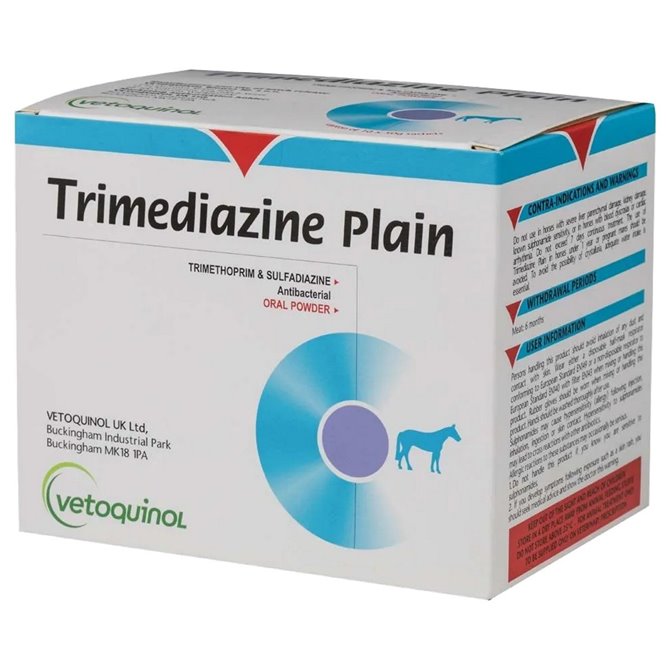
Trimediazine Plain Sachet for Horses - 10 sachets of 50g
Trimediazine Plain combines trimethoprim and sulfadiazine to treat susceptible bacterial infections in horses, including respiratory infections and infected wounds.
The oral powder mixes with a small portion of feed, allowing treatment to be given as part of your horse’s feeding routine. Each pack contains ten 50g sachets.
Product Features
- Pack Size: - 10 Sachets
- Target Animal: - Horse (Equine)
- Pet Prescription Required?: - Yes
- Active Ingredient: - Trimethoprim and Sulfadiazine
- Product Name: - Trimediazine Plain Sachet for Horses - 10 sachets of 50g
Additional Product Information
Description
Trimediazine Plain is an antibiotic powder for horses, used to treat susceptible bacterial infections affecting the respiratory tract, digestive tract or wounds. It combines trimethoprim and sulfadiazine, two active ingredients that work together against bacteria. Your vet will assess the infection and decide whether this combination is appropriate, using laboratory testing where possible. The powder is mixed with feed rather than applied to the affected area. This pack contains ten individually sealed 50g sachets, providing a measured format for the course of treatment your vet has arranged.
Each gram of Trimediazine Plain contains 50mg trimethoprim and 250mg sulfadiazine. The two antibiotics interfere with different stages of the same bacterial metabolic pathway, strengthening their combined antibacterial action. A cough, nasal discharge or a wound does not automatically mean this medicine is needed: the cause, severity and likely bacteria all influence the choice of treatment. Trimediazine Plain should therefore be used for the horse and condition assessed by your vet. Do not share leftover sachets between horses or restart treatment for a new illness without further advice.
Give Trimediazine Plain according to the dispensing label, using a weight estimate that is as accurate as possible. The product’s standard daily quantity is 50g for a 500kg horse, but the amount for your horse must follow your vet’s directions. Mix the dose thoroughly into a small quantity of feed immediately before administration and check that the medicated portion has been eaten. The product instructions recommend withholding other feed until this portion is consumed. If your horse refuses it or leaves some behind, contact your vet rather than guessing how much extra powder to give. Discard uneaten medicated feed.
The authorised treatment schedule is five days, with the daily amount given once or divided into two portions twelve hours apart. Follow the schedule on your horse’s label; do not change the frequency, stop early or extend treatment yourself. Trimediazine Plain must not be given for more than seven continuous days. Keep a clear record of each dose, particularly where several people share yard duties. Fresh drinking water must be readily available throughout treatment because adequate water intake helps reduce the risk of crystals forming in the urine. Tell your vet promptly if your horse is drinking poorly, stops eating or becomes more unwell.
Your vet needs to know about existing health problems before Trimediazine Plain is started. It must not be used in horses with severe liver damage, kidney damage, certain blood disorders, cardiac arrhythmias or known sulphonamide sensitivity. Use should be avoided in horses under one year old and in pregnant mares. Treatment of a nursing mare also needs careful veterinary consideration because small amounts of the ingredients pass into milk. Although the product information lists no known adverse events, any suspected reaction or deterioration still warrants veterinary advice. Continue any wound care, rest or other management your vet recommends alongside the medicine.
Handle Trimediazine Plain carefully to avoid breathing in powder or getting it on your skin. Wear rubber gloves and the respiratory protection specified in the leaflet when mixing or handling it, and wash your hands afterwards. Anyone with a known sulphonamide allergy should avoid contact with the product. Store sachets in a dry place at no more than 25°C, separately from animal feed and out of children’s reach. A valid veterinary prescription is needed for supply. The meat and offal withdrawal period is six months; discuss your horse’s food-chain status and treatment records with your vet before use.
What is Trimediazine Plain used for?
It treats susceptible bacterial diseases in horses, including upper and lower respiratory infections, digestive-tract infections and infected wounds. Your vet determines whether an antibiotic is needed and whether this product is suitable.
What does each Trimediazine sachet contain?
Each 50g sachet contains 2.5g trimethoprim and 12.5g sulfadiazine. The pack contains ten sachets. These are antibiotic ingredients, and the sachet quantity does not determine the course length by itself.
How do I give Trimediazine Plain?
Mix the directed amount into a small portion of feed immediately before giving it. Check that the horse eats the whole portion. Do not sprinkle the powder onto a wound or administer it by injection.
What if my horse does not finish the medicated feed?
Contact your vet for advice. It may be unclear how much medicine the horse received, so adding another full dose could give too much. Discard the remaining medicated feed as directed.
Why is drinking water especially important?
Adequate water intake helps reduce the risk of crystalluria, meaning crystals in the urine. Keep fresh water available and tell your vet if the horse drinks less than usual or appears dehydrated.
Can Trimediazine Plain be given to foals or pregnant mares?
Use should be avoided in horses under one year and in pregnant mares. Nursing mares also require veterinary assessment because the ingredients can pass into milk and affect a very young foal’s exposure.
What protection should I wear when mixing it?
Wear rubber gloves and either an EN149 disposable half-mask respirator or an EN140 respirator with an EN143 filter, as specified in the leaflet. Avoid dust and skin contact, then wash your hands thoroughly.
Brand

What our customers say about us.
I wouldn’t go anywhere else for my cat’s medication. Price is competitive, but the difference here is the customer service - it is second to none. They’re so helpful, and the medicine is always delivered immediately. Nice clear invoices too makes claiming back on my insurance a doddle. Fantastic company
Nikki
Source: Trustpilot Review
Fantastic service
Joanne
Source: Trustpilot Review
Smooth process, medication arrived quickly very happy overall with the service
Kelly
Source: Trustpilot Review
You may also like





- Tracked 24 Delivery Follow your parcel online
- VMD & RCVS Registered VetDispense is a registered UK Dispensary
- Secure Payment Pay securely online by card or PayPal
- Independent Since 2008 A Trusted UK Dispensary