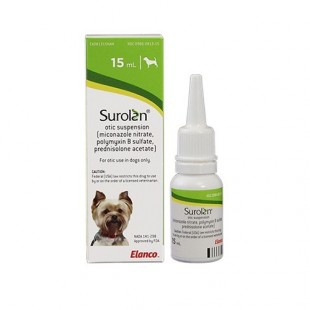
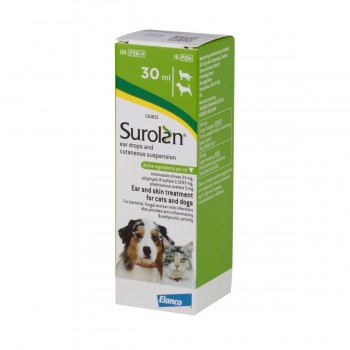
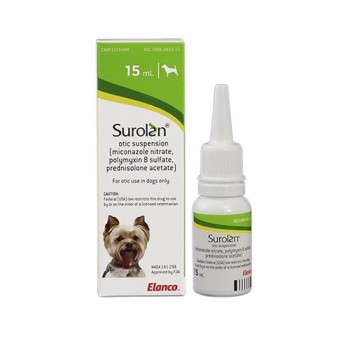
Surolan is a prescription-only ear-drop and skin suspension for dogs and cats, combining three active ingredients to treat susceptible local infections and reduce inflammation. Miconazole nitrate provides antifungal activity and activity against some bacteria, polymyxin B sulphate acts against susceptible Gram-negative bacteria, and prednisolone acetate helps reduce swelling and itching. Surolan is authorised for otitis externa and specified skin infections, including infections involving susceptible bacteria, fungi or yeasts. It is also used for otitis externa caused by the ear mite Otodectes cynotis. The 15ml and 30ml bottles contain the same formulation. Each millilitre provides 23mg miconazole nitrate, 5mg prednisolone acetate and 0.5293mg polymyxin B sulphate. The medicine is applied locally, with the quantity and course suited to the affected area and cause.
Otitis externa is inflammation of the outer ear canal, the passage extending from the visible ear opening towa...
Surolan is a prescription-only ear-drop and skin suspension for dogs and cats, combining three active ingredients to treat susceptible local infections and reduce inflammation. Miconazole nitrate provides antifungal activity and activity against some bacteria, polymyxin B sulphate acts against susceptible Gram-negative bacteria, and prednisolone acetate helps reduce swelling and itching. Surolan is authorised for otitis externa and specified skin infections, including infections involving susceptible bacteria, fungi or yeasts. It is also used for otitis externa caused by the ear mite Otodectes cynotis. The 15ml and 30ml bottles contain the same formulation. Each millilitre provides 23mg miconazole nitrate, 5mg prednisolone acetate and 0.5293mg polymyxin B sulphate. The medicine is applied locally, with the quantity and course suited to the affected area and cause.
Otitis externa is inflammation of the outer ear canal, the passage extending from the visible ear opening towards the eardrum. An affected dog or cat may scratch the ear, shake its head or resist having the area touched. Redness, discharge and an unpleasant smell can develop as inflammation and microbial growth disturb the normal ear environment. Surolan treats susceptible organisms while reducing the inflammatory response that contributes to discomfort. Yeasts such as Malassezia can multiply when conditions within the canal change, and bacterial infection can develop alongside them. Surolan is particularly useful when its combination of antimicrobial and anti-inflammatory actions matches the problem present. Recurrent ear disease can be associated with an underlying skin allergy or another continuing cause, so episodes do not always arise from a new infection alone.
Miconazole in Surolan disrupts the production of ergosterol, an essential component of fungal cell membranes. This impairs normal membrane function and provides activity against susceptible yeasts and fungi. Polymyxin B acts differently, interacting with the membranes of susceptible bacteria and damaging their integrity. Surolan therefore provides local antimicrobial activity through more than one mechanism. The organisms involved in ear disease vary, and resistance can affect which antibacterial medicine will work. Sampling ear discharge can help identify whether bacteria or yeasts are present and whether a particular treatment is appropriate. The formula also has activity against certain Gram-positive bacteria through miconazole, but there is no need for an owner to identify an organism from the colour or smell of discharge. Those appearances alone cannot reliably establish the cause. Warmth, moisture and accumulated debris can encourage microbial growth, while swelling reduces the space within the canal and makes drainage more difficult. Long-standing inflammation can also thicken the canal lining and make recurrent episodes harder to resolve.
Prednisolone acetate in Surolan is a corticosteroid with anti-inflammatory and anti-pruritic effects; anti-pruritic means that it reduces itching. Inflammation can make the canal swollen, sore and more easily damaged by scratching or repeated head shaking. Reducing this response helps improve comfort while the antimicrobial ingredients act at the affected surface. Surolan is also authorised for ear-mite-associated otitis externa. Mites can cause intense irritation and dark debris, particularly in cats, although similar-looking discharge can occur with other ear disorders. The specific ear-mite schedule in the product information is five drops twice daily for 14 days, with both ears considered for treatment even when changes are more obvious on one side. Other infections do not automatically use this same fixed-duration schedule.
Shake Surolan vigorously before use so that the suspension is fully mixed. For ear treatment, drops are placed into the affected canal after appropriate cleaning, followed by gentle massage to distribute the medicine. The standard ear directions specify a few drops twice daily, with the separate five-drop instruction applying to ear mites. Surolan can also be applied twice daily to clean areas of skin affected by infections within its authorised indications. Hair covering a skin lesion may need clipping to allow contact with the affected surface. The 15ml bottle offers the smaller quantity, while the 30ml bottle provides more of the same suspension. Treatment usually continues for a few days after clinical signs have completely disappeared. Persistent infections can require a course lasting two to three weeks. The relevant course therefore depends on the type of infection and its response, with the fixed 14-day schedule reserved for the ear-mite indication.
Surolan must not be used when the eardrum is perforated because polymyxin B can damage structures involved in hearing. A change in hearing during treatment requires the drops to be stopped and veterinary advice obtained; reported hearing impairment has often been temporary and mainly affected older dogs. Prolonged exposure to topical corticosteroids can also alter the skin and delay healing. Surolan should not be used alongside medicines known to cause ear toxicity, and corticosteroids are not recommended for pregnant animals. Wear single-use disposable gloves when applying the suspension and wash any accidental skin exposure promptly. Keep the bottle in its outer carton below 25°C. Once opened, it has a three-month in-use shelf life, provided the printed expiry date has not passed.
What is Surolan used for?
Surolan treats otitis externa and specified skin infections in dogs and cats. Its ingredients provide antifungal, antibacterial and anti-inflammatory effects against susceptible infections. It is also authorised for ear-mite-associated otitis externa. The appropriate course depends on the cause and location of the condition being treated.
What are the active ingredients in Surolan?
Surolan contains miconazole nitrate, polymyxin B sulphate and prednisolone acetate. Miconazole acts against susceptible fungi, yeasts and some bacteria; polymyxin B acts against susceptible Gram-negative bacteria. Prednisolone reduces inflammation and itching. Mupirocin is not an ingredient in this ear-drop and skin suspension.
Can Surolan be used for cats as well as dogs?
Yes. Surolan is authorised for both dogs and cats for the ear and skin indications described in its product information. The medicine is applied locally rather than swallowed. Suitability depends on the problem present, including whether the eardrum is intact when treating an ear.
Does Surolan treat yeast infections in ears?
Surolan contains miconazole, which acts against susceptible yeasts, including organisms involved in otitis externa. Prednisolone helps reduce the accompanying inflammation and itching. Yeast overgrowth can develop alongside bacterial infection or underlying skin disease, so recurrent episodes may need more than repeated treatment of the discharge alone.
Can Surolan treat ear mites?
Yes. Surolan is authorised for otitis externa caused by Otodectes cynotis. The specific ear-mite directions are five drops twice daily for 14 days, with both ears considered for treatment. This fixed schedule should not be applied automatically to every other type of ear infection.