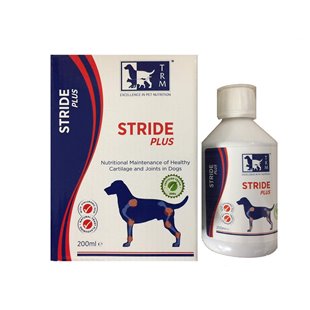
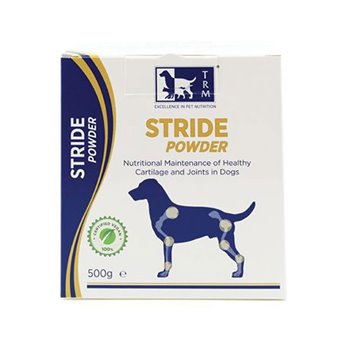
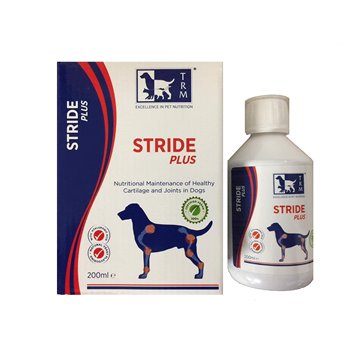
Stride Plus for Dogs is a joint-support supplement designed to help dogs stay comfortable and mobile when everyday movement starts to feel like harder work. Many dogs develop stiffness after exercise, take longer to rise after resting, or seem less willing to jump into the car or climb stairs, and these changes can relate to joint wear, low‑grade inflammation, or reduced lubrication within the joint. Stride Plus is typically used as part of a vet-led approach to supporting normal joint function in older dogs, larger breeds, or dogs with a history of orthopaedic strain.
Rather than acting as a fast-acting painkiller, Stride Plus provides nutritional support for joint structures such as cartilage, synovial fluid, and surrounding connective tissues. It can be used alongside practical measures like weight control and appropriate exercise, and alongside prescribed medicines when needed. If your dog has other health conditions or takes multiple medications, check with your vet before starting Stride Plus.
Arthritis in dogs most often refers to osteoarthritis, also known clinically as degenerative joint disease. In a healthy joint, smooth cartilage covers the ends of bones and allows near-frictionless movement, while synovial fluid lubricates and nourishes the cartilage. With osteoarthritis, cartilage becomes worn and microscopically damaged, the synovial lining can become inflamed (synovitis), and the joint capsule may thicken. The body tries to stabilise the joint by laying down new bone at the edges (osteophytes), but this can further limit movement and contribute to discomfort. Pain comes not only from the joint surface but also from inflammation, altered biomechanics, and sensitivity in surrounding soft tissues. Arthritis can develop with age, after injury such as cruciate ligament damage, or alongside conditions like hip or elbow dysplasia and patellar luxation. Excess body weight increases mechanical load on joints and is strongly linked with worsening clinical signs. Arthritis is usually progressive, but many dogs do very well with a tailored management plan that may include analgesia, rehabilitation, and long-term support such as Stride Plus.
Dogs rarely point to where it hurts, so changes in behaviour and movement are important clues. Arthritis may flare after activity or during colder, damp weather, and some dogs have good days and bad days. You might notice:
- Stiffness when getting up, especially first thing in the morning or after a nap.
- Slower walking pace, lagging behind, or tiring sooner on normal routes.
- Reluctance to jump, climb stairs, or get into the car.
- Lameness, toe-dragging, or a shortened stride in one or more legs.
- Less interest in play, running, or social interaction with other dogs.
- Irritability when touched, yelping, licking a joint, or guarding a limb.
- Muscle loss around an affected joint, or a change in posture and weight-bearing.
A veterinary assessment usually includes an orthopaedic examination, checking range of motion, joint thickening, and pain response, and may include imaging such as radiographs to look for degenerative change. Identifying arthritis early helps because a combination of weight management, appropriate exercise, physiotherapy, and supportive products such as Stride Plus can reduce strain and help preserve function.
Stride Plus works by supporting the tissues commonly affected in canine osteoarthritis and by helping to maintain the joint’s normal lubrication and shock-absorbing properties. Stride Plus is formulated around joint nutrients such as glucosamine and chondroitin, which support cartilage metabolism and the production of glycosaminoglycans, important components of the cartilage matrix. Many Stride Plus formulas also include methylsulfonylmethane (MSM), a source of sulphur that supports connective tissue, and hyaluronic acid, a key part of synovial fluid that helps joints move smoothly. In practical terms, Stride Plus helps to maintain the “cushioning” and lubrication that arthritic joints often lose over time. These ingredients do not reverse advanced joint damage, and Stride Plus is not a replacement for veterinary analgesics when pain control is required, but it can be a valuable adjunct within a multimodal plan. By supporting cartilage and synovial fluid, Stride Plus may help reduce friction within the joint, which can lessen secondary irritation and help maintain smoother movement. Over time, improved joint support can make it easier for dogs to keep gently active, which helps preserve muscle strength and proprioception and reduces the ‘stiff after rest’ feeling that many owners recognise.
How you use Stride Plus matters as much as why you use it. Joint supplements are usually given daily, and most dogs benefit from consistency, because cartilage and synovial support tend to be gradual processes rather than overnight changes. Follow the label directions or your vet’s advice for dosing based on body weight, and introduce Stride Plus as directed so your dog tolerates it well. Many owners look for changes such as easier rising, a longer comfortable walk, or less stiffness the day after exercise, but response varies. It can help to reassess after several weeks of steady use, noting activity levels and comfort. If your dog develops vomiting, diarrhoea, or reduced appetite after starting Stride Plus, pause it and speak to your vet. If your dog is already on medicines such as an NSAID, ask your vet whether Stride Plus is appropriate for your dog’s case.
Living with arthritis can feel worrying, but many dogs remain happy and active with the right support, and small adjustments often make a meaningful difference. Keeping your dog at a lean body condition score is one of the most clinically important steps, because reduced weight lowers load on painful joints. Shorter, more frequent walks can be kinder than a single long outing, and a gentle warm-up before energetic play can reduce stiffness. At home, non-slip flooring, supportive bedding, ramps, and raised bowls may reduce awkward movements that strain hips, elbows, and the spine. Physiotherapy and hydrotherapy can improve muscle strength and joint stability, which helps protect arthritic joints from overload. Stride Plus fits best when paired with these measures and when you keep an eye on comfort and stamina. If lameness suddenly worsens, a joint becomes hot or swollen, or your dog seems unusually unsettled at rest, seek prompt veterinary advice.
What is Stride Plus for Dogs used for?
Stride Plus is used to provide nutritional support for joints, particularly in dogs with osteoarthritis, stiffness or reduced mobility. It is designed to support cartilage health and synovial fluid lubrication, so movement feels smoother. It is often used alongside weight management, suitable exercise and any vet-prescribed pain relief.
How long does Stride Plus take to work?
Some dogs show subtle improvements in comfort within a few weeks, but joint supplements usually need consistent daily use to assess properly. Many owners review progress after 4–8 weeks, looking for easier rising, longer comfortable walks and less post-exercise stiffness. Response varies with age, weight and severity of arthritis.
Can Stride Plus be given with anti-inflammatory pain medicine?
In many cases, Stride Plus can be used alongside veterinary medicines such as non-steroidal anti-inflammatory drugs (NSAIDs), because it targets joint support rather than acting as a painkiller. However, every dog is different. If your dog has other illnesses or takes several medicines, ask your vet before combining products.
What are the early signs of arthritis in dogs?
Early arthritis signs can be easy to miss. Look for stiffness after rest, a shortened stride, reluctance to jump or use stairs, and a change in enthusiasm for walks. Some dogs lick sore joints or become grumpy when handled. If signs persist, a vet exam helps confirm the cause and plan support.
Is Stride Plus a replacement for pain relief?
Stride Plus is not a substitute for veterinary pain relief when a dog is uncomfortable. It is best viewed as an adjunct that supports joint tissues over time, while medicines manage pain and inflammation more directly. If your dog is limping, restless at night or losing interest in walks, speak to a vet.