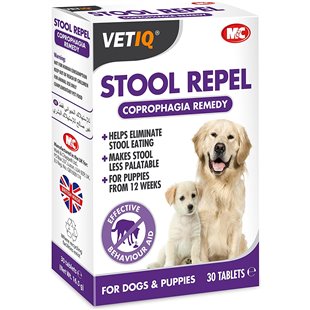
Stool Repel Tablets are an aid for dogs that eat faeces, a behaviour known clinically as coprophagia. If your dog has developed this habit, it can be upsetting and may raise concerns about hygiene, parasites, and what it might mean for their health. Stool Repel is intended to support a sensible care plan by helping to make your dog’s own stools less appealing after toileting. The tablets are given by mouth, usually with food, and they work from the inside out as the stool is formed. Used consistently, Stool Repel can help break the “reward” cycle that keeps stool eating going, while you also address triggers such as stress, scavenging, or dietary imbalance. Stool Repel is not about punishment; it simply changes the stool’s taste and odour so your dog has less reason to go back for it.
Coprophagia is more common than many people realise, and it does not automatically mean that a dog is “naughty”. Puppies may mouth stools because they investigate the world with their mouths, and some adult dogs copy the behaviour after seeing another dog do it. Some puppies also learn stool-related behaviours because mother dogs naturally keep the nest clean by ingesting waste, and that early exposure can linger. Stool eating can be linked with boredom, anxiety, over-excitement, or attention-seeking, particularly if a dog has learnt that grabbing stools gets a reaction. In multi-dog households, it may occur through competition or simple opportunity in shared spaces. Medical factors can contribute too, including intestinal parasites, dietary intolerance, malabsorption syndromes, or conditions that increase appetite (polyphagia). When a dog is not absorbing nutrients effectively, they may seek out unusual items, including stools, to satisfy hunger-driven behaviours. Because coprophagia has more than one possible cause, it is often best approached with a mix of health checks, environmental management, and calm behaviour support, alongside a product such as Stool Repel.
Stool Repel works by changing the taste and odour profile of your dog’s stools after they pass, so the stool is no longer rewarding to eat. When Stool Repel Tablets are given with a meal, the ingredients travel through the gastrointestinal tract during digestion and become incorporated into the faeces. This matters because coprophagia is maintained by reinforcement: the act of eating stool provides its own “pay-off”, whether that pay-off is taste, smell, curiosity, or fast scavenging. By reducing that pay-off, Stool Repel helps interrupt the habit and can make training easier. Consistency is important, because occasional untreated stools can keep the behaviour going. In homes with more than one dog, Stool Repel is often used so that stools a dog targets become uniformly unappealing.
Stool Repel is most effective when paired with practical management and positive training, because dogs are influenced by routine and opportunity as much as taste. Pick up stools promptly in the garden and on walks where possible, especially during the first few weeks, so your dog has fewer chances to practise the behaviour. Consider taking your dog out on a lead for toileting, then rewarding them for coming straight back to you, which replaces stool eating with a predictable routine. A cue such as “leave” can be taught with reward-based methods, and it is kinder and more effective than scolding, which may increase anxiety and lead to faster scavenging. It can also help to review enrichment: sniff walks, food puzzles, and short training sessions reduce boredom and support impulse control. If your dog scavenges generally, check that their diet is complete and appropriate for their life stage, and speak with your veterinary team about digestibility and stool quality, because digestive comfort can influence coprophagia. Stool Repel can sit alongside these changes as a steady, supportive tool.
Because coprophagia can sometimes be a sign of an underlying problem, it is sensible to arrange a veterinary check if stool eating starts suddenly, becomes intense, or occurs alongside other symptoms. Your vet may recommend a faecal examination, targeted parasite control, or a diet trial, and they may discuss conditions such as exocrine pancreatic insufficiency, inflammatory bowel disease, or endocrine disorders that can alter appetite and digestion. Seek advice promptly if you notice any of the following alongside stool eating:
- persistent diarrhoea lasting more than 48 hours, especially with blood or mucus
- repeated vomiting, retching, or marked nausea
- unexplained weight loss, failure to gain weight, or a change in body condition
- sudden, pronounced polyphagia or new food-seeking behaviours
- lethargy, abdominal pain, or a hunched posture
Stool Repel Tablets are not a substitute for diagnosis, but they can be part of a plan that supports hygiene while health causes are investigated or ruled out. If your dog is pregnant, nursing, very young, has a chronic illness, or takes regular medication, your veterinary team can advise whether Stool Repel is suitable.
For everyday use, give Stool Repel exactly as directed on the label, ideally with a main meal, because this supports consistent intake and reduces the chance of stomach upset in sensitive dogs. If your dog is fussy, you can disguise Stool Repel Tablets in a small portion of wet food or a soft treat, then follow with praise and a calm routine. Most dogs begin to respond as the stools become less attractive, but timing can vary, so it is worth keeping up the course while you also reduce access to stools and reinforce alternative behaviours. If the habit returns when you stop, it may mean your dog needs a longer period of support while new routines bed in, or it may indicate an unresolved trigger such as anxiety or digestive discomfort. Basic hygiene helps too, such as washing hands after clearing stools and keeping up with your dog’s routine parasite prevention. Store Stool Repel in a cool, dry place with the lid tightly closed, keep it out of reach of children and pets, and never exceed the recommended amount. If you notice any unexpected signs such as ongoing stomach upset, contact your veterinary team for individual advice.
What is coprophagia in dogs?
Coprophagia is the clinical term for a dog eating faeces. It can be occasional or habitual, and it may involve the dog’s own stools or other animals’ stools. It is often driven by learning, opportunity, stress, or appetite changes, so it is best approached calmly and consistently.
Why do dogs eat their own poo?
Dogs may eat their own stools out of curiosity, boredom, anxiety, or because the behaviour has become self-rewarding. Some dogs learn it as puppies or copy another dog. In some cases it is linked to increased appetite, parasites, or digestive issues, so a health check can be sensible.
Is stool eating dangerous for my dog?
Stool eating can expose dogs to parasites, bacteria, and intestinal irritants, particularly if they eat faeces from other animals. It can also contribute to bad breath and upset stomachs in sensitive dogs. Many dogs do not become ill, but ongoing coprophagia is worth addressing and monitoring.
How long does Stool Repel take to work?
Some owners notice a change within a few days, while other dogs take longer because habits are reinforced over time. Consistent daily use is important, and quick stool pick-up helps prevent setbacks. If there is little improvement after a few weeks, speak to your vet to rule out medical triggers.
Should I use Stool Repel for every dog in the household?
If one dog is eating another dog’s stools, the target is usually the stool itself. In that situation, it may help to give Stool Repel to the dog whose stools are being eaten, so all available stools are unappealing. Your product label and veterinary team can guide the best approach.