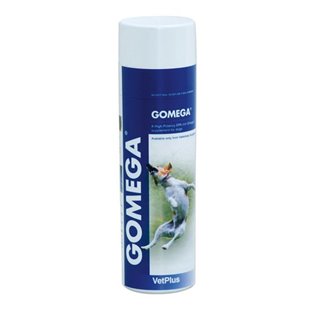
Gomega for Dogs is a concentrated fish oil supplement that helps you add Omega 3 Essential Fatty Acids (EFAs) to your dog’s daily diet in a consistent, measurable way. These fatty acids are “essential” because the body needs them for normal function, yet dogs do not always obtain an ideal balance from food alone. Many diets are relatively higher in Omega 6 fats, which are important, but an imbalance may make it harder for the body to maintain a steady inflammatory response and healthy skin barrier function.
Gomega for Dogs provides marine‑sourced Omega 3s, including eicosapentaenoic acid (EPA) and docosahexaenoic acid (DHA), which are widely used in veterinary nutrition as supportive care for the skin, coat, joints and general wellbeing. Because it is a nutritional supplement, Gomega is intended to complement, not replace, diagnosis and treatment from your veterinary surgeon when a medical condition is present.
Gomega Fish Oil works by supplying EPA and DHA in a form the body can readily use. Given with food, the oil is digested and absorbed in the small intestine, packaged into lipoproteins, and delivered to tissues where these fatty acids become part of cell membranes (the phospholipid bilayer). This is clinically relevant because cell membranes influence how cells communicate and respond to normal immune and inflammatory signals. With regular intake, Omega 3 EFAs can partially replace arachidonic acid within membranes, which helps shift the balance of lipid mediators the body produces. In simpler terms, the body has more of the raw materials it needs to make less irritating prostaglandins and leukotrienes, and more specialised pro‑resolving mediators such as resolvins. This is one reason Gomega for Dogs is often used as part of longer‑term support plans where consistency matters more than an occasional dose. Benefits are typically assessed after four to eight weeks of daily use, once these fatty acids have had time to become established in tissues, and your vet can advise if a different dose or approach is more appropriate.
For many owners, the most noticeable benefit of Gomega for Dogs is improved skin and coat quality. Omega 3 EFAs support the epidermal lipid barrier, which can reduce transepidermal water loss and help the coat feel softer and look shinier, particularly in dogs with dry or dull coats. They can also support comfort in dogs prone to pruritus (itching) linked to atopic dermatitis, flea allergy dermatitis or contact sensitivities, as part of a wider approach that may include parasite control, gentle bathing, topical therapy or a prescription diet. You might consider Gomega for Dogs if you notice one or more of the following signs, especially when they recur or flare seasonally:
- Your dog scratches, rubs, licks or chews at their paws most days.
- Your dog has flaky skin or mild dandruff, and the coat feels dry and brittle.
- Your dog develops greasy patches or a musty odour, sometimes described clinically as seborrhoea
- Your dog gets recurrent “hot spots” or irritated areas after grooming or outdoor walks.
- Your dog’s ears seem itchy or waxy between check‑ups, and otitis externa keeps returning.
Skin turnover takes time, so Gomega for Dogs is usually best assessed over several weeks, not days, and it can be reassuring to know you are supporting the skin from the inside while your vet addresses the root cause.
Mobility support is another common reason to use Gomega, particularly for older dogs, larger breeds, and active dogs that place higher mechanical stress on joints. In canine osteoarthritis, the joint lining (synovium) can become inflamed and the cartilage surface gradually degenerates, which may lead to stiffness after rest, difficulty rising, reluctance to climb stairs, or shorter walks. EPA in Gomega for Dogs can help support a healthier inflammatory mediator profile within the joint environment, and many vets include fish oil as an adjunct in multimodal osteoarthritis management alongside weight control, appropriate exercise, physiotherapy and, where needed, analgesics such as NSAIDs. It is sensible to view Gomega as steady nutritional support that may improve comfort and willingness to move over time, rather than a rapid pain reliever on the first day. Keeping your dog lean remains one of the most important clinical factors for osteoarthritis, so fish oil works best when paired with sensible calorie control and a movement plan that suits your dog’s abilities.
Because Omega 3 EFAs are used throughout the body, Gomega for Dogs can also be relevant beyond skin and joints. DHA is a major structural component of the brain and retina, which is why it is often discussed in feeding programmes for puppies and for senior dogs where age‑related cognitive change is a concern. In veterinary nutrition, fish oil may be used to support dogs with hypertriglyceridaemia by helping to maintain normal lipid levels, and it can be included in some renal and cardiac dietary plans for additional support. Where a dog has a chronic condition such as kidney disease with proteinuria, your vet may advise Omega 3 supplementation as part of a wider plan, with regular monitoring. Gomega for Dogs fits best when it is used thoughtfully, alongside proper veterinary assessment and any prescribed diet or medication.
To give Gomega for Dogs, measure the recommended amount for your dog’s weight and mix it into a main meal so it is better tolerated and less likely to cause reflux. If your dog has a sensitive stomach, introduce Gomega gradually over several days, as richer oils can occasionally cause soft stools or mild diarrhoea, and adjust with veterinary advice if problems persist. Store the bottle as directed and keep the lid tightly closed to reduce oxidation, because rancid oils are less palatable and provide poorer nutritional value. Speak to your veterinary surgeon before using Gomega if your dog has a history of pancreatitis, is on anticoagulant medication, has a bleeding disorder, or is due to have surgery, as high‑dose fish oils can affect platelet function. If you are already using Gomega alongside other supplements, ask your vet to check the total daily fat intake so the overall plan remains appropriate for your dog’s body condition and health needs.
How long does Gomega for Dogs take to work?
Some owners notice a glossier coat within a couple of weeks, but most benefits are gradual. Because Omega 3s need time to integrate into cell membranes, improvements in itching or mobility are often assessed after four to eight weeks of consistent daily use, alongside your vet’s advice.
Can Gomega for Dogs help with itchy skin and allergies?
Gomega for Dogs can support the skin’s normal inflammatory balance and barrier function, which may help reduce pruritus in dogs with atopic dermatitis or allergy-related flare-ups. It is not a standalone treatment for allergies, so parasite control, diet trials or prescribed medication may still be needed.
Can I give Gomega for Dogs with joint medication or NSAIDs?
Fish oil is frequently used alongside multimodal osteoarthritis management, including physiotherapy, weight control and medicines such as NSAIDs. In most cases, it can be combined safely, but the dose matters. Your vet can check for any individual risks and advise how to monitor comfort and stools.
What is the difference between EPA and DHA in fish oil for dogs?
EPA is often linked with supporting a balanced inflammatory response, which is helpful for skin irritation and joint inflammation. DHA is a key structural fat in the brain and retina, supporting neurological and visual health. Most quality fish oils, including Gomega for Dogs, provide both for broader support.
Can Gomega for Dogs upset my dog’s stomach?
Like any oil, fish oil can occasionally cause soft stools, mild diarrhoea or reflux, especially if introduced at a full dose immediately. Mixing Gomega for Dogs into a main meal and building up gradually over several days usually improves tolerance. If vomiting or ongoing diarrhoea occurs, stop and contact your vet.