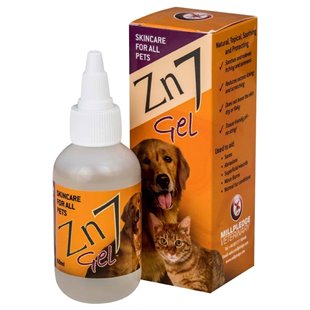
Zn7 Zinc Skin Gel for dogs and cats is a topical, zinc-based gel designed to support the skin’s natural repair processes when the surface has been mildly damaged. Everyday life can leave pets with small scrapes from rough play, superficial abrasions from running through undergrowth, sore patches from persistent scratching, or tiny nicks from grooming. In these situations, good management is about keeping the area clean, comfortable, and protected so the body can do its job.
Zn7 Gel creates a gentle, cushioning layer over the affected site, helping to reduce friction from fur, bedding, and movement, which can otherwise keep a minor lesion inflamed. Because it is a gel, Zn7 Gel can be applied precisely to small areas without flooding surrounding coat, which is helpful for cats and dogs that dislike messy treatments. Zn7 Gel can be kept in a pet first-aid kit for the management of superficial wounds, abrasions, and minor sores, alongside prompt cleansing and close observation. It is intended for surface problems only, not for deep punctures, large open wounds, or injuries that need stitches or urgent veterinary care.
Zinc is an essential trace element involved in many parts of skin health, including normal keratinisation (healthy surface cell turnover) and wound healing. After a superficial injury, the body moves through inflammation, early tissue repair, and epithelialisation, where new surface cells migrate to cover the defect. By supplying zinc directly to the affected skin, Zn7 Gel helps create conditions that favour orderly repair and barrier restoration. Zinc also supports enzyme systems linked to collagen formation and immune function in the skin, which is relevant when the surface has been compromised. A supportive topical layer can help limit excessive moisture and mild exudate, reducing maceration and making the site less prone to secondary bacterial overgrowth. In plain terms, Zn7 Gel helps the skin surface stay calm and protected, so granulation tissue can form appropriately and the outer layer can re-establish without being repeatedly disturbed by rubbing, drying-out, or over-cleaning.
First, check that the problem is superficial: the skin should not be gaping, heavily bleeding, or visibly deep, and your pet should seem comfortable and well in themselves. If there is dirt, remove it carefully and cleanse the area with lukewarm water or a vet-recommended skin cleanser, then pat dry with clean gauze so the gel can adhere properly. Apply a thin layer of Zn7 Gel over the sore or abrasion and a small margin of surrounding skin; more is not better, and thick layers can trap moisture. Allow a minute for the gel to settle before your pet lies down. Reapply Zn7 Gel as directed on the label or by your veterinary team, and keep handling to a minimum between applications so you do not disrupt the healing surface. If you are using other topical products, avoid layering multiple preparations at the same time unless your vet has advised it, as mixing products can irritate sensitive skin or reduce adhesion.
Zn7 Gel is often chosen for minor issues where you can see that the surface is irritated but the skin around it is intact. It may be helpful in the management of:
- superficial cuts and grazes that are not gaping
- mild abrasions on paw pads, elbows, or hocks
- small sores caused by friction from a harness, collar, or bandage edge
- minor excoriations from scratching linked to pruritus (itchiness)
- irritated skin within folds where moisture and rubbing occur
- small, clean sites after a tick has been removed
- mild ‘hot spot’ areas once clipped, cooled, and checked as superficial
Even with minor wounds, keep an eye out for clinical signs that suggest infection or deeper tissue involvement. Seek veterinary advice promptly if the area becomes increasingly swollen, hot, painful, or rapidly enlarges, or if you notice purulent discharge (pus), a strong odour, spreading redness, or your pet seems lethargic, feverish, or off their food. These signs can indicate a need for targeted treatment such as antibiotics, pain relief, anti-inflammatory medication, or investigation for an underlying cause.
Because dogs and cats groom themselves, lick prevention is often the key to progress. Repetitive licking can macerate the skin, disrupt epithelialisation, and introduce bacteria from the mouth, turning a small abrasion into a moist dermatitis that keeps re-opening. If your pet is tempted to lick, use a buster collar, recovery suit, or a breathable dressing recommended by your vet, and keep bedding clean and dry. It can help to trim hair around the area (without shaving harshly), as damp fur holds bacteria and irritants against the skin. When used consistently, Zn7 Gel supports a cleaner surface environment, but it works best alongside sensible steps that reduce irritation, scratching, and moisture. Monitor daily for reduced redness, less exudate, and improved comfort, and take photos if the lesion is in a hard-to-see area. If the skin becomes more inflamed after application, rinse the area and speak to your vet, as individual sensitivity can occur with any topical product.
Do not use Zn7 Gel in the ear canal, in or around the eyes, or on extensive areas without professional advice, and contact a vet urgently for bites, punctures, burns, or wounds that are deep, bleeding heavily, or very painful. If you are ever uncertain whether a lesion is superficial, it is safer to have it assessed early; early assessment can prevent small wounds from developing into cellulitis, abscesses, or more complicated dermatitis.
What is Zn7 Gel used for in dogs and cats?
Zn7 Gel is used to support the management of superficial skin damage, such as small abrasions, minor sores and shallow scratches. It provides a protective topical layer and delivers zinc to the local area, helping maintain a calm surface environment while the skin repairs and the barrier re-forms.
How do I apply Zn7 Gel to a superficial wound?
Clean the area gently with lukewarm water or a vet-recommended cleanser, then pat dry with clean gauze. Apply a thin, even layer of Zn7 Gel over the affected skin and a small margin around it. Let it settle before your pet lies down, and avoid over-handling between applications.
Can my pet lick Zn7 Gel after application?
Try to prevent licking. Licking can remove Zn7 Gel, macerate the skin and introduce bacteria, which may delay epithelialisation. If your dog or cat is persistent, use an Elizabethan collar, recovery suit or vet-advised dressing. If your pet seems unwell after licking any topical product, contact your vet.
Can I bandage over Zn7 Gel?
Sometimes, but it depends on the location and your pet’s skin. A breathable, non-occlusive dressing may help protect the area and reduce licking, while a tight or waterproof bandage can trap moisture and worsen maceration. If you need to bandage, ask your vet or nurse for the safest method.
Does Zn7 Gel help with sore skin folds or friction rubs?
Yes, Zn7 Gel can support minor sores in skin folds or friction areas by providing a protective layer while you address the cause, such as moisture, rubbing, or poorly fitting equipment. Keep folds clean and dry, trim surrounding fur if needed, and watch for odour or discharge, which may signal yeast or bacterial overgrowth.