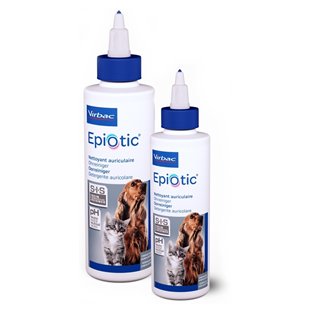
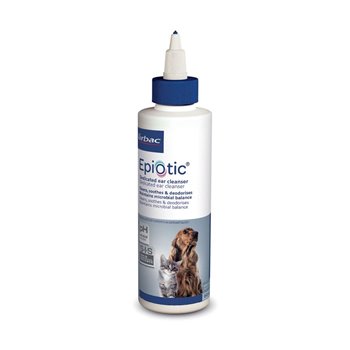
Epiotic Ear Cleaner is a gentle ear cleansing solution for dogs and cats that helps lift wax, remove debris, and leave the ear canal feeling fresher. Epiotic Ear Cleaner is simple to use at home when a vet has confirmed it is appropriate.
Healthy ears are often overlooked, yet they play a vital role in your pet’s comfort, balance, and day‑to‑day behaviour. Dogs and cats naturally produce ear wax (cerumen) and skin oils, and these secretions can trap dirt, pollen, and moisture inside the ear canal. Over time, that build‑up can change the ear’s micro‑environment, making the canal more prone to irritation and creating conditions where otitis externa can develop.
The ear canal is warm, curved, and relatively enclosed, which means it can hold onto moisture and debris more easily than skin elsewhere on the body. In dogs, floppy ear flaps, narrow canals, frequent swimming, and heavy ear hair can reduce airflow; in cats, cerumen can become sticky and collect dust and...
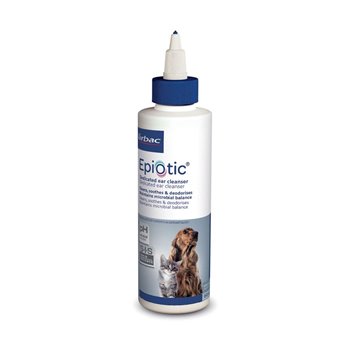
Epiotic Ear Cleaner is a gentle ear cleansing solution for dogs and cats that helps lift wax, remove debris, and leave the ear canal feeling fresher. Epiotic Ear Cleaner is simple to use at home when a vet has confirmed it is appropriate.
Healthy ears are often overlooked, yet they play a vital role in your pet’s comfort, balance, and day‑to‑day behaviour. Dogs and cats naturally produce ear wax (cerumen) and skin oils, and these secretions can trap dirt, pollen, and moisture inside the ear canal. Over time, that build‑up can change the ear’s micro‑environment, making the canal more prone to irritation and creating conditions where otitis externa can develop.
The ear canal is warm, curved, and relatively enclosed, which means it can hold onto moisture and debris more easily than skin elsewhere on the body. In dogs, floppy ear flaps, narrow canals, frequent swimming, and heavy ear hair can reduce airflow; in cats, cerumen can become sticky and collect dust and dander. When wax and moisture accumulate, the canal lining can become inflamed (erythema), the protective skin barrier can weaken, and opportunistic organisms such as Malassezia yeasts or bacteria may multiply. Keeping ears clean is not about making them “sterile”; it is about maintaining a healthy balance, reducing excess material that microbes can feed on, and keeping the canal dry enough to support normal skin function. Epiotic Ear Cleaner can be part of preventative care for both dogs and cats.
Epiotic Ear Cleaner works through a combination of cleansing and conditioning actions that are designed for the ear’s sensitive epithelium. It contains cleansing agents (surfactants) that loosen and disperse waxy secretions, helping cerumen and trapped debris move out of the canal rather than clinging to the lining. Many ear cleaners are also formulated to support an acidic skin pH, which can make the canal less favourable to microbial overgrowth, and some include drying agents to reduce lingering moisture after cleaning. This ceruminolytic effect matters because dense wax can behave like a plug, holding onto moisture and reducing ventilation, which can keep the canal damp and irritated. By reducing excess wax, Epiotic Ear Cleaner can also improve contact between the canal lining and any prescribed topical treatment, because drops work best on skin rather than on a layer of wax. It is a supportive hygiene product, and it is not an antibiotic, antifungal, or pain relief medication, so ongoing discomfort should always be checked by a vet.
Ear cleaning is most helpful when it is part of a sensible plan rather than a reaction to severe symptoms. Epiotic Ear Cleaner can be used for routine maintenance, after bathing or swimming, and to help clear away discharge or residue that may otherwise sit in the canal. It can also be useful before applying veterinary ear drops, because medication is more likely to reach the affected tissue when wax is reduced. However, it is important to recognise when home care is not enough, because ear disease can worsen quickly if the middle ear is involved or if the ear drum (tympanic membrane) is compromised. You should arrange a veterinary check before using Epiotic Ear Cleaner if any of the following are present:
- Your pet has marked redness, swelling, or obvious pain when the ear is touched
- There is thick discharge, pus, blood, or a strong rancid odour.
- Your pet is persistently head shaking, rubbing the ear, or holding the head to one side.
- You notice loss of balance, unusual eye movements, or changes in hearing.
- Symptoms keep returning despite appropriate use of Epiotic Ear Cleaner and good hygiene.
In these situations, your vet may recommend ear cytology (microscopy of wax and debris), a culture, or examination with an otoscope to identify the underlying cause and choose targeted treatment.
Using Epiotic Ear Cleaner correctly is straightforward, and gentleness matters more than force. Choose a calm moment, keep handling relaxed, and stop if your pet becomes distressed, because anxiety can make ears more sensitive. You should avoid cotton buds, because they can push debris deeper and may abrade delicate tissue, especially if the canal is inflamed. Instead, allow the solution to do the work and wipe only what you can see. Typical directions are as follows:
- Check the ear flap and the entrance of the canal for obvious redness, swelling, or wounds before you begin.
- Apply Epiotic Ear Cleaner into the ear canal as directed on the label or by your vet, keeping the nozzle at the opening rather than inserting it deeply.
- Gently massage the base of the ear for 20–30 seconds, because this helps the liquid reach the curved canal and lift debris from the lining.
- Allow your pet to shake their head, because this naturally brings loosened wax towards the outer ear.
- Wipe away loosened debris from the ear flap and canal entrance with cotton wool or gauze, and you should repeat if the ear remains very dirty.
- Leave the ear to air‑dry and then offer a reward, because positive associations make future cleaning easier.
If your pet is being treated for otitis externa, your vet may advise a specific schedule so that Epiotic Ear Cleaner complements, rather than dilutes, prescribed drops.
Regular ear care matters because ear problems can become cyclical, particularly in pets with allergies (atopy or food sensitivity) or anatomical predispositions. Inflammation can lead to increased wax production and swelling of the canal, which traps more moisture and debris, and that environment can encourage further microbial overgrowth and irritation. Used as part of a consistent routine, Epiotic Ear Cleaner can help reduce build‑up between veterinary visits and support comfort for pets that are prone to waxy ears. Over‑cleaning can irritate the canal, so it is best to follow the frequency recommended by your vet and to monitor the ear for changes. If your pet has repeated flare‑ups, ask your vet about underlying triggers such as allergy, foreign bodies, ear mites, or endocrine disease, because long‑term control depends on treating the cause as well as keeping the canal clean.
How often should I clean my dog’s ears?
Frequency depends on your dog’s ear shape, lifestyle, and skin health. Some dogs only need occasional cleaning, while swimmers or dogs with floppy, waxy ears may benefit weekly. If your vet recommends Epiotic Ear Cleaner, follow their schedule and reduce cleaning if the canal looks sore
How often should I clean my cat’s ears?
Many cats rarely need routine ear cleaning, but some produce more wax or collect debris. If your cat’s ears look dirty, Epiotic Ear Cleaner can help, provided your vet has ruled out infection or mites. Start gently and keep sessions brief to reduce stress.
Can I use Epiotic Ear Cleaner if my pet has an ear infection?
If you suspect infection, your pet should be examined first. Ear infections can involve bacteria, yeast, parasites, or deeper structures, and the ear drum must be intact before using any cleanser. Once your vet has assessed the ear, Epiotic Ear Cleaner may be used alongside prescribed treatment.
Can Epiotic Ear Cleaner help with smelly ears?
A mild “stale” smell is often linked to wax build‑up and trapped moisture. By clearing debris and reducing excess cerumen, Epiotic Ear Cleaner can help ears smell fresher. A strong, rancid odour or thick discharge is more concerning and usually needs veterinary diagnosis and targeted medication.
Is Epiotic Ear Cleaner safe for puppies and kittens?
Young pets can have sensitive ears, so it is best to check with your vet before starting any ear‑cleaning routine. If the ear canal is healthy and your vet agrees, Epiotic Ear Cleaner can be used gently. Avoid over‑cleaning and stop if your pet shows pain.