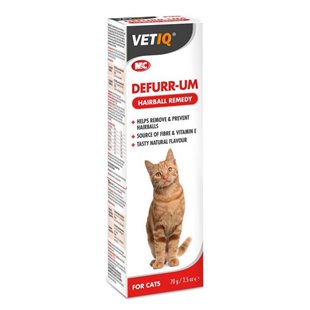
Hairballs are a normal side-effect of a cat being a cat. Grooming is healthy behaviour, but every lick pulls loose hair into the mouth. Most swallowed hair passes quietly through the gastrointestinal tract, yet some strands can collect in the stomach and form a compact “trichobezoar” (hairball). When that happens you may see occasional retching, gagging or vomiting, which can be unsettling even when your cat is otherwise bright. Defurr-UM for Cats is a palatable laxative paste designed to help lubricate the digestive tract and support the natural passage of swallowed fur. It can be useful for cats that bring up hairballs, seem prone to constipation during heavy moulting, or need a little extra support when their coat is shedding. Defurr-UM works locally within the gut, helping hair and food material move along together, and it is intended to feel gentle rather than dramatic. Used as directed, Defurr-UM can reduce the chance of fur sitting in the stomach and triggering nausea, and it fits well alongside regular brushing, good hydration, and a diet that supports healthy stool quality.
Hairballs develop because the feline tongue has tiny backward-facing barbs (papillae) that act like a brush, pulling fur free and directing it towards the throat. Fur is indigestible, and it can bind with mucus and food particles, irritating the gastric lining and sometimes slowing intestinal motility. The “hacking” sound owners associate with hairballs can also be caused by airway irritation or feline asthma, so repeated unproductive retching deserves veterinary advice. Defurr-UM can help cats that are prone to hairballs, but you still want to watch the overall pattern of signs.
Common signs linked with hairballs and fur-related gastrointestinal irritation include:
- Your cat gags or retches intermittently, especially after grooming.
- Your cat vomits a hairball, or vomits froth and mucus when one is forming.
- Your cat eats less, chews grass, lip-smacks, or drools, suggesting nausea.
- Your cat strains, passes small dry stools, or skips bowel movements.
- Your cat overgrooms or has a dull coat, increasing swallowed hair.
Seek urgent veterinary attention if you see repeated unproductive retching, abdominal pain, marked lethargy, refusal of food, or no stools, as these can indicate a gastrointestinal obstruction and Defurr-UM for Cats would not be appropriate in that moment.
Defurr-UM for Cats works by supporting normal gastrointestinal transit and helping fur pass in the stool rather than accumulating in the stomach. As a lubricating laxative paste, Defurr-UM is formulated to coat swallowed hairs and reduce friction as they move through the stomach and intestines. This lubrication can support peristalsis (the muscular contractions that propel intestinal contents forward) and can soften dry faeces, which is helpful when fur contributes to mild constipation. In practical terms, Defurr-UM helps hair move along with food and water, lowering the chance that a trichobezoar will continue to irritate the stomach and trigger vomiting. Because Defurr-UM acts within the gut rather than being absorbed into the bloodstream, it is generally used for local digestive support. For many cats, that means fewer bouts of nausea during shedding seasons and less strain when passing stools, especially when the paste is paired with good hydration. To keep the effect predictable, give Defurr-UM at the frequency advised on the label rather than “topping up” repeatedly after vomiting.
Most cats will take Defurr-UM for Cats readily because it is designed to be palatable and simple to administer. You can offer Defurr-UM directly from the tube, place a small amount on the paw for your cat to lick off, or mix it into a small portion of food. Always follow the package directions for your cat’s bodyweight and age, and keep fresh water available, as hydration supports healthy stool consistency and intestinal transit. Many owners use Defurr-UM daily for a short period during peak shedding, then reduce to a maintenance schedule for cats that are prone to hairballs. Daily brushing reduces the amount of loose hair available to swallow, and some cats benefit from a diet with appropriate fibre to encourage regular bowel movements. If you are changing foods, do it gradually so you can tell whether Defurr-UM is helping without adding avoidable digestive upset.
Because Defurr-UM for Cats is a laxative product, it is best used thoughtfully and with your cat’s comfort in mind. If your cat has diarrhoea, is dehydrated, is very young, is pregnant or nursing, or has a known gastrointestinal disorder, check with your vet before giving Defurr-UM. If your cat takes other oral medicines, ask about timing, as lubricating pastes can sometimes change how quickly other products move through the gut. Do not give Defurr-UM if you suspect an obstruction, such as repeated unproductive retching, a distended abdomen, obvious pain, collapse, or an inability to pass faeces; those signs need prompt veterinary assessment. If vomiting, poor appetite, or nausea persist despite Defurr-UM for Cats, your vet may want to rule out problems such as parasites, dental disease, pancreatitis, inflammatory bowel disease, or dehydration linked with kidney disease. If your cat is on a prescription diet or has a history of megacolon, ask for personalised guidance before using any laxative paste.
Frequent hairballs are often a sign that your cat is swallowing more hair than usual, so it can help to look for the reason while you use Defurr-UM for Cats. Stress-related overgrooming, flea allergy dermatitis, dry or inflamed skin, and arthritic pain may all increase shedding and licking. Hairballs can also be more common during seasonal moults, or when a cat is overweight and cannot groom efficiently. Sometimes the “hairball cough” is not a hairball at all; if the sound is more like wheezing, or your cat repeatedly swallows without producing anything, a vet should consider respiratory or oesophageal causes. Alongside Defurr-UM, consistent grooming, parasite control, and a calm routine reduce the amount of fur entering the gut, while fibre support and good hydration help keep stools moving. If hairballs are happening weekly, a veterinary check and a review of coat and skin health can make a real difference.
How quickly does Defurr-UM work?
Many cats pass fur more comfortably within a day or two, although timing varies with diet, hydration and how much hair has been swallowed. Defurr-UM is often used as a short daily course during shedding, then reduced to a maintenance schedule for hairball‑prone cats, as directed.
How do I give Defurr-UM if my cat is fussy?
You can offer Defurr-UM directly from the tube, smear a small amount onto a paw for your cat to lick off, or mix it into a tiny portion of favourite food. Giving it when your cat is calm, and following with a drink or meal, can improve acceptance and consistency.
Can kittens use Defurr-UM?
Kittens can be more sensitive to changes in bowel habits and hydration, so it is safest to follow the product’s age guidance and check with your vet if you are unsure. If a kitten is vomiting, not gaining weight, or seems unwell, a veterinary assessment is more important than hairball treatment.
Is my cat coughing or trying to bring up a hairball?
Hairball retching is usually followed by vomiting a hairball or froth and mucus. A cough can sound similar but may involve wheezing, repeated swallowing, or breathing effort without vomiting. If the sound is frequent, unproductive, or worse with activity, ask your vet to rule out airway disease.
When should I see a vet for hairballs?
Seek veterinary advice if your cat has repeated unproductive retching, abdominal pain, marked lethargy, refusal of food, dehydration, or no stools. These signs can indicate a gastrointestinal obstruction, which is an emergency. Also book a check if vomiting is frequent, even if hairballs appear occasionally.