


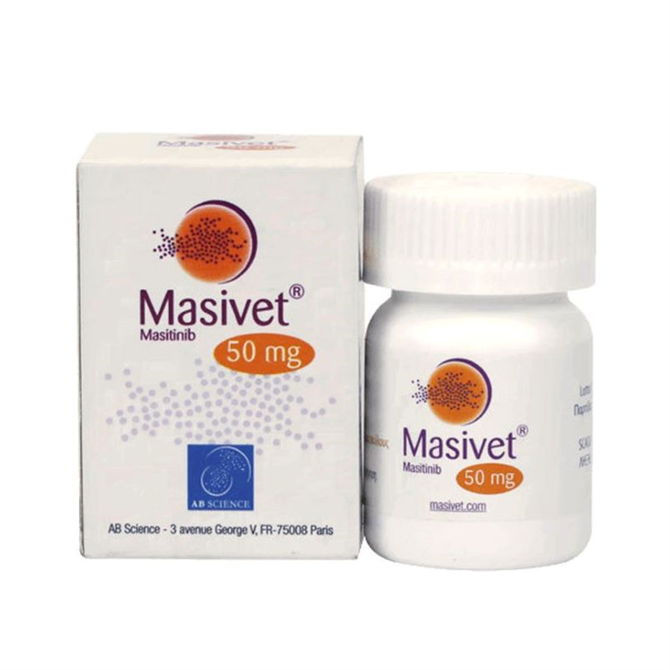
50mg Masivet Tablets - Pot of 30
50mg Masivet (licensed as Kinavet in the USA) is a prescription-only tablet for use against Mast Cell Tumours in dogs.
Masivet is a prescription-only dog tablet used to treat mast cell tumours. Masivet 50mg is regarded as safe enough to be used at home, and is given as a tablet once daily. Masivet acts against mast cell tumours, by inhibiting cell division, therefore preventing further development of the tumours.
Masivet is used to treat dogs with mast-cell tumours (a type of cancer). It is used for tumours which are severe in character (grade 2 or 3) and which cannot be removed with surgery.
VETERINARY PRESCRIPTION REQUIRED
Product Features
- Pack Size: - Pack of 30
- Target Animal: - Dog (Canine)
- Related Condition: - Mast Cell Tumours in Dogs
- Pet Prescription Required?: - Yes
- Active Ingredient: - Masitinib
- Product Name: - Masivet Tablets for Dogs
Additional Product Information
Description
50mg Masivet Tablets - For the treatment of Mast Cell Tumours in Dogs.
Masivet may only be supplied with a valid veterinary prescription issued by your vet. You should only purchase Masivet if you have or are in the process of arranging such a prescription. See information bar for further details.
50mg Masivet (licensed as Kinavet in the USA) is a prescription-only tablet for use against Mast Cell Tumours in dogs. Masivet is regarded as safe enough to be used at home, and is given as a tablet once daily. Masivet acts against mast cell tumours, by inhibiting cell division, therefore preventing further development of the tumours. Not all dogs respond, but the results can be very helpful for others. Close veterinary supervision is recommended at all times.
What is Masivet?
50mg Masivet is a round, orange tablet containing 50mg masitinib, which belongs to a class of medicines having an anticancer action.
What is Masivet used for?
Masivet is used to treat dogs with mast-cell tumours (a type of cancer). It is used for tumours which are severe in character (grade 2 or 3) and which cannot be removed with surgery. Masivet is only used if the presence of a mutated form of the receptor protein c-kit in the tumours has been confirmed before the start of treatment. Masivet tablets are given by mouth, once a day. The dose of Masivet depends on the weight of the dog being treated.. The duration of treatment depends on the dog’s response to treatment.
How does Masivet work?
The active substance in Masivet, masitinib, is a protein-tyrosine kinase inhibitor. This means that it blocks some specific enzymes known as tyrosine kinases. These enzymes can be found in some receptors on the surface of cells, including the c-kit receptor. Some types of mast-cell tumour are linked to a mutation that causes excessive action of c-kit and stimulates the mast cells to divide uncontrollably. By blocking these receptors, Masivet might help to control cell division, preventing further development of the tumours with this particular mutation.
How has Masivet been studied?
A number of studies with Masivet were carried out either in laboratory dogs or in animal patients at veterinary practises in Europe and in the USA. The main study compared the effectiveness of Masivet at the recommended dose of 12.5 mg per kilogramme bodyweight once a day with placebo (a dummy treatment). The study included dogs of various breeds and both sexes with mast-cell tumours that had come back after surgery or could not be removed with surgery. The study population included dogs whose tumours contained mutated or normal (‘wild-type’) c-kit receptors.
Legal Category
Masivet is a POM-V (Pet Prescription-only Medication)
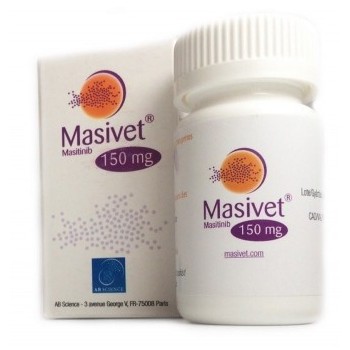
Masivet is used to treat dogs with mast-cell tumours (carcinomas), which are characterized by rapidly growing, highly vascular (blood filled) tumours. These tumours are a type of cancer that develops from white blood cells called mast cells. Masivet is a medicine used for treatment of mast cell tumours (a type of cancer). The medicine contains masitinib, which belongs to a class of medicines having an anti cancer action. It is available as round, orange tablets (50 and 150 mg).
What our customers say about us.
Delivery was really prompt plus the tablets were nearly half the price of the same item at the vet.
customer
Source: Trustpilot Review
Simple to use and prompt delivery. Thank you.
Yvonne
Source: Trustpilot Review
Easy to use and very quick dispatch and delivery. Would definitely recommend and use again.
Keith
Source: Trustpilot Review
You may also like
- Tracked 24 Delivery Follow your parcel online
- VMD & RCVS Registered VetDispense is a registered UK Dispensary
- Secure Payment Pay securely online by card or PayPal
- Independent Since 2008 A Trusted UK Dispensary