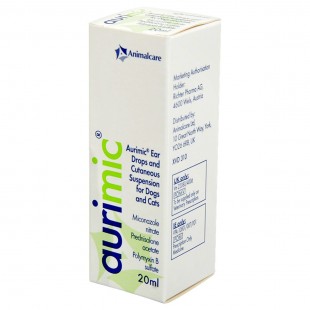
Aurimic Ear Drops are a prescription ear medication for dogs, prescribed to treat inflammation and infection in the outer ear canal. The clinical term for this is otitis externa, and it is one of the most common reasons dogs are seen for sore, smelly or itchy ears. A dog’s ear canal is long and L‑shaped, which makes it easy for moisture, wax and debris to become trapped and difficult for air to circulate. When the canal lining becomes irritated, it can swell and produce more discharge, creating a warm, moist environment where bacteria and yeast can thrive.
VETERINARY PRESCRIPTION REQUIRED
Aurimic Ear Drops are applied directly into the ear canal so the medication can work where it is needed. If your dog has been shaking their head, scratching, or showing signs of pain, using Aurimic Ear Drops as directed by your vet can help calm irritation while the infection is brought under control.
Ear infections (otitis externa) in dogs usually begin with a trigger that upsets the normal balance of the ear canal. Swimming and bathing, humid weather, floppy ears, narrow canals, trapped hair, ear mites, foreign material such as grass seeds, and skin conditions such as atopic dermatitis or food-related allergy can all start the cycle. The canal lining becomes red (erythema) and itchy (pruritus), the dog scratches and shakes, and the skin barrier breaks down. Microbes that normally live harmlessly on the skin can then overgrow, leading to infection and increasing discharge (exudate). Common signs that suggest otitis externa include:
- frequent head shaking or rubbing the ear along carpets and furniture
- persistent scratching at one or both ears
- redness, heat, swelling, or pain when the ear is touched
- an unpleasant odour, visible wax, or creamy discharge in the ear opening
- sensitivity around the head, or reluctance to have the collar fitted
In long‑standing cases the canal may thicken and narrow, and vigorous shaking can occasionally cause an aural haematoma (a blood blister on the ear flap). Because different bacteria and yeast can be involved, vets often examine the canal with an otoscope and use ear cytology to look for yeast cells and bacterial shapes, which helps them choose whether Aurimic Ear Drops are the right match and whether ear cleaning or additional treatment is needed first.
Aurimic Ear Drops work by addressing the problems that drive uncomplicated otitis externa: microbial overgrowth and inflammation. They are designed to provide local antimicrobial activity against susceptible bacteria within the ear canal and antifungal activity to help control yeast overgrowth, while an anti‑inflammatory component helps reduce swelling, heat and itch. This “treat and soothe” approach matters because a canal that is swollen and painful is harder to medicate effectively and more likely to be damaged by scratching. Your vet may choose Aurimic Ear Drops after assessing the ear and deciding that the infection pattern and canal condition suit this type of combination treatment. If infection is severe, recurrent or not responding as expected, your vet might recommend further tests such as culture and sensitivity, or they may adjust the plan to target resistant organisms or deeper ear disease.
Using Aurimic Ear Drops correctly helps your dog feel better and reduces the chance of relapse. Always follow the dose and course length provided by your vet, even if the ear looks improved before you reach the end of treatment. Many dogs benefit from gentle cleaning before medication is applied, but you should only use a cleanser recommended by your veterinary team, because some products can sting in inflamed ears and some are not appropriate if there is concern about the tympanic membrane (eardrum). Warm the bottle of Aurimic Ear Drops in your hands for a minute so the liquid feels less cold, then lift the ear flap and place the nozzle just at the canal entrance without pushing it deep. Instil the prescribed number of drops, massage the base of the ear for 20–30 seconds to help the drops spread through the canal, and then let your dog shake their head afterwards. If both ears are affected, treat each ear as advised and avoid touching the nozzle to the skin to reduce contamination.
Aurimic Ear Drops should only be used in ears that have been properly assessed, because some signs of ear disease need urgent attention or a different approach. Contact your vet promptly if your dog has marked pain, bleeding, a sudden head tilt, loss of balance, vomiting, facial weakness, or any noticeable change in hearing, as these can suggest deeper involvement such as otitis media, a ruptured eardrum, or a foreign body. Some dogs may experience mild, short‑lived stinging when drops are first applied, particularly if the canal is very inflamed, but significant discomfort should be reported. As with any medicine, occasional sensitivity reactions can occur, and you should seek veterinary advice if swelling worsens, discharge increases, or your dog seems unwell. Do not use Aurimic Ear Drops in any way other than directed, and do not combine them with other ear medications unless your vet has advised it.
For dogs that suffer repeated otitis externa, Aurimic Ear Drops may be one part of a broader management plan aimed at preventing flare‑ups. Recurrent ear infections are often linked to an underlying cause such as allergy, endocrine disease, conformational factors (for example very hairy or narrow canals), or frequent moisture, and these issues need addressing for long‑term control. Your vet may suggest follow‑up rechecks, repeat cytology to confirm the infection has cleared, and a tailored routine of cleaning and drying that suits your dog’s ears. It can also help to keep a note of when flare‑ups occur, such as after swimming, during high‑pollen seasons, or alongside skin itching elsewhere, as this information supports a more targeted prevention plan. If your vet recommends maintenance ear care alongside Aurimic Ear Drops, it should feel gentle and comfortable for your dog, and any increase in soreness or odour is a good reason to book a re‑examination.
What is otitis externa in dogs?
Otitis externa is inflammation and infection of the outer ear canal. The canal lining becomes red, swollen and itchy, often producing extra wax or discharge. Dogs may shake their head, scratch, or show pain. A vet will usually examine the ear and may perform cytology to identify bacteria or yeast.
What causes ear infections in dogs?
Ear infections often start when moisture, debris or allergy-driven inflammation changes the ear canal environment. Swimming, floppy ears, trapped hair, ear mites, and skin allergies can all play a part. Once the canal is inflamed, bacteria and yeast can overgrow, making the problem worse.
Can Aurimic Ear Drops be used if the eardrum is ruptured?
Do not use Aurimic Ear Drops unless a vet has checked the ear and confirmed it is safe. If the tympanic membrane is damaged, some ear products can irritate the middle ear and worsen symptoms. Signs like severe pain, head tilt or balance problems need prompt veterinary assessment.
Why does my dog keep getting ear infections?
Repeat otitis externa is often a sign of an underlying trigger such as allergy, frequent moisture, narrow or hairy ear canals, or a broader skin condition. Treating the infection with Aurimic Ear Drops may settle a flare-up, but long-term control often needs a prevention plan and follow-up checks.
When should I contact the vet during treatment?
Contact your vet if your dog’s pain is severe, if there is bleeding, a sudden head tilt, loss of balance, vomiting, facial weakness, or any change in hearing. You should also get advice if there is no improvement, the smell or discharge worsens, or your dog reacts strongly to Aurimic Ear Drops.