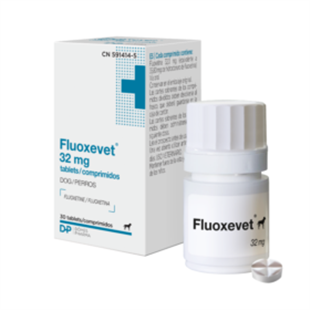
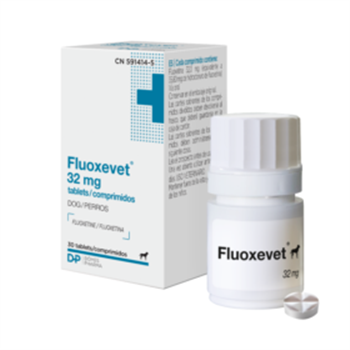
Fluoxevet Tablets for Dogs – Treatment for Separation-Related Disorders
Fluoxevet Tablets are a prescription veterinary medicine used for the treatment of separation-related disorders in dogs. These conditions often involve unwanted or problematic behaviours such as excessive barking, destructive chewing, pacing, house soiling, or signs of distress when a dog is left alone. Fluoxevet is formulated to support dogs showing these behaviours by helping them feel calmer and less anxious. Fluoxevet is usually used alongside practical behaviour modification, changes to routines, and careful support from your vet or a qualified clinical animal behaviourist. The goal is to reduce the intensity of the dog’s anxiety so training can be more effective and the dog can learn calmer, safer coping behaviours.
VETERINARY PRESCRIPTION REQUIRED
Each tablet contains fluoxetine, a selective serotonin reuptake inhibitor (SSRI). Fluoxetine has been widely used in veterinary medicine to help manage anxiety-related conditions in dogs. It is particularly effective when used as part of a broader behaviour modification plan guided by a veterinary surgeon or animal behaviourist.
What Are Separation-Related Disorders?
Separation-related disorders occur when a dog experiences stress, anxiety, or panic when separated from their owner or left alone. These behaviours are not simply signs of boredom; they are emotional responses that can significantly affect a dog’s wellbeing and a household’s daily routine. Dogs may show visible signs of anxiety even when the owner is preparing to leave the house. They may bark, whine, scratch doors, destroy furniture, or urinate indoors. These behaviours typically stop once the owner returns, indicating they are related specifically to separation.
A dog with separation-related anxiety may:
- bark, howl, or whine shortly after you leave
- pace, pant, or salivate excessively
- scratch at doors, chew window frames, or damage furniture near exits
- toilet indoors despite being house trained
- try to escape crates, rooms, or the home
- refuse food or treats when alone
- over-greet, cling, or shadow you before and after separations
This condition can affect dogs of any breed, age, or background. It is more common in rescue dogs or those who have experienced changes in their living environment, but it can also occur in well-adjusted dogs after a disruption in routine, such as moving home, a change in household members, or extended periods of isolation.
How Fluoxevet Works
Fluoxevet contains fluoxetine, an SSRI that works by increasing the level of serotonin in the brain. Serotonin is a naturally occurring chemical that helps regulate mood, anxiety, and behaviour. By preventing the reabsorption of serotonin in the brain, fluoxetine allows serotonin to remain active for longer, supporting emotional balance and reducing the intensity of fear and anxiety responses.
By adjusting the brain’s chemical balance, fluoxetine can reduce the compulsive or panic-driven behaviours associated with separation anxiety. It does not sedate the dog but instead helps to make them more receptive to behavioural training and environmental changes aimed at addressing the root cause of the distress. Improvement is often gradual rather than immediate. Many owners first notice that their dog settles more easily, recovers faster after departures, or can tolerate slightly longer absences during training sessions. Progress is best measured with a plan, a diary, and video recordings. If the dog is repeatedly pushed beyond their coping threshold, setbacks are common, even with medication.
Separation-related disorders can be successfully managed, but they require consistency. Medication may be used for a defined period or longer-term, depending on the dog’s history and response. Your vet is the best person to guide this decision and to plan safe adjustments over time.
Fluoxevet is available in a flavoured, double-divisible tablet. This means each tablet is scored in such a way that it can be accurately split into halves or quarters. This feature allows for tailored dosing according to the dog’s body weight and response to treatment, offering flexibility for veterinarians and ease of administration for owners.
The exact dosage will depend on your dog’s weight and medical history. A veterinary surgeon will determine the appropriate starting dose and may adjust it over time based on the dog's progress and any side effects.
How long does Fluoxevet take to start working?
Many dogs need several weeks before you see clear improvement, because fluoxetine gradually changes brain signalling. Some dogs show earlier changes such as slightly better recovery after departures, but full benefit often takes longer. Your vet will advise when to review progress and whether any dose adjustments are needed.
Can Fluoxevet cure separation anxiety?
Fluoxevet does not “cure” separation anxiety on its own. It can reduce the intensity of distress so your dog is able to learn through training. The long‑term outcome depends on consistent behaviour modification, preventing panic episodes, and addressing triggers. Some dogs can eventually reduce or stop medication under veterinary guidance.
Should I change my routine while my dog is on Fluoxevet?
A predictable routine often helps, but the key is a planned programme of gradual alone‑time practice. Avoid sudden long absences that trigger panic, and use support such as a sitter when needed. Your behaviour professional may also recommend reducing pre‑departure fuss and practising calm settling. Medication works best when paired with these changes.
What should I do if I miss a dose?
Follow your vet’s advice for missed doses, as recommendations can vary. In many cases, you may be advised to give the next dose at the usual time and not double up. If you are unsure, contact your veterinary practice for guidance. Consistent dosing is important for stable results, so consider reminders or a routine.
Can Fluoxevet be used with behaviour training?
Yes. In separation-related disorders, behaviour training is essential and medication is usually an aid to that process. Training focuses on gradual exposure below the dog’s anxiety threshold, changing the dog’s emotional response to being alone. Fluoxevet can make training sessions more productive by reducing panic and improving recovery.