


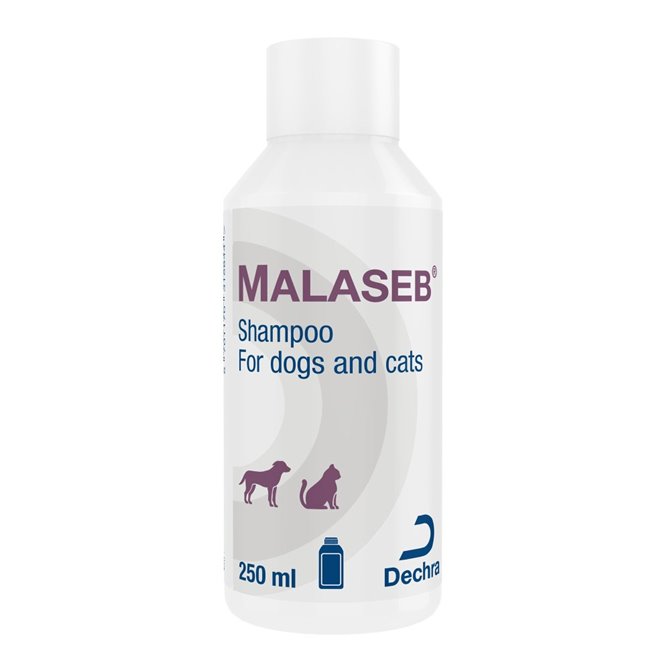
Malaseb Shampoo 250ml
Malaseb Shampoo is a prescription-only shampoo for dogs and cats with skin problems where bacteria and yeast are involved. Healthy skin has a protective barrier and a balanced community of microbes living on the surface. When that balance is disrupted, for example by allergies, moisture trapped in skin folds, hormonal change or repeated scratching, organisms can multiply too quickly and trigger inflammation. This is when many pets develop pruritus (itch), erythema (redness), greasy patches, flaky scale or a persistent, musty odour.
Used as directed, Malaseb Shampoo helps reduce the organisms contributing to infection and gives irritated skin a chance to settle. Malaseb Shampoo combines two active ingredients with complementary actions: chlorhexidine gluconate and miconazole nitrate. Chlorhexidine is a broad‑spectrum antiseptic that binds to the skin and disrupts bacterial cell membranes, helping to reduce bacteria associated with superficial pyoderma and bacterial folliculitis. Miconazole is an imidazole antifungal that interferes with fungal cell membrane function, which is particularly useful when Malassezia pachydermatis yeast is driving inflammation.
By lowering the microbial load on the skin surface and in hair follicles, Malaseb Shampoo helps reduce odour, irritation and the build-up of oils and debris that can feed further overgrowth. Medicated bathing can also lift away surface allergens, pollen and grime, which can be helpful when skin is already reactive. Rather than trying to “sterilise” the coat, Malaseb Shampoo supports a healthier balance so the skin barrier can recover, and that is why regular use and good technique matter.
VET PRESCRIPTION REQUIRED
Product Features
- Pack Size: - 250ml
- Target Animal: - Dog (Canine)
- Related Condition: - Seborrhoeic Dermatitis and Dermatophytosis in Pets
- Pet Prescription Required?: - Yes
- Active Ingredient: - Chlorhexidine and Miconazole
- Product Name: - Malaseb Shampoo 250ml
Additional Product Information
Description
Malaseb Shampoo is commonly used for recurrent or persistent dermatitis where yeast, bacteria or mixed infection is suspected. Vets often prescribe Malaseb Shampoo for greasy, scaly skin (seborrhoeic dermatitis), in skin fold irritation (intertrigo), and in pododermatitis where the feet become red, sore and lick-prone. It is also used as an adjunct when pets with atopic dermatitis (environmental allergy) or flea allergy dermatitis develop secondary infection, because controlling infection can make other long‑term treatments work better.
Depending on the case, Malaseb Shampoo may be used alongside other therapies such as prescription tablets, ear preparations, wipes or diet trials, and your vet will tailor this to your pet’s diagnosis. In cats, Malaseb Shampoo may be included in a ringworm (dermatophytosis) management plan when your vet advises. Owners commonly notice the following signs when Malaseb Shampoo may be relevant, although your vet should confirm the cause:
- Your pet has persistent itching or rubbing that is worse in warm, moist areas such as paws, ears, armpits, groin or skin folds.
- You notice a strong, sweet, “yeasty” or musty odour that returns quickly after bathing or grooming.
- The skin looks red, thickened, greasy or darker than usual in chronic areas, or you see waxy build-up.
- There is visible flaking, dandruff, scurf or greasy scale on the coat and skin.
- You see small spots, pustules, crusts or patchy hair loss that could fit with superficial infection.
These signs are not specific to one diagnosis, so it is sensible to involve your vet, especially if the skin is painful, your pet seems unwell, or the problem keeps returning.
To use Malaseb Shampoo correctly, brush the coat if needed, then thoroughly wet your pet with lukewarm water. Apply Malaseb Shampoo and massage it through the coat so the lather reaches the skin, and focus on the areas your vet has identified, such as feet, skin folds, belly, armpits or around the base of the tail. Avoid direct contact with the eyes, inside the ear canal and other mucous membranes, and rinse well if any product splashes where it should not. Most treatment plans include a contact time because the active ingredients need time on the skin to work, and many vets advise leaving Malaseb Shampoo on for around ten minutes before rinsing thoroughly and towel drying. Frequency varies with the condition and your pet’s response, so it is best to follow your vet’s schedule, but many pets start with twice-weekly use for a short period before moving to a maintenance routine.
Most pets tolerate Malaseb Shampoo well, but it helps to know what to expect and when to ask for help. The coat often feels cleaner and less greasy after the first wash, while itch, redness and odour usually improve more gradually over several days to a couple of weeks as inflammation settles and the skin barrier repairs. Any medicated shampoo can occasionally cause transient stinging, dryness or increased redness, especially if the skin is already very inflamed or has open sores from scratching. If your pet becomes noticeably more uncomfortable after using Malaseb Shampoo, if you see swelling, hives, marked redness, or if the skin becomes cracked or weepy, you should stop and contact your veterinary practice. Malaseb Shampoo is designed for external use on skin and coat, and it should not be used as an ear drop or put into the ear canal. If your pet needs additional cleansing between baths, ask your vet about compatible wipes or moisturising products so the skin does not become over-dry.
Recurring skin infection is often a secondary problem, so Malaseb Shampoo is at its best when the underlying trigger is identified and managed. Allergy (atopic dermatitis), flea exposure, endocrine disorders and anatomical factors such as tight skin folds can all predispose a pet to repeated flare-ups, and your vet may recommend tests such as skin cytology or culture if episodes keep returning. Everyday measures, including effective parasite control, regular grooming, and keeping skin folds and paws clean and dry, can reduce relapse once the infection is controlled. If your pet’s signs are severe, widespread, rapidly worsening, or associated with lethargy, fever or pain, you should seek veterinary advice promptly, because deeper infection and other conditions need a different approach. If ringworm is suspected in a cat, your vet may also discuss household hygiene, because dermatophytes can spread to people, and Malaseb Shampoo is only one part of management.
What is Malaseb Shampoo used for in dogs?
Malaseb Shampoo is commonly used when a vet suspects bacteria and/or yeast are contributing to dermatitis. It can help in seborrhoeic dermatitis, Malassezia overgrowth, and superficial bacterial infections by reducing microbial load on the skin and supporting the skin barrier while other underlying triggers are addressed.
Can I use Malaseb Shampoo on cats?
Malaseb Shampoo is used in cats under veterinary guidance, including in some fungal skin problems such as ringworm as part of a wider plan. Because many cat skin conditions look similar, it is best to confirm the diagnosis first. Always follow your vet’s directions and avoid the eyes and ear canals.
How often should I bathe my pet with Malaseb Shampoo?
The ideal schedule depends on the diagnosis and severity. Many treatment plans start with Malaseb Shampoo twice weekly for a short period, then reduce to a maintenance routine once the skin is stable. Your vet may adjust frequency based on response, coat type, and how sensitive your pet’s skin is.
Does Malaseb Shampoo treat yeast infections?
Yes, Malaseb Shampoo contains miconazole, which targets yeasts such as Malassezia pachydermatis. It can be very helpful for yeast-associated itch, greasiness and odour, especially in skin folds and on feet. Some pets also need additional treatment or investigation, so improvement should be monitored with your vet.
When should I stop using Malaseb Shampoo and contact the vet?
Stop and contact your vet if your pet shows marked redness, swelling, hives, intense discomfort, or if the skin becomes cracked or weepy after using Malaseb Shampoo. You should also seek help if symptoms worsen, spread rapidly, or your pet seems unwell, because deeper infection may be present.
Brand

What our customers say about us.
Good prices, super fast delivery. Considering its pwt medication it comes so quickly and emails and quick also.
Nicolle
Source: Trustpilot Review
I wouldn’t go anywhere else for my cat’s medication. Price is competitive, but the difference here is the customer service - it is second to none. They’re so helpful, and the medicine is always delivered immediately. Nice clear invoices too makes claiming back on my insurance a doddle. Fantastic company
Nikki
Source: Trustpilot Review
Ordering and payment were smoothly carried out, dispatch was timed to coincide with the delivery service to ensure the drugs reached me in a chilled state within the stated delivery time.
JB
Source: Trustpilot Review
You may also like
- Tracked 24 Delivery Follow your parcel online
- VMD & RCVS Registered VetDispense is a registered UK Dispensary
- Secure Payment Pay securely online by card or PayPal
- Independent Since 2008 A Trusted UK Dispensary