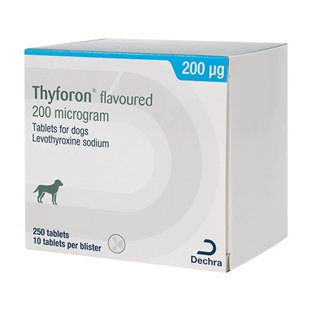
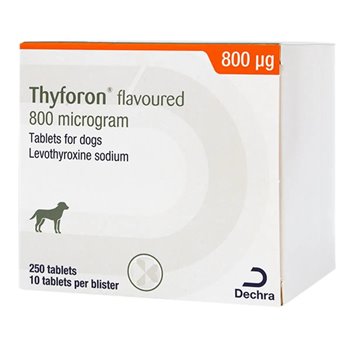
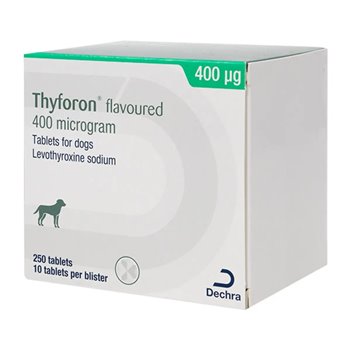
Forthyron has now been renamed Thyforon...
Dogs with an underactive thyroid can seem as if they have slowed down. This condition is called canine hypothyroidism, and it occurs when the thyroid gland does not produce enough thyroid hormones to keep metabolism and normal cell activity running smoothly. Thyforon Tablets are a veterinary prescription medicine used to replace those missing hormones in dogs that have been diagnosed by a vet.
VETERINARY PRESCRIPTION REQUIRED
Thyforon contains levothyroxine sodium, a synthetic form of thyroxine (T4), which is the main hormone normally produced by the canine thyroid gland. After your dog takes Thyforon Tablets, T4 is absorbed into the bloodstream and converted in body tissues to the more active hormone triiodothyronine (T3). Together, T4 and T3 bind to thyroid hormone receptors inside cells and influence how the body uses energy, controls body temperature, maintains cardiovascular function, and supports normal turnover of skin and hair. Thyforon Tablets are flavoured to encourage acceptance, and they are available in several strengths (200 micrograms, 400 micrograms and 800 micrograms) so your vet can fine-tune the dose. The tablets are scored, which means they can be divided into halves or quarters when needed, making it easier to tailor the amount for smaller dogs or for gradual dose adjustments.
In most dogs, hypothyroidism is a primary endocrine disorder, meaning the thyroid gland itself is not working properly. The two most common underlying causes are immune-mediated inflammation (lymphocytic thyroiditis) and gradual loss of functioning thyroid tissue (idiopathic atrophy). Because thyroid hormones affect many body systems, signs can be wide-ranging and often develop slowly over months. It is common for owners to assume their dog is simply ageing, gaining weight, or becoming less interested in activity, when in fact hormone levels have been drifting lower in the background.
Diagnosis is not based on symptoms alone, because other illnesses can mimic hypothyroidism or temporarily lower thyroid hormone readings. Your vet will typically consider your dog’s history and examination findings alongside blood tests such as total T4 (TT4), free T4, and thyroid-stimulating hormone (TSH), and may also look for supportive changes such as hypercholesterolaemia. This careful approach helps ensure Thyforon is used for true hypothyroidism rather than for a “false low” result caused by another condition.
Hypothyroidism can look different from dog to dog, but it commonly affects weight, energy, and the skin. You might notice a change that is subtle at first and becomes more obvious over time, or you may only realise how long it has been present once treatment begins. Signs your vet may ask about include:
- Your dog seems lethargic, has low stamina, or appears “flat” on walks.
- Your dog gains weight despite no increase in food, or finds it harder to lose weight.
- Your dog develops dry skin, dandruff, or recurrent ear and skin infections (otitis externa, pyoderma).
- Your dog’s coat becomes thin, slow to regrow after clipping, or shows symmetrical hair loss (alopecia).
- Your dog feels the cold more, seeks warm spots, or shows exercise intolerance.
- Your dog has a slower heart rate (bradycardia) or a generally “slowed” demeanour.
These signs can overlap with other conditions such as allergies, arthritis, or Cushing’s syndrome, so it is always worth getting a proper assessment rather than guessing. If hypothyroidism is confirmed, Thyforon helps by addressing the hormonal cause, while your vet may also treat secondary issues such as skin infection, itching, or weight management to keep your dog comfortable as hormone levels stabilise.
Your vet will tell you exactly how to give Thyforon and how often, because levothyroxine dosing needs to be individualised. Many dogs start with dosing twice daily and then, depending on response and blood results, the dose (and sometimes the frequency) is adjusted. One practical detail is especially important: absorption of levothyroxine can be affected by food, so the goal is consistency. Give Thyforon at the same times each day, and in the same way in relation to meals (either always with food or always without food), so blood levels are as steady as possible. If you need to split a tablet, use the score lines to help you break it accurately, and keep any unused portion in the opened blister for the next dose to help protect it. It can take a little time for improvements to show: some dogs appear brighter within a couple of weeks, while skin and coat changes may take longer because hair growth cycles are slow. If you miss a dose, follow your vet’s advice; as a general rule, avoid doubling up unless your vet specifically instructs you to do so.
Because Thyforon is replacing an essential hormone, ongoing monitoring is part of safe, effective treatment. Your vet may recommend a follow-up blood test after starting Thyforon or after a dose change, and then periodic checks to confirm the dose remains appropriate as your dog’s needs change with age, weight, and overall health. In correctly dosed dogs, adverse effects are uncommon, but too high a dose can cause signs of over-supplementation (thyrotoxicosis), such as increased thirst and urination (polydipsia and polyuria), panting, restlessness, a rapid heart rate (tachycardia), or weight loss without loss of appetite.
Thyforon should not be used in dogs with uncorrected adrenal insufficiency (Addison’s disease), and your vet may take extra care when prescribing Thyforon for dogs with cardiac disease, diabetes mellitus, or liver or kidney problems, because requirements can change and monitoring may need to be closer. Tell your vet about any other medicines or supplements, including antacids and long-term corticosteroids, as some treatments can alter thyroid hormone levels or how the body handles them. As with any hormone tablet, wash your hands after handling Thyforon, store it safely out of reach of children and pets, and ask your vet for advice if a person accidentally swallows a tablet.
What does Thyforon treat in dogs?
Thyforon is prescribed for dogs diagnosed with hypothyroidism, an endocrine disorder where the thyroid gland does not produce enough hormone. It provides levothyroxine (a T4 replacement) to help normalise metabolism, skin and coat turnover, and overall energy levels. Diagnosis and dosing should always be guided by your vet.
What are the first signs of hypothyroidism in dogs?
Early signs are often gradual and easy to miss. Many dogs become less energetic, gain weight without eating more, and develop skin or coat changes. You might notice a dull coat, increased shedding, recurrent ear or skin infections, or cold intolerance. Because signs overlap with other illnesses, a vet assessment is important.
How quickly will I see improvement after starting Thyforon?
Some dogs seem brighter within a couple of weeks, but many changes take longer. Skin and coat improvement often needs several weeks, and full stabilisation can take a month or two. Your vet may reassess clinical signs alongside blood tests after starting Thyforon or adjusting the dose, to fine-tune treatment.
What if I miss a dose of Thyforon?
If you miss a dose, give it when you remember unless it is close to the next scheduled dose. In that case, skip the missed dose and carry on as normal. Do not double up unless your vet advises it. If doses are missed frequently, ask your vet for a simpler routine
Can Thyforon cause side effects?
Side effects are uncommon when the dose is right. If the dose is too high, signs of over-supplementation may include panting, restlessness, increased thirst and urination, faster heart rate, or weight loss despite a good appetite. Contact your vet if you notice these changes, especially after a dose change.