


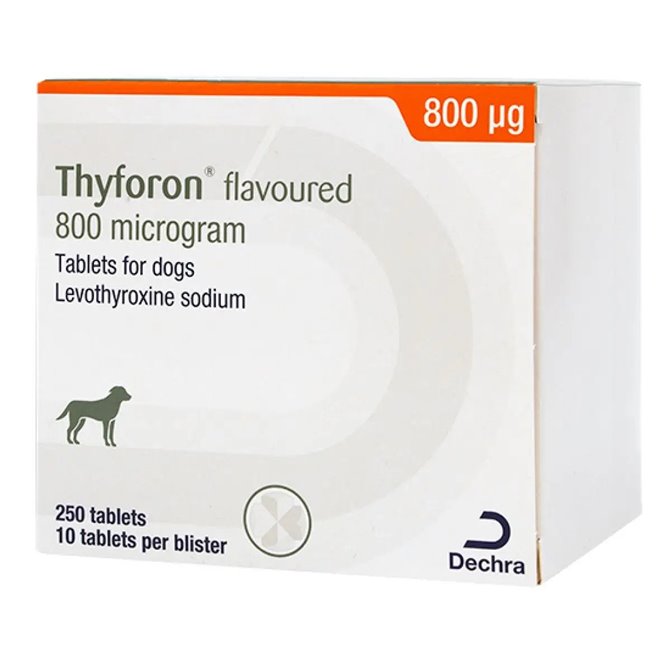
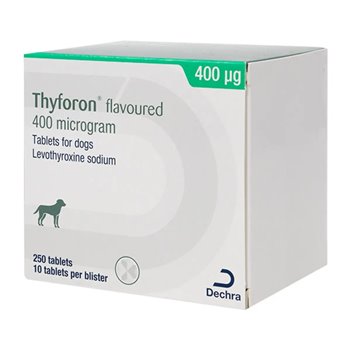
Thyforon 800 Tablet for Dogs - per Tablet
Thyforon 800 is a prescription medication used to treat hypothyroidism in dogs. Each tablet contains 800 micrograms of levothyroxine sodium, a synthetic form of the thyroid hormone thyroxine (T4). This medication helps restore normal thyroid hormone levels in dogs with an underactive thyroid, supporting their overall health and well-being. Thyforon 800 is designed to be easily administered and provides consistent hormone replacement therapy for dogs diagnosed with hypothyroidism.
How Thyforon 800 Works
Thyforon 800 contains levothyroxine sodium, a synthetic version of the T4 hormone that the thyroid gland naturally produces. In healthy dogs, the thyroid gland regulates metabolism, energy production, and organ function. When a dog has hypothyroidism, its thyroid does not produce enough hormones, leading to various health problems.
Levothyroxine sodium works by supplementing the missing hormone, restoring normal thyroid function. Once administered, the medication is absorbed into the bloodstream and converted into triiodothyronine (T3), the active thyroid hormone. This conversion allows the dog’s body to regulate metabolism, energy levels, skin health, and organ function as it would in a healthy thyroid state.
Product Features
- Pack Size: - Sold Individually
- Target Animal: - Dog (Canine)
- Related Condition: - For the treatment of hypothyroidism in dogs
- Pet Prescription Required?: - Yes (For UK Orders)
- Active Ingredient: - Levothyroxine Sodium
- Product Name: - Thyforon 800 (Forthyron) Tablet for Dogs - per Tablet
Additional Product Information
Description
Thyforon may only be supplied with a valid veterinary prescription issued by your vet. You should only purchase Thyforon if you have or are in the process of arranging such a prescription. See information bar for further details.
Signs of Hypothyroidism in Dogs
Hypothyroidism is a common endocrine disorder in dogs, primarily affecting middle-aged and older dogs. It occurs when the thyroid gland fails to produce enough thyroid hormones, leading to a range of symptoms.
Some of the most common signs of hypothyroidism in dogs include:
- Weight gain despite no change in diet
- Lethargy and reduced energy levels
- Hair loss, often on the body and tail
- Dry, flaky skin and increased shedding
- Slow heart rate
- Intolerance to cold temperatures
- Thickened or darkened skin
- Recurrent skin infections
- Mental dullness or depression
These symptoms develop gradually and may be mistaken for normal ageing. If left untreated, hypothyroidism can lead to severe complications, including heart problems, neurological issues, and decreased quality of life.
Which Dogs are at Risk of Hypothyroidism?
Hypothyroidism can occur in any breed, but some dogs are more predisposed to the condition. Medium and large breeds are more commonly affected, and the disease typically develops in middle-aged dogs. Some breeds known to have a higher risk include:
- Golden Retrievers
- Labrador Retrievers
- Doberman Pinschers
- Boxers
- Cocker Spaniels
- Irish Setters
- Great Danes
Neutered male and female dogs are also at a slightly higher risk of developing hypothyroidism. The condition is not contagious and is usually caused by autoimmune disorders or glandular atrophy, where the thyroid gland gradually deteriorates over time.
Administering Thyforon 800
Thyforon 800 is available in flavoured tablets to make administration easier. The dosage is determined by a veterinarian based on the dog's weight, thyroid hormone levels, and overall health condition. The tablets are usually given once or twice daily, depending on the veterinarian's recommendation.
It is important to give Thyforon 800 at the same time each day and follow the prescribed dose. Regular monitoring and blood tests are necessary to ensure that the medication is working effectively. If a dose is missed, it should be given as soon as possible unless it is close to the next scheduled dose.
Possible Side Effects of Thyforon 800
Thyforon 800 is generally well tolerated, but some dogs may experience mild side effects. These are often related to overdosage and include:
- Increased thirst and urination
- Restlessness or hyperactivity
- Increased heart rate
- Diarrhoea or vomiting
- Weight loss despite normal feeding
If any of these symptoms occur, a veterinarian should be consulted to adjust the dosage. Long-term use of Thyforon 800 requires routine blood tests to ensure the correct hormone levels are maintained.
Importance of Regular Monitoring
Dogs receiving Thyforon 800 require ongoing monitoring to ensure the medication remains effective. Regular veterinary check-ups and blood tests help determine if adjustments to the dosage are needed. Thyroid levels may fluctuate over time, requiring periodic changes to the treatment plan.
In most cases, dogs with hypothyroidism require lifelong medication. With consistent treatment and monitoring, affected dogs can live healthy, active lives. Owners should watch for any changes in their dog’s behaviour or health and report concerns to their veterinarian.
Storage and Handling of Thyforon 800
Thyforon 800 should be stored in a cool, dry place away from direct sunlight. The tablets should be kept in their original packaging and out of reach of children and pets. Unused or expired medication should be disposed of safely, following veterinary or pharmacy guidance.
Legal category
Thyforon is a POM-V (Pet Prescription Required)
Brand

What our customers say about us.
Ordering and payment were smoothly carried out, dispatch was timed to coincide with the delivery service to ensure the drugs reached me in a chilled state within the stated delivery time.
JB
Source: Trustpilot Review
First time I have used this company and pleased the Order arrived fairly quickly and at a reasonable price, will definitely be using this company again
MW
Source: Trustpilot Review
I bought some pills for my cat that the vet had recommended. I shopped around at various pet product sites and found Vetdispense far the cheapest even after including the postage charge. Delivery was within a few days of my order. By all means if you are buying something for your pet, check all the sites but make sure you check Vetdispense!
Martin
Source: Trustpilot Review
- Tracked 24 Delivery Follow your parcel online
- VMD & RCVS Registered VetDispense is a registered UK Dispensary
- Secure Payment Pay securely online by card or PayPal
- Independent Since 2008 A Trusted UK Dispensary