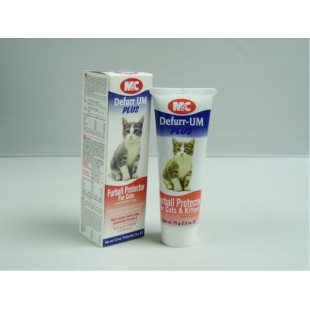
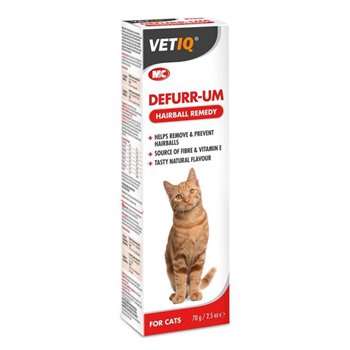
Cats groom for hours each day, and their rough tongue acts like a natural comb that pulls loose hairs into the mouth. Most swallowed fur passes quietly through the gastrointestinal tract and leaves in the faeces, but sometimes it clumps together and forms a hairball (clinically, a trichobezoar). Hairballs are typically a mix of fur and gastric mucus, and because hair cannot be digested, the body relies on normal gut movement to carry it through. When a trichobezoar irritates the stomach or oesophagus, your cat may retch, gag or vomit, and it can be unsettling to watch even when they seem bright afterwards.
Hairballs are common, but repeated episodes can point to heavy moulting, long coats, or slowed gut motility, and they can contribute to nausea, reduced appetite or constipation. Defurr-UM is a practical option for cats that are prone to hairballs, helping swallowed fur move through the gut more comfortably. Used alongside sensible grooming and diet choices, Defurr-UM supports the body’s normal route for fur to leave the system: out in the litter tray rather than up on the carpet.
Hairballs do not always look like neat “balls”. They can appear as a damp tube of fur, or your cat may bring up frothy fluid with no hair at all, particularly if the fur is still sitting in the stomach. Signs that can fit with hairball irritation or fur build‑up include:
- intermittent vomiting or regurgitation
- dry heaving, gagging or repeated retching
- lip‑licking, drooling, swallowing or “gulping”
- reduced appetite or fussy eating
- constipation, small hard stools, or straining in the litter tray
Some cats also seem restless, swallow repeatedly, or act hungry but then walk away after a few mouthfuls. Because these signs can overlap with other conditions, it is important to watch the whole cat, not just the hairball. Contact a vet promptly if vomiting is frequent, your cat cannot keep food or water down, there is lethargy, abdominal pain, weight loss, blood in vomit or faeces, constipation lasting more than a day, or repeated unproductive retching, as these can indicate a more serious gastrointestinal problem. Defurr-UM is intended for routine hairball management, not for emergencies or suspected intestinal obstruction.
Defurr-UM works in a straightforward, practical way. It is a lubricant‑style oral supplement that helps coat swallowed hairs and intestinal contents so they slide through more easily with normal peristalsis, the wave‑like muscular contractions that move material along the gut. By reducing friction and helping fur mix with stool rather than compacting into a dense mass, Defurr-UM supports the natural passage of hair in the faeces instead of it being brought back up. This can reduce irritation in the upper digestive tract and help settle the cycle of retching and nausea that some cats develop during heavy shedding. Many owners find Defurr-UM particularly useful during seasonal moulting, in long‑haired breeds, or in cats that groom intensively. Defurr-UM is usually easy to give: you can offer the recommended amount directly, place a small dab on a paw for your cat to lick off, or mix it with a tiny portion of food. For best results, use Defurr-UM exactly as directed on the pack, and aim for consistency during high‑risk periods rather than waiting until retching becomes a pattern in practice.
If hairballs are a recurring issue, it helps to think in terms of a complete routine rather than one single fix. Regular brushing removes loose coat before it is swallowed, and long‑haired cats often benefit from an undercoat comb as well as a softer brush for the top coat. Many cats tolerate short, frequent sessions better than an occasional long groom, and a grooming glove can be helpful for cats that dislike brushes. Hydration supports stool moisture and gut transit, so a water fountain, multiple bowls, or wet food can be useful for cats that drink poorly. Some cats also benefit from appropriate dietary fibre or a hairball‑support diet, which can help move hair through the intestines and improve stool quality. Daily play and movement matter too, because activity supports normal gastrointestinal motility, particularly in indoor or less active cats. In this broader plan, Defurr-UM acts as an extra helping hand: used alongside grooming and feeding strategies, Defurr-UM can reduce the frequency of retching episodes and make hairball seasons easier on both you and your cat.
Like any product that influences gut transit, Defurr-UM should be used responsibly and exactly as the label advises. Giving more is not better; overuse may cause loose stools, temporary diarrhoea, or mild vomiting in some cats, especially if their stomach is sensitive. If your cat is dehydrated, unwell, or off their food, speak to a vet before adding any supplement. If your cat takes other oral medicines or supplements, it is sensible to separate dosing times, as lubricant products can, in theory, affect absorption for some medications. Seek veterinary guidance before using Defurr-UM if your cat is very young, pregnant, has ongoing vomiting, or has a long‑term condition such as kidney disease, diabetes, or inflammatory bowel disease. Stop and speak to a vet if symptoms worsen, your cat seems painful, or you suspect a blockage.
It is also worth considering why your cat is producing hairballs in the first place. Heavy shedding may be normal, but excessive grooming can be linked to fleas, allergies, skin infections, pain, anxiety, or stress‑related overgrooming, and those issues often need their own targeted approach. Obesity can reduce activity and contribute to slower gastrointestinal motility, while arthritis can make grooming patchy and lead to more loose coat being swallowed. If you are seeing frequent hairball episodes alongside a dull coat, scurf, bald patches, or changes in appetite and behaviour, a veterinary check can help rule out underlying problems and tailor a plan. Used appropriately, Defurr-UM can sit comfortably within that plan, supporting normal fur transit while you address the triggers that make hairballs more likely, and helping you keep your cat comfortable day to day.
What causes hairballs in cats?
Hairballs form when cats swallow fur during grooming. The barbed tongue pulls loose hairs into the mouth and, because hair is indigestible, it must either pass through the gut or be brought back up. Heavy moulting, long coats, low activity, and skin itchiness can all increase the amount of fur swallowed.
How often is it normal for a cat to bring up a hairball?
Some cats bring up an occasional hairball, especially during spring or autumn moulting. If it becomes frequent, your cat retches repeatedly, or there are appetite or litter‑tray changes, it is worth speaking with a vet. Regular brushing and support products like Defurr-UM can help during high‑risk periods.
Is my cat coughing or trying to bring up a hairball?
Hairball retching often looks like repeated gagging with a hunched posture and throat movements, sometimes ending with a fur “sausage” or foamy fluid. Coughing tends to be more chest‑based and may include wheezing or faster breathing afterwards. If you are unsure, filming an episode for your vet is very helpful.
When should I take my cat to the vet about hairballs?
Seek veterinary advice urgently if your cat cannot keep food or water down, is lethargic, painful, has repeated unproductive retching, constipation lasting more than a day, or blood in vomit or faeces. These signs can indicate obstruction or another illness. Hairball remedies like Defurr-UM are not a substitute for urgent care.
Can stress or overgrooming increase hairballs?
Yes. Stress, boredom, or anxiety can trigger overgrooming, which increases fur ingestion and hairball risk. Environmental enrichment, predictable routines, and addressing multi‑cat tension can help. If grooming seems obsessive, ask your vet to check for skin disease, pain, or parasites, and consider supportive options such as Defurr-UM while the cause is managed.