Stool Eating in Dogs (Coprophagia in Dogs)
Stool eating (poo eating), known as coprophagia, is a behaviour many dog owners find difficult to manage. Although unpleasant, it is relatively common in both puppies and adult dogs. In some cases, it is a normal exploratory behaviour that disappears with maturity, but in others it becomes a persistent habit linked to medical, nutritional, or behavioural factors. A clearer understanding of why a dog may eat stool helps in choosing the most effective combination of environmental management, training, diet adjustments, and supportive supplements such as Stool Repel and Coprostop.
Why Dogs Eat Stool
There is no single explanation for coprophagia because dogs may do it for different reasons. Puppies often explore the world with their mouths and may ingest stool out of curiosity. Many grow out of the habit naturally as their environment is kept clean and they learn more appropriate behaviours.
Adult dogs may eat stool for behavioural reasons. Boredom, anxiety, stress, or a desire for attention can contribute to the problem. Some dogs quickly learn that approaching faeces makes an owner react, even negatively, which can inadvertently reinforce the behaviour. In households with multiple dogs, competition over resources or copying another dog’s behaviour can also play a part.
Medical reasons should not be overlooked. Conditions that affect nutrient absorption, digestion, or appetite can make stool more appealing. Dogs with increased hunger due to underlying illness or restricted diets may scavenge more readily. Intestinal parasites may also be associated with changes in appetite or digestion. Because of this, persistent coprophagia is always worth discussing with a veterinary surgeon.
Health Risks of Coprophagia
Eating stool carries certain risks. Faeces from other animals can contain bacteria, viruses, or parasite eggs, and ingesting them may expose a dog to infection. Even when a dog eats its own stool, there is a potential risk of re-ingesting parasite eggs if regular worming schedules are not maintained.
There are also hygiene concerns. Dogs that consume stool may develop unpleasant breath odour and can transfer faecal material onto their coat, bedding, and living areas. These issues often add urgency for owners wanting to address the behaviour quickly and effectively.
When to Consult Your Vet
Veterinary advice is recommended if:
- The behaviour appears suddenly in an adult dog.
- The dog shows additional symptoms such as diarrhoea, vomiting, weight loss, increased hunger, or a poor coat.
- Coprophagia persists despite a suitable diet, training, and environmental control.
A vet may suggest faecal tests, dietary review, blood tests, or examination to rule out medical causes. Treating any underlying condition is important because supplements and training strategies work best when the dog’s overall health is stable.
Management and Training Approaches
Environmental control plays a major role in reducing stool eating. Prompt removal of faeces in the garden or when out walking limits opportunities for the dog to engage in the behaviour. Consistent worming helps protect against parasite-related risks.
Training supports this further. Teaching a reliable "leave it" command or reinforcing recall away from stool can give owners greater control in outdoor environments. Rewarding attention, engagement, and appropriate behaviour helps build a positive pattern over time.
Providing physical exercise, mental stimulation, and activities such as puzzle feeders can reduce boredom-related scavenging. Reviewing the dog’s diet with a vet or nutritionist may also help. Some dogs respond well to highly digestible diets or supplements that support gut health, which may in turn reduce the attractiveness of stool.
How Supplements Can Help: Stool Repel and Coprostop
Supplements designed for coprophagia aim to make the stool unappealing once passed, reducing the likelihood that a dog will want to eat it. They are not a standalone cure but can support a broader behavioural and environmental plan.
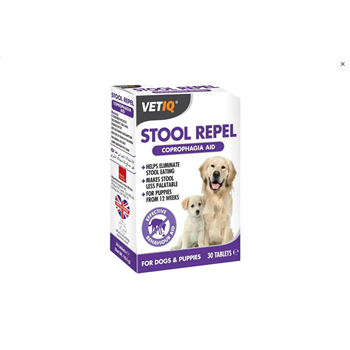
Stool Repel
Stool Repel is a behavioural aid formulated to discourage stool eating. It works by altering the taste and smell of the dog’s faeces in a way that dogs find unpleasant. When used consistently, this can help break the cycle of coprophagia because the reward value of eating stool is removed.
Stool Repel is generally mixed with the dog’s food according to the manufacturer’s instructions. Because its effect relies on the stool becoming distasteful, it is important to give the supplement every day and allow time for the change in behaviour to develop. Some dogs respond quickly, while others may require several weeks of consistent use, along with good environmental management.
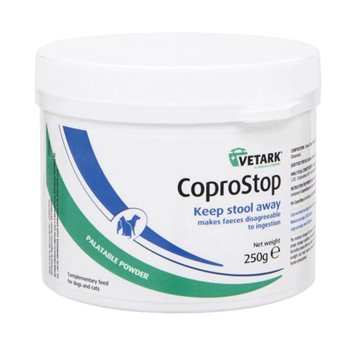
Coprostop
Coprostop is another supplement commonly used to deter stool eating. It is usually provided as a palatable powder added to the dog's daily meal. Its active ingredients are intended to make faeces taste unpleasant to dogs, reducing the likelihood that they will ingest them.
Coprostop can be especially useful in households with more than one dog. In such situations, giving the supplement to all dogs ensures that any stool available is treated, preventing one dog from continuing the behaviour with another dog’s faeces. Some owners also notice an improvement in breath odour after reducing episodes of coprophagia.
As with any supplement, the best results come from daily use over a sustained period. Dogs vary in how quickly they respond, but consistent feeding, controlled access to stool, and positive reinforcement of good behaviour help support success.
Effective Use of Coprophagia Supplements
Both Stool Repel and Coprostop work best when:
- Given at the correct dose for the dog’s weight.
- Used every day for the recommended duration.
- Combined with strict faeces removal and good hygiene.
- Incorporated into a training and enrichment plan.
In many cases, owners see gradual improvement rather than an immediate change. Reducing opportunities for the behaviour, rewarding desired actions, and reinforcing new habits contribute significantly to long-term success.
Although supplements can be helpful, some dogs require additional support from a vet or qualified behaviourist. This is especially true when coprophagia is severe, long-standing, or linked to anxiety, stress, or compulsive behaviours. A behaviour professional can help identify triggers and design a structured plan, while your vet can ensure that no underlying medical issue is contributing to the problem.
Supplements such as Stool Repel and Coprostop fit well into these plans by reducing the reward of eating stool while behaviour modification takes place.