


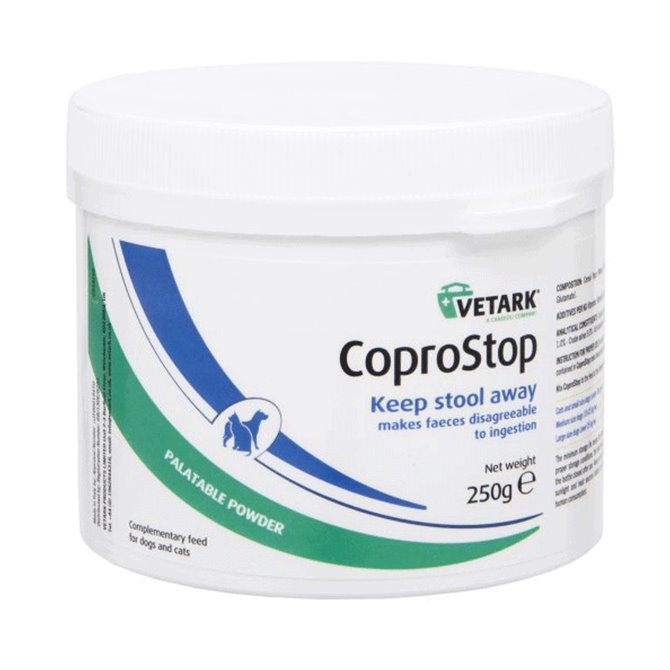
CoproStop for Dogs - 250g Powder
CoproStop for dogs
CoproStop is a palatable supplement designed to help manage stool eating, also known as coprophagia, in dogs. It is given with food and works by making your dog’s faeces less appealing to eat, while also supporting normal digestion. CoproStop is intended to be used alongside good hygiene, dietary management and appropriate training, so that owners can tackle the behaviour from several angles at the same time.
CoproStop is suitable for dogs that eat their own stools and for dogs that target the faeces of other pets in the household. CoproStop is typically introduced as part of a wider management plan agreed with your veterinary surgeon, particularly if the behaviour is new, severe or associated with weight loss, vomiting or diarrhoea.
How CoproStop works
CoproStop is formulated to alter the taste and odour of your dog’s faeces after it has been digested and passed. When given daily with food, the active components are processed in the gut and excreted into the stools, where they make the faeces much less attractive to your dog. Over time, this helps to break the habit of stool eating by removing the reward that your dog previously experienced.
In addition to its deterrent effect on faeces, CoproStop is designed to support normal digestive function. By promoting more complete digestion of food, the stools are less likely to contain undigested nutrients that might otherwise encourage a dog to eat them. A combination of taste modification and digestive support helps address both the appeal of the faeces and one of the common triggers for coprophagia.
CoproStop is a palatable poweder that can be mixed with your dog’s normal food. This makes it straightforward to administer on a daily basis and suitable for long-term use where your vet considers it appropriate. 250g Tub.
Additional Product Information
Description
What is coprophagia in dogs?
Coprophagia is the term used when a dog regularly eats faeces. Some dogs eat their own stools, while others seek out the faeces of other dogs, cats or wildlife. Many owners find this behaviour unpleasant and worrying, and it can be difficult to manage without targeted support.
There are several possible causes. In some dogs, coprophagia is mainly behavioural and linked to boredom, stress, attention-seeking or learned habits. In others, an underlying medical or nutritional problem may contribute, such as poor digestion, intestinal parasites or conditions that alter appetite. Puppies may explore and mouth faeces as part of normal development, but the habit can persist if it is not addressed.
Because coprophagia can occasionally be associated with disease, your dog should be checked by a vet, especially if there are other signs such as weight loss, increased thirst, changes in appetite or abnormal stools. Once medical causes have been ruled out or treated, products such as CoproStop can form part of a practical management strategy.
How to use CoproStop
CoproStop should be used exactly as directed on the product packaging or by your veterinary surgeon. The total daily amount is usually based on bodyweight and divided between your dog’s meals. It is important that every dog whose faeces are being eaten receives the product in their food, even if that individual dog is not seen eating stools.
For many dogs, CoproStop is given for a number of weeks to allow the behaviour pattern to change. Some dogs respond within a short time, while others may need a longer course and ongoing environmental management. Owners should avoid allowing the dog access to faeces from animals that are not receiving CoproStop, such as wildlife or dogs outside the household, since these stools may still be attractive.
If your dog is on other medication or has an existing medical condition, you should check with your vet before starting any new supplement, including CoproStop. You should stop the product and seek veterinary advice if you notice vomiting, persistent diarrhoea, marked changes in appetite or any other concerning signs.
CoproStop works best when used as part of a comprehensive plan to manage coprophagia. Prompt removal of faeces from the garden or exercise area remains essential. The less opportunity your dog has to practise the behaviour, the more likely it is that the habit will fade. Lead walking, supervised free running and the use of a basket muzzle in appropriate cases can help limit access to faeces while CoproStop is taking effect.
Behavioural strategies are also important. Providing regular exercise, mental enrichment, training sessions and feeding from puzzle toys or scatter feeding can reduce boredom and frustration, which often contribute to inappropriate eating behaviours. Avoid punishing your dog for stool eating, as this can increase anxiety and may make the problem worse. Instead, reward calm behaviour and reliable responses to recall and “leave it” cues.
Many dogs with coprophagia also benefit from broader digestive and behavioural support. Your vet may discuss diet adjustments, parasite control and the use of probiotics or fibre supplements to promote healthy stool quality and gut function. In some cases, additional calming products or behaviour therapy are recommended, especially if anxiety, rehoming or environmental change appear to be involved.
You may also like
What our customers say about us.
easy to order quick services by tracked RMail delivery
Phillip
Source: Trustpilot Review
First time I have used this company and pleased the Order arrived fairly quickly and at a reasonable price, will definitely be using this company again
MW
Source: Trustpilot Review
Very impressive order turnaround and competitive pricing.
Lina
Source: Trustpilot Review
- Tracked 24 Delivery Follow your parcel online
- VMD & RCVS Registered VetDispense is a registered UK Dispensary
- Secure Payment Pay securely online by card or PayPal
- Independent Since 2008 A Trusted UK Dispensary